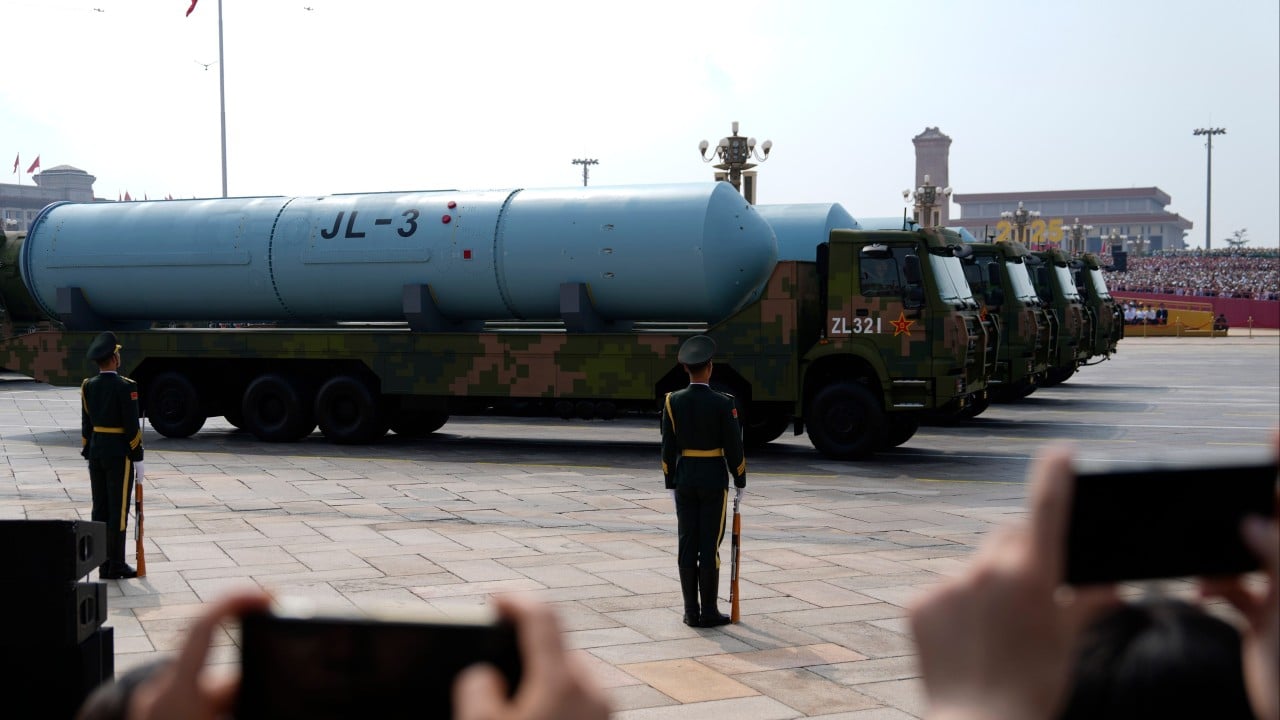
When a nuclear-armed submarine fires an intercontinental ballistic missile into international open waters for the first time in over four decades, military analysts don't just take notes—they panic quietly. On July 6, 2026, the People's Liberation Army Navy did exactly that. They launched a submarine-launched ballistic missile—widely identified as either a JL-2 or the newer third-generation JL-3—from a submerged platform, sending a dummy warhead flying roughly 7,300 kilometers across the South China Sea and parts of the Philippines before it splashed down safely in the South Pacific.
Most casual observers missed the sheer weight of this moment. They heard "routine military training" via state media and went back to scrolling. Don't make that mistake. This wasn't just another weapon trial. It was Beijing loudly announcing that its sea-based nuclear deterrent has finally graduated from theory into a terrifyingly functional reality. You might also find this similar article interesting: Why The Pentagon Is Running Out Of Ships To Protect Israel.
The Real Message Behind the Pacific Splashdown
Why did this test cause such an immediate earthquake in defense circles? Context matters. The last time China tested a ballistic missile into open international waters like this was back in 1980. For over forty years, Beijing kept its long-range missile tests close to home, mostly firing overland or into domestic restricted zones to avoid escalating regional anxiety.
By taking the JL-3 out into the open Pacific, China crossed a major psychological and operational Rubicon. As extensively documented in latest reports by USA.gov, the results are widespread.
- The Second-Strike Credibility: Land-based missile silos are sitting ducks in modern warfare. Everyone knows where they are. Submarines hiding in deep ocean bastions, however, are notoriously hard to find.
- The U.S. Mainland Reach: The JL-3 boasts a range exceeding 10,000 kilometers. Firing it along a realistic trajectory proves that Chinese Type 094 nuclear-powered ballistic missile submarines can threaten targets across the globe without ever leaving heavily defended patrol areas.
- The Direct Strategic Signal: Timing is everything. This test coincided directly with regional friction, including security pact developments involving Australia and Fiji, proving that military hardware and foreign policy are moving in lockstep.
Sorting Fact from Speculation on the JL-3
Military spotters love to argue over grainy photos, and this test gave them plenty of fuel. Because the People's Liberation Army released images over open water without clear reference points, experts spent weeks debating whether the weapon was a stretched JL-2 or the advanced JL-3.
Both missiles share similar two-stage or three-stage configurations and solid-fuel rocket boosters. But their operational capabilities sit in entirely different leagues. If it was a JL-2, the test pushed that older missile to near its maximum limit. If it was the JL-3—which made its public debut at the 2025 military parade—the test was a flexible demonstration of a weapon designed to carry multiple independently targetable reentry vehicles (MIRVs) deep into the Western Hemisphere.
Either way, the hardware works. And that is what keeps Pentagon strategists awake at night.
Why Current Defense Protocols Are Failing
Here is the part mainstream reporting glosses over. Testing missiles across international lanes without strict adherence to established notification networks creates a dangerous playground for miscalculation.
While Beijing claimed it gave advance notice to relevant countries, critics point out that these warnings failed to match the rigorous standards set by international transparency frameworks like the Hague Code of Conduct. When a multi-thousand-kilometer missile flies over active commercial zones and near friendly neighbors like the Philippines, a tiny miscommunication can trigger an accidental escalation.
China is normalizing these open-ocean demonstrations. They are telling the world that the Indo-Pacific power dynamic has shifted permanently, and no amount of diplomatic hand-wringing is going to put that genie back in the bottle.
Stop looking at this as a localized drill. It's the blueprint for the next half-century of global naval power.
How China's JL-3 Missile Test From A Nuclear Submarine Sends A Dire Warning To NATO
This video breaks down how the JL-3 missile test from a nuclear submarine delivers a sharp strategic warning to global defense alliances.
http://googleusercontent.com/youtube_content/1