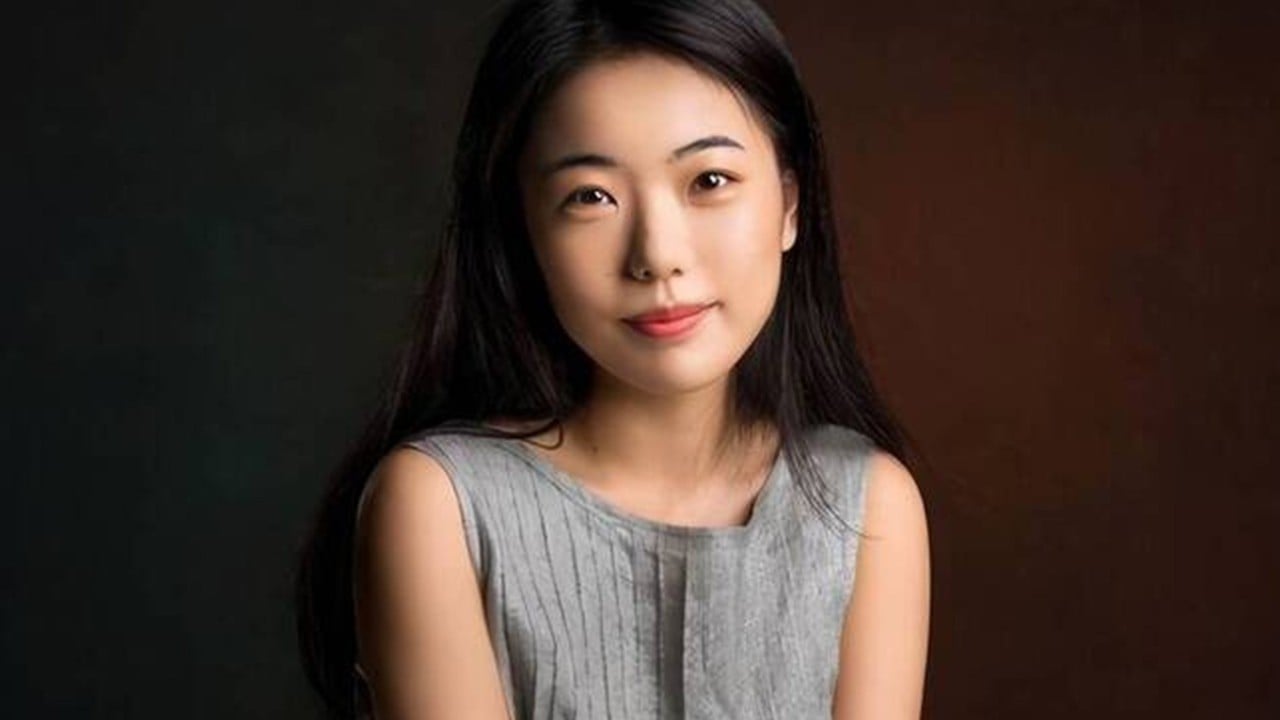
Genius status won't shield you forever when you stop doing the work. For decades, the Chinese public treated Jiang Fangzhou as a literary unicorn. She published her first book at nine years old, bypassed China’s brutal college entry standards via a massive point bonus, and built a massive career lecturing adults on how to write. But her carefully constructed reputation shattered when Renmin University of China officially stripped her of her 2019 master's degree.
The reason? Blatant plagiarism and fabricated citations. Meanwhile, you can explore similar stories here: Why Lebanon's American Gamble Could Backfire On Joseph Aoun.
This isn't just a localized piece of academic gossip. The news racked up over 200 million views on mainland social media platforms almost overnight. People are angry, and they should be. The scandal hits a massive nerve because it exposes how elite systems protect their darlings until the public outcry becomes too loud to ignore. If you want to understand why a master's thesis by a 36-year-old author became a nationwide obsession, you have to look past the footnotes and look at how society treats self-proclaimed prodigies.
The Rise of a Manufactured Literary Idol
To understand the downfall, you have to understand how high the pedestal was. Jiang Fangzhou grew up in Hubei province, the daughter of a railway police officer and a school teacher. She started writing essays at age seven and published her first major collection, Open the Skylight, at nine. The book was aggressively marketed as authentic literature written by a kid, for kids. Ambitious parents across China bought it in droves, desperate to find the secret recipe for raising their own genius children. To understand the complete picture, check out the recent article by The Washington Post.
By age 11, she published a novel about puberty and bullying. By 17, she had eight books under her belt. She became a household name.
The real controversy began when she transitioned into adulthood. In 2008, Jiang took the gaokao, China’s notoriously stressful National Higher Education Entrance Examination. She scored 561 out of 750 points. It’s a decent score, but completely insufficient for entry into China's absolute top-tier institutions under normal rules. Yet, the prestigious Tsinghua University used its independent recruitment program to hand her a 60-point preferential bonus. That bonus pushed her across the threshold into their journalism school.
Critics back then complained that Tsinghua was trading its institutional credibility for celebrity clout. The university defended the choice, arguing that rigid test scores shouldn't crush unconventional, exceptional talent. But giving a celebrity a massive head start left a sour taste in the mouths of ordinary students who stayed up until 3:00 AM every night studying just to miss out on admission by a single point.
After graduating, her celebrity engine kept spinning. She landed a job as a deputy editor for the prominent magazine New Weekly almost immediately. She traveled on high-profile diplomatic literary exchanges, sharing stages with state officials. She built a business around her childhood identity, touring the country to give paid lectures on creative writing.
Then she decided to get a master's degree from Renmin University, graduating in 2019. That's where the shortcut finally caught up with her.
Anatomy of a Plagiarized Master Thesis
You might think a professional writer with multiple published books wouldn't need to cheat on a graduate thesis. Writing is literally her job. But academic research operates on rules of evidence, structure, and rigorous citation—things that a lifestyle writer used to unchecked public praise might find tedious.
The cracks in her armor appeared when Xiao Ying, a philosophy professor at Tsinghua University, publicly accused Jiang of serious academic dishonesty in her master's dissertation. Xiao didn't just throw out vague accusations. He spent months systematically dismantling her work.
The details of the academic fraud are embarrassing for someone of Jiang's stature. Xiao published evidence showing that all 20 footnotes in Jiang's thesis violated basic academic requirements. Even worse, 16 of those footnotes were entirely fabricated. She cited pages from novels and journals that didn't exist. It looked like a classic case of a student inventing sources at 2:00 AM the night before a deadline, hoping the professor wouldn't bother checking the library stacks.
Online internet sleuths and independent bloggers quickly joined the hunt. They ran her paper through databases and crowd-sourced a massive list of similarities between Jiang’s thesis and a paper by Taiwanese scholar Chen Zhongren. Large chunks of her text overlapped with overseas academic journals without a single shred of proper citation or inclusion in her reference lists.
When the news first broke, Jiang didn't apologize. She denied everything, claimed she was the victim of cyberbullying and malicious targeting, and even reported the accusers to the police. Her defensive stance only fueled the online anger. Millions of internet users felt she was using her elite status to silence legitimate academic critique.
The Eight Day Whiplash
The most frustrating part of this scandal for the public was the way Renmin University handled the initial investigation. The timeline shows a clumsy attempt at institutional self-protection that completely backfired.
- April 2026: Professor Xiao Ying sends a formal complaint letter with detailed evidence to the university's School of Liberal Arts.
- July 5, 2026: The university releases its first statement. They acknowledge her thesis has "incorrect source attributions," misspelled authors' names, and wrong publication dates. But they claim this doesn't constitute actual academic misconduct. They give her a slap on the wrist, suspend her thesis advisor from taking new graduate students for a year, and call it a day.
- July 13, 2026: Exactly eight days later, after a massive public uproar and an influx of undeniable crowd-sourced proof, the university completely reverses course. They issue a second statement admitting that her thesis contains nine sections of direct textual overlap with an overseas journal article. They officially declare it academic misconduct and strip her of her master's degree.
The sudden pivot made the institution look incompetent. They clearly tried to bury the issue by punishing her advisor while letting their famous alumna keep her credentials. They only did the right thing when the reputational cost of protecting her became higher than the cost of throwing her to the wolves.
Following the final ruling, Jiang changed her tune. She posted a brief apology on Weibo, stating that she accepted the university’s decision and apologized to her readers and her disciplined advisor. But the damage was done. The public wasn't buying the sudden humility from someone who had spent the previous months threatening her critics with legal action.
Why the Genius Narrative is a Trap
This downfall matters because Jiang Fangzhou is a symptom of a larger cultural obsession. Society loves the narrative of the unassisted child genius. It makes for great television, sells books, and gives institutions an easy marketing win. But this narrative creates a toxic cycle for both the person involved and the public watching them.
When you label a nine-year-old a prodigy, you stop teaching them how to handle failure. They learn that their value comes from being naturally superior, not from putting in hours of tedious effort. As they grow older and encounter spaces where raw talent isn't enough—like academic research—they hit a wall. Instead of humbling themselves and doing the hard work, they use their prestige to take shortcuts, assuming their reputation will shield them from scrutiny.
We saw a near-identical situation pop up just days after Jiang's degree was revoked. Northwest University stripped Chinese poet Jia Qianqian of her master's degree and associate professorship due to plagiarism. Jia happens to be the daughter of the famous novelist Jia Pingwa.
These cases show a clear pattern. The cultural elite in creative and academic spaces get comfortable trading favors, approving subpar work, and looking the other way because of a person’s pedigree or lineage. An ordinary graduate student faces terrifying plagiarism software checks, strict peer reviews, and the constant threat of expulsion for a minor citation mistake. Meanwhile, public figures get away with fake footnotes until a rogue professor throws a tantrum on social media.
Academic institutions must realize that protecting celebrities ruins their value for everyone else. If a master's degree from a top university can be secured through copy-pasting and social status, then the degree itself becomes a worthless piece of paper.
Real Lessons for Creators and Academics
If you're a writer, student, or researcher watching this trainwreck, you can extract some very clear, practical takeaways from Jiang's mistakes.
First, independent scrutiny is at an all-time high. In an era where documents are digitized, searchable, and cross-referenced globally, hiding academic fraud is practically impossible. If you copy someone else's work, someone with an internet connection will eventually find it, point it out, and share it with millions of people.
Second, never let your personal brand outpace your actual output. If you spend more time touring and lecturing people on how to do a skill than actually practicing that skill with integrity, your foundation will crumble.
Finally, don't double down when you get caught. Jiang's decision to play the victim and threaten her critics turned a standard academic dispute into a massive public relations disaster. If she had owned her mistakes early on, she might have salvaged some goodwill. Instead, she chose arrogance, and it cost her everything.
The era of letting child geniuses skate by on lifetime passes is ending. If you want the credentials, you have to do the work. No exceptions. No shortcuts. No matter how many books you wrote when you were nine years old.