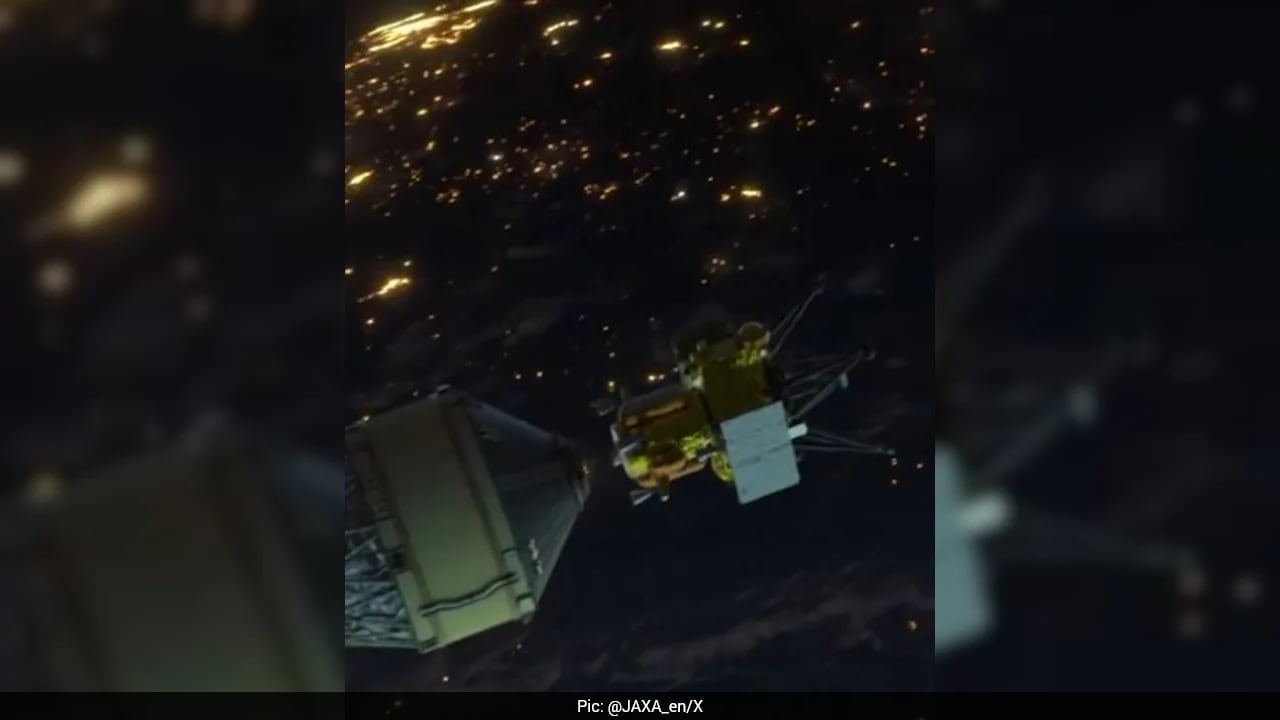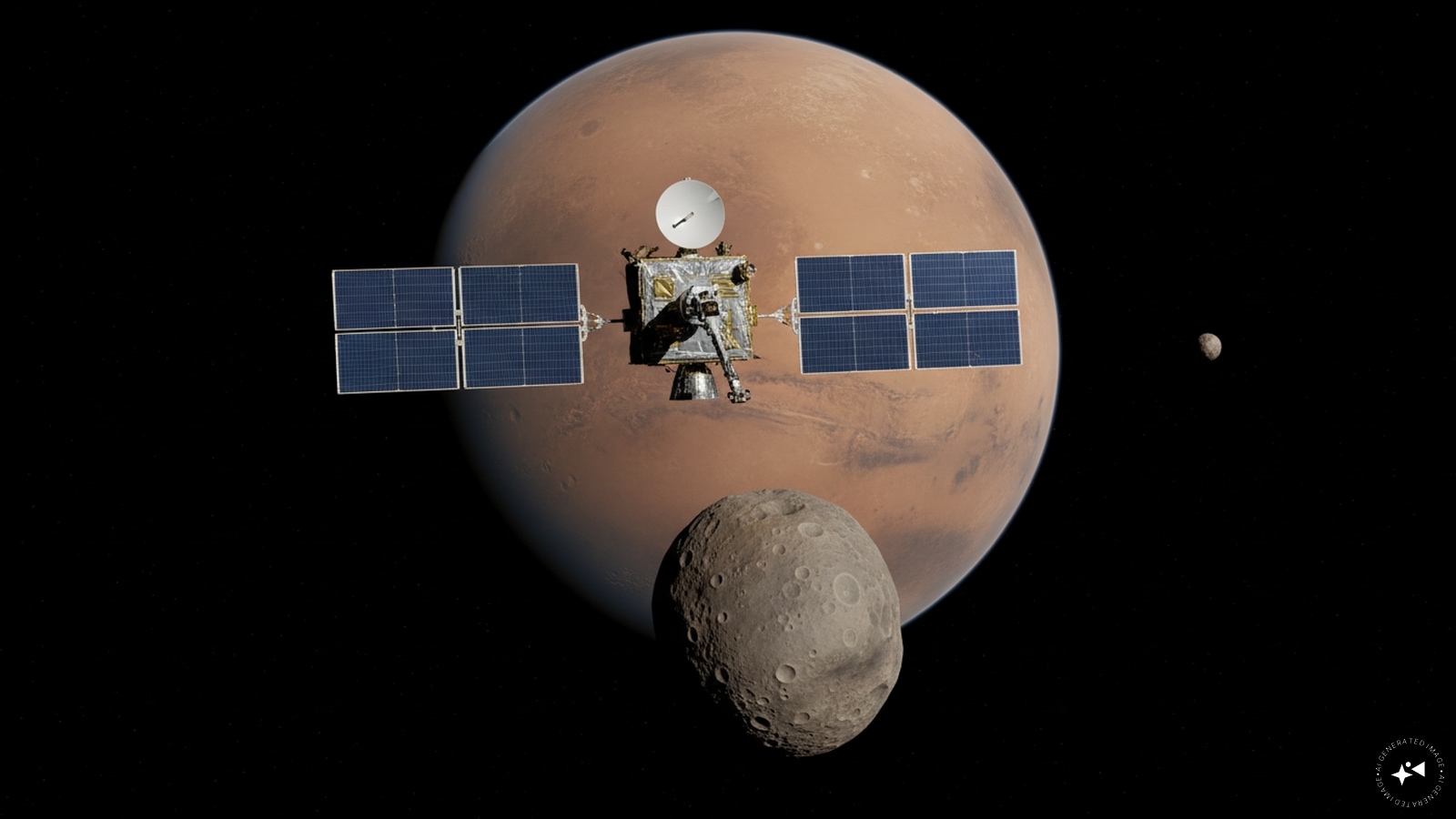
Landing a spacecraft on a potato-shaped rock orbiting Mars sounds like science fiction. Japan just made it reality.
The Japan Aerospace Exploration Agency successfully blasted off its flagship Martian Moons eXploration spacecraft on October 20, 2026. Riding atop the country's reliable H3 rocket from the Tanegashima Space Center, the probe officially set off on a grueling five-year, round-trip journey. If everything goes according to plan, humanity will hold pristine samples from a Martian moon in our hands by 2031.
Nobody has ever pulled off a sample return from the Martian sphere before. While rovers crawl across the red dirt of Mars proper, its two tiny moons—Phobos and Deimos—have sat in deep mystery for decades. This mission changes that dynamic completely, giving scientists a direct path to cracking open solar system secrets.
The Big Debate About Phobos and Deimos
Why target a barren, crater-scarred moon instead of landing directly on the main planet? Scientists are split down the middle on where Phobos and Deimos actually came from.
Theory number one claims they are wandering asteroids snagged by Martian gravity long ago. Theory number two argues they are massive chunks of debris blasted into orbit after a giant impact rocked young Mars.
If they are captured asteroids, their chemical makeup won't match Mars at all. If they are impact debris, they hold pristine records of ancient Martian conditions buried right in their regolith.
JAXA expects to settle this debate once and for all. By analyzing the returned soil, researchers can look for microscopic traces of impact ejecta from Mars mixed into the moon's surface layers. It is basically a cosmic filing cabinet waiting to be opened.
How the MMX Mission Actually Works
Getting to Mars isn't a straight line. The spacecraft will spend roughly ten months cruising through interplanetary space, reaching the Martian system around August 2027.
Once it arrives, it won't just zip past. The probe will settle into a stable quasi-satellite orbit to spend years studying both Phobos and Deimos up close.
The hardware involved is heavily collaborative. Before the main craft attempts any touchdowns, it will deploy a tiny French-German rover named Idefix. This little robot will roll across the rough terrain for about 100 days to map out safe landing zones.
When the main spacecraft moves in for the collection phase, it will execute two separate soft-landing operations. Using a mix of Japanese coring drills and NASA-built pneumatic sampling tools that blow pressurized gas to kick up surface dust, the mission aims to harvest at least 10 grams of material.
Ten grams might sound small, but modern analytical labs can extract a mountain of data from tiny amounts of extraterrestrial dust.
The Journey Back Home
After filling its heat-resistant return capsule with precious regolith, the spacecraft will fire its engines to break free from Martian orbit around late 2030.
The final leg involves a high-speed plunge back through Earth's atmosphere. The capsule is scheduled to deploy parachutes and touch down softly in the Australian desert in 2031.
Japan already proved it can pull off complex sample returns with its Hayabusa missions to asteroids, but scaling up to the Martian system is an entirely different beast. Succeeding here lays the groundwork for future crewed trips to Mars, proving we can navigate, land, and launch from deep-space gravity wells safely.