We've spent decades staring at the red planet while completely ignoring its tiny companions. That changes right now.
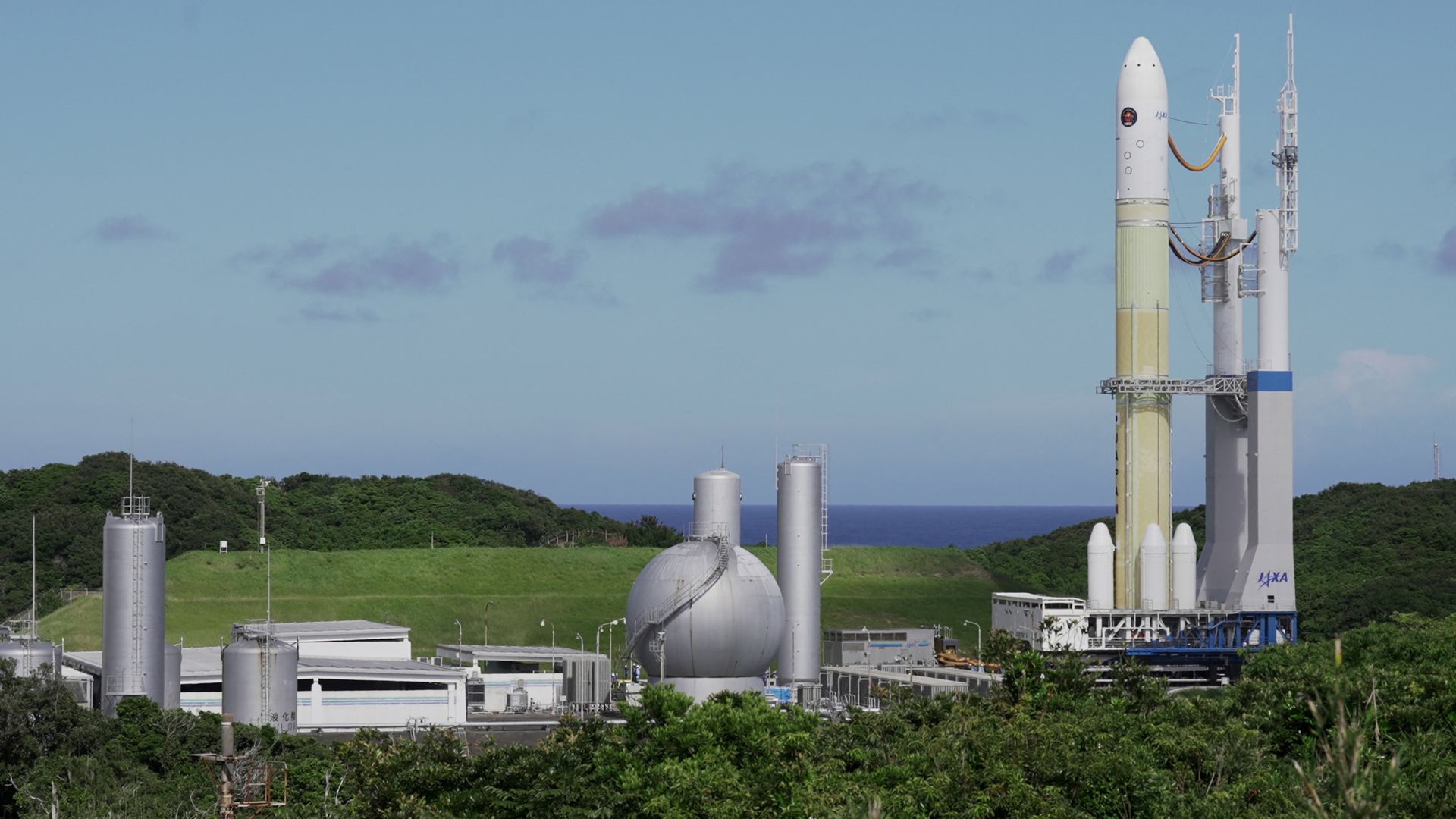
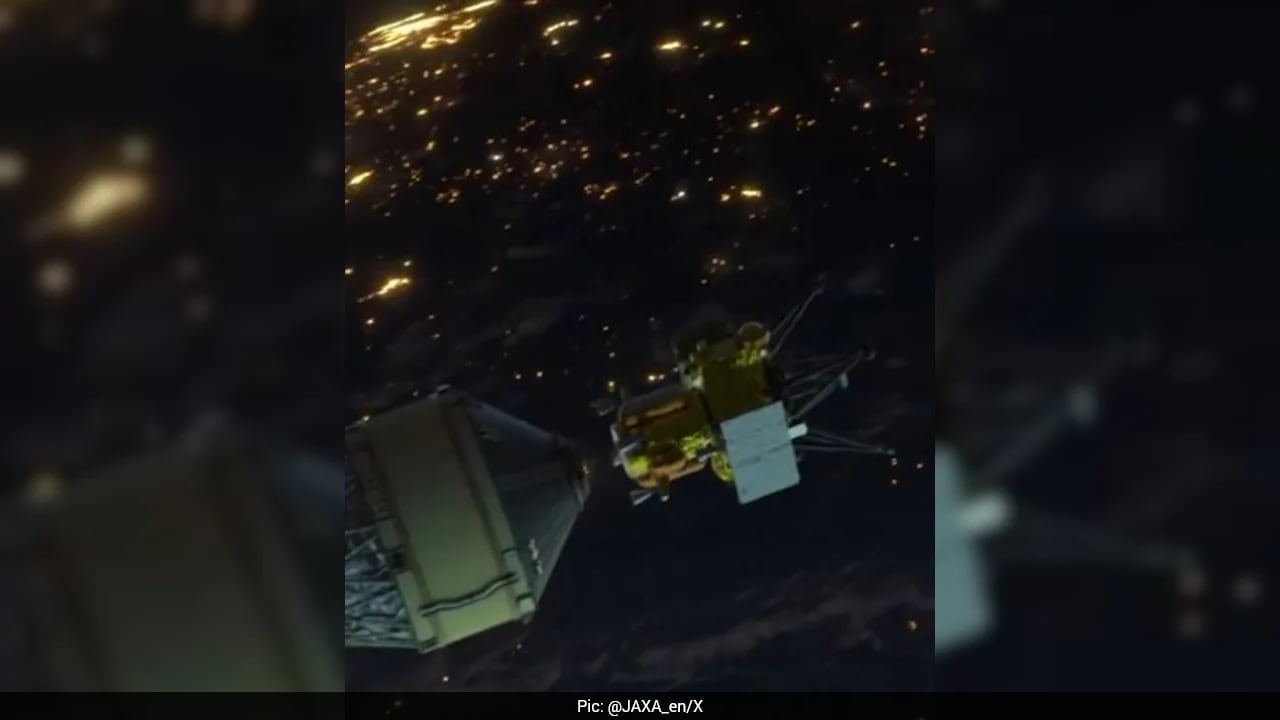
Before dawn on a Tuesday morning, the Japan Aerospace Exploration Agency (JAXA) fired a massive 5-ton spacecraft away from Earth and toward the Martian system. This isn't just another orbit-and-observe routine. It's an unprecedented, high-stakes gamble to land a probe on Phobos, scoop up its dirt, and race back to Earth by 2031. For another look, consider: this related article.
If it works, we'll finally solve a planetary mystery that has baffled astronomers for generations. If it fails, it joins a long graveyard of failed Martian moon endeavors.
The Brutal Reality of Targeting Potato-Shaped Moons
Phobos and Deimos sound terrifying because they're named after the twin sons of Ares, the Greek god of war: Fear and Dread. But physically, they're nothing like menacing planetary bodies. Phobos is a lumpy, potato-shaped rock measuring barely 14 miles across. Its gravity is practically nonexistent. Related coverage regarding this has been shared by The Verge.
Landing on something with that little mass is an engineering nightmare. You can't just parachute down or fire retrorockets the way you would on Mars. You essentially have to drop a probe onto a cosmic boulder and hope it doesn't bounce off into the void.
That's why JAXA packed a tiny, microwave-sized secret weapon inside the Martian Moons Exploration (MMX) spacecraft: a French-German rover named Idefix, styled after the loyal white terrier in the Asterix comics.
Idefix has four wheels and a single job. It will drop onto Phobos, bounce around for a few minutes in the microgravity, and settle onto the surface. If it flips upside down, it's designed to right itself—once. But if it plunges into loose, powdery soil or wedges tightly between sharp rocks, mission controllers lose control immediately. Once its solar panels deploy, it can't flip itself back over anymore.
That's why this little rover will crawl across the moon at a painfully slow speed of one millimeter per second. It isn't just gathering science data. It's acting as a safety scout so the main mothership doesn't smash into a hidden hazard when it lands later.
Why Everyone Is Betting Millions on Phobos
You might wonder why space agencies are dropping $578 million on a lumpy rock instead of landing humans directly on Mars. The answer comes down to planetary real estate and cosmic history.
For decades, scientists have argued over where Mars' moons actually came from. There are two leading theories.
- They're captured asteroids that drifted too close and got snagged by Martian gravity.
- They're chunks of debris blasted into orbit after a colossal space rock smashed into Mars billions of years ago.
If the debris theory holds true, the dust on Phobos contains pristine fragments of ancient Mars. You get a two-for-one sample return without ever having to launch a heavy rocket off the surface of the red planet itself. That makes the MMX mission a massive shortcut to understanding planetary formation.
JAXA isn't doing this alone. Five global space agencies pooled their resources and expertise into the $578 million budget. NASA chipped in $87 million, the French Space Agency contributed around $68 million, Germany added $56 million, and the European Space Agency kicked in $17 million.
Japan holds a unique advantage here. They aren't going into this blind. JAXA has already pulled off two successful asteroid sample-return missions, bringing cosmic dust back to Earth from Hayabusa and Hayabusa2. They know how to catch a moving rock in deep space. Russia hasn't been so lucky, suffering multiple devastating failures with its past Phobos attempts.
The Tight Timeline to 2031
Getting there is a marathon. The MMX mothership will reach Mars by late next summer, slipping smoothly into a tight orbit around Phobos.
After Idefix completes its 100-day scouting mission, the main spacecraft will execute the terrifying touchdown maneuver. It will extend its four legs, press against the moon's surface for a mere two hours, and use a specialized drill and vacuum system to suck up at least 10 grams of dust and rocks.
Then it blasts off.
The craft will fly past Deimos for a quick series of reconnaissance flybys before leaving the Martian neighborhood in 2030. The final destination is the Australian desert, where a capsule containing the precious Phobos samples will parachute down in 2031.
That timeline puts Japan in a dead heat with other cosmic competitors. China is planning its own ambitious Martian sample-return mission for 2028, aiming for a similar 2031 return window. Meanwhile, NASA is still arguing internally over how to retrieve the sample tubes currently sitting in the dirt courtesy of the Perseverance rover.
We are standing on the precipice of a brand-new era in planetary exploration. If Japan pulls this off, the tiny moons of Mars won't be footnotes in astronomy textbooks anymore. They'll be the keys to unlocking our solar system's violent past.