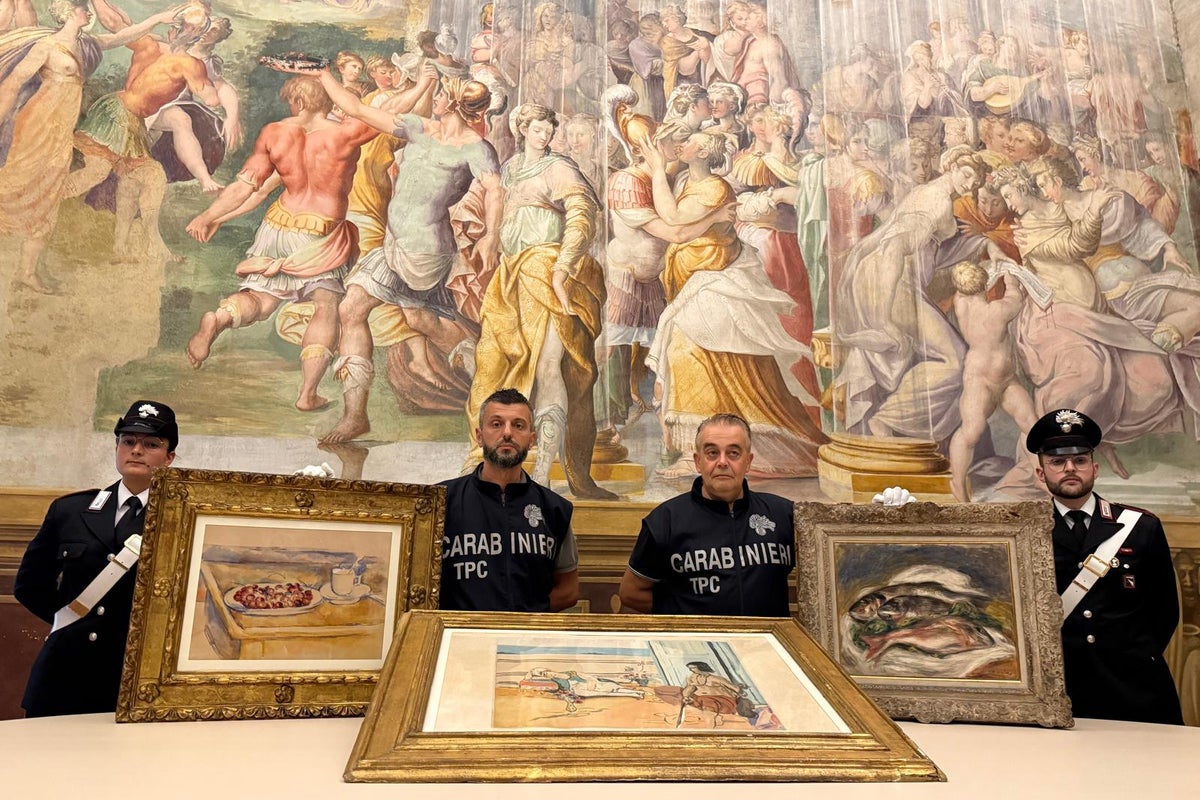
The art world is breathing a massive sigh of relief this week. Those three stolen masterpieces, swiped from the Magnani Rocca Foundation near Parma earlier this year, are back where they belong. The Italian Carabinieri—specifically their specialized art squad—managed to track down the works by Renoir, Cézanne, and Matisse. It’s a win for cultural heritage, but the way this went down reveals some uncomfortable truths about how easily these high-value targets can be hit.
When you look at the details of the heist, you realize how quickly a "daring" robbery can happen. We are talking about professional thieves who treated a guarded museum like a smash-and-grab retail store. They spent less than three minutes inside. Most of us take longer to decide what we want for lunch.
The Reality of Museum Security
People often assume that top-tier collections are locked down with impenetrable lasers and vaults. The truth is much messier. The Magnani Rocca Foundation is a private museum, a villa housing treasures by legends like Rubens, Goya, and Monet. It holds some of the world’s most significant art history. Yet, on that night in March, four masked individuals simply forced an entrance door open.
The alarm went off. It actually worked, which is more than you can say for a lot of security setups. Police and security forces were alerted almost immediately. Despite that, the thieves didn't panic. They didn't dump the paintings. They made a clean break across the museum gardens and scaled a fence, disappearing into the night before anyone could lay hands on them.
This wasn't some clumsy amateur job. This was targeted, fast, and remarkably calculated. It points to a growing problem with how we secure, transport, and monitor art that is theoretically worth millions but practically impossible to fence on the open market.
The Stolen Goods
What were they after? The haul included three very specific pieces:
- Paul Cézanne’s "Still Life with Cherries": Valued at roughly 6 million euros. This isn't just paint on canvas. Cézanne’s watercolor work from his final years is notoriously rare.
- Auguste Renoir’s "Fish" (Les Poissons): Valued at 3 million euros.
- Henri Matisse’s "Odalisque on the Terrace": Valued at 20,000 euros.
It’s an odd mix of valuations. The Matisse, while significant, carries a much lower price tag compared to the Cézanne. When you see such a spread, you have to wonder if the thieves were picking based on prestige, ease of transport, or specific "orders" from underground collectors.
Why The Recovery Matters
The Carabinieri recovered these paintings following a series of searches ordered by prosecutors. They haven't released every detail yet, and honestly, that makes sense. The investigation into the gang behind this is still active. If you’ve ever followed art crime, you know the recovery is usually harder than the theft. Once a piece hits the black market, it often enters a "cool down" phase where it sits in a crate in a damp basement for years.
The fact that these were returned so relatively quickly is a testament to the effectiveness of Italy’s specialized art recovery units. These officers aren't your typical beat cops. They have databases and networks that span the entire continent. They understand the art market’s unique ecosystem better than almost anyone.
Lessons for the Future
If you own or manage high-value assets, there is a hard lesson here. Relying on perimeter alarms is not enough. The heist at the Magnani Rocca Foundation happened despite those alarms. If the thieves can clear the building in three minutes, they are moving faster than the fastest police response time.
Effective security in 2026 isn't about thicker locks. It’s about:
- Internal compartmentalization: Keeping items in vaults that take more than three minutes to breach.
- Predictive surveillance: Identifying patterns of reconnaissance before the actual break-in occurs.
- Digital provenance tracking: Making it impossible to move stolen goods through the legitimate art market without triggering an immediate alert.
We have to stop treating museums like static showcases. They are active, high-risk environments. This recovery feels like a victory, but the next heist might not end with the police finding the goods in a quiet search. Art crime is evolving. The response needs to get faster, smarter, and much more aggressive.
The art is safe. The investigation continues. Keep an eye on how these security standards shift in the coming months. If you’re involved in the industry, don’t wait for an incident to audit your protocols. Proactive defense is the only way to keep these pieces off the black market and on the walls where they belong.