Baghdad is panicking. When local Iran-backed militias used Iraqi territory to launch a drone strike against a crucial Saudi oil pipeline, they didn't just rattle Riyadh—they backed the Iraqi government into a corner. Prime Minister Ali al-Zaidi is now scrambling to contain a massive geopolitical disaster, but firing a local commander in Maysan province won't fix the underlying rot.
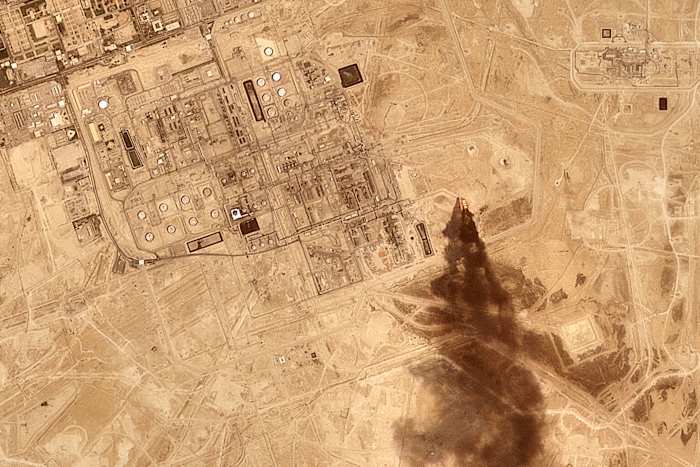
If you want to understand why this specific attack matters right now, look at a map. The East-West pipeline isn't just some random piece of infrastructure. It's Saudi Arabia's insurance policy. When shipping through the Strait of Hormuz gets too risky, this 1,200-kilometer cross-country artery allows the world's largest crude exporter to pump oil directly to Red Sea ports. Taking a swing at this pipeline means taking a direct swing at global energy stability.
The Baghdad Balancing Act
The Iraqi government admitted the obvious: the drones came from inside Iraq. Specifically, authorities tracked the launch site to Maysan province, right on the border with Iran. Prime Minister al-Zaidi moved fast to dismiss the local operations commander and launch an investigation, hoping to appease a furious Saudi leadership.
Saudi Arabia's reaction has been surprisingly measured, opting to shut down the pipeline as a precaution rather than immediately launching retaliatory airstrikes. Riyadh stated it wants to give Baghdad a chance to handle its rogue elements. That restraint won't last forever.
Tehran-backed factions inside Iraq, such as Kataib Hezbollah and allied groups, operate with a level of impunity that makes a mockery of state sovereignty. These militias coordinate fluidly with Yemen's Houthi rebels, sharing tactics, drones, and targets. When the Houthis need to squeeze regional energy corridors, Iraqi soil provides a convenient launchpad. Baghdad is left holding the bag.
The September 30 Deadline Facing Iraqi Militias
Time is running out for the Iraqi state. Prime Minister al-Zaidi's administration has drawn a hard line in the sand, setting a September 30 deadline for all non-state armed groups to disarm and surrender their heavy weaponry to the government.
The powerful militias have already laughed off the threat. They flat-out refuse to comply.
This creates an impossible dilemma. If Baghdad backs down, it proves the state is completely subservient to armed proxies, inviting more foreign airstrikes from irritated neighbors or the United States. If Baghdad actually tries to enforce the disarmament deadline by force, it risks plunging the capital into open urban warfare.
To signal seriousness, Iraqi authorities took the unusual step of closing two major border crossings with Iran—Shalamcheh and Chazabeh—halting all commercial and passenger traffic. Whether this border shutdown is a genuine security crackdown or just smoke and mirrors for international consumption remains to be seen. Ministry of the Interior forces have a history of infiltration by elements sympathetic to these exact same militia networks.
Regional Spillover and the Energy Market Threat
The timing of this escalation couldn't be worse for global markets. Energy prices are already hyper-inflated from the prolonged conflict involving Iran, the U.S., and Israel. Any sustained threat to Saudi export routes pushes the global economy closer to the edge.
Meanwhile, down in Yemen, the Houthi advance along the west coast and their maneuvers near the Bab el-Mandeb Strait—a bottleneck handling roughly 12% of global trade—compound the crisis. Regional officials note that the convergence of Iraqi militia drones and Houthi maritime operations points to a unified, multi-front strategy designed to maximize economic disruption.
Saudi Arabia and the U.S. previously carried out retaliatory strikes against militia infrastructure in Iraq back in July. Riyadh's current patience is a calculated pause, not a pardon. If Baghdad fails to rein in the groups operating within its borders, the next wave of hits won't target empty desert pipelines—they'll land directly inside Iraqi territory.
The fiction of state control is wearing thin. The upcoming deadline at the end of the month will show whether Iraq's government still governs the country, or if the militias write the rules.