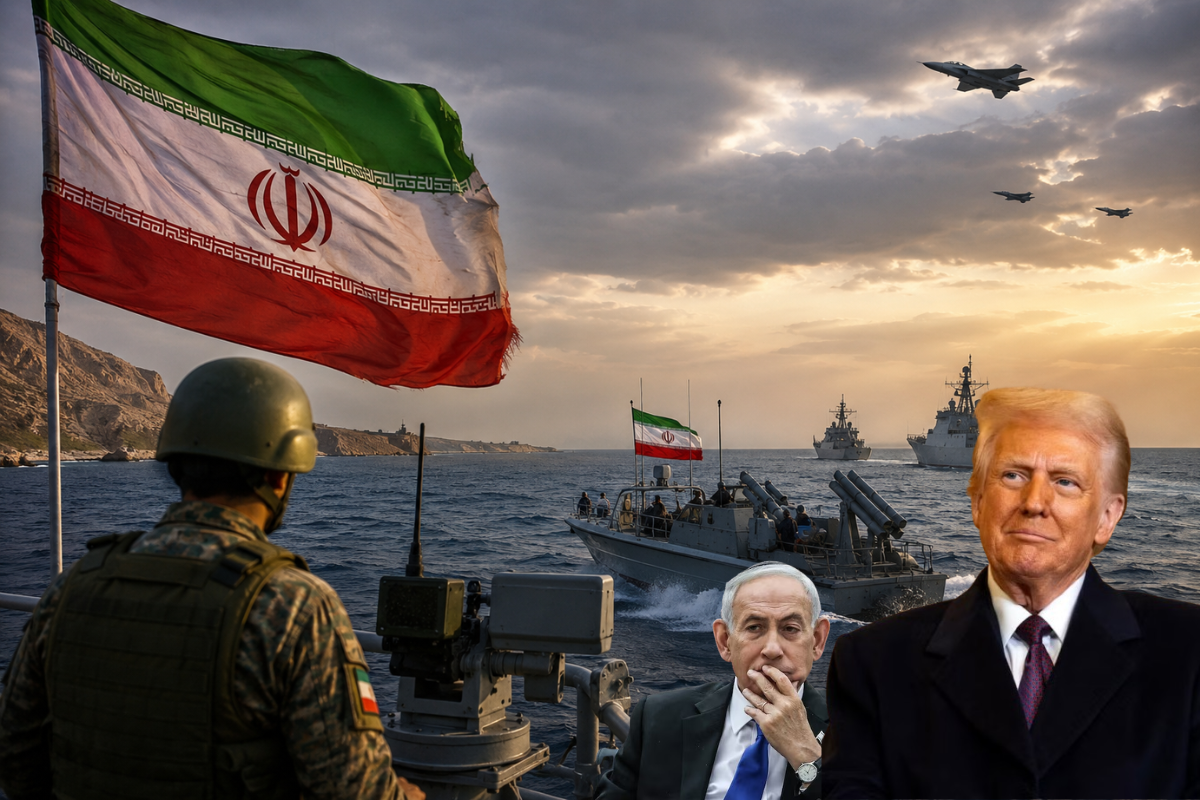
The media keeps acting surprised every time Tehran flexes its muscles in the Persian Gulf. They shouldn't be. When Iran issues aggressive warnings stating it won't tolerate foreign intervention in the Strait of Hormuz, it's not empty posturing. It's the execution of a multi-decade military blueprint.
Mainstream coverage focuses heavily on the immediate political theater—the public warnings, the angry press conferences, and the threat of "seeing to anyone who steps forward." But that misses the real story. The real issue isn't just that Iran is angry. It's that Tehran is actively attempting to reshape the legal and economic rules of global shipping, using its geographic vantage point as a permanent lever.
The Illusion of Free Passage in the Choke Point
Don't buy into the narrative that the Strait of Hormuz is a wide-open international highway where sudden tensions randomly flare up. It's an incredibly tight squeeze. The entire waterway is roughly 21 to 60 miles wide, but the actual commercial shipping lanes—divided into inbound and outbound channels—are only two miles wide each.
These lanes sit entirely within the territorial waters of Oman and Iran.
[ Iran Territorial Waters (12 Nautical Miles) ]
-----------------------------------------------
   <== Outbound Shipping Lane (2 Miles Wide) ==
================ Separator Zone ==============
   ==> Inbound Shipping Lane (2 Miles Wide) ==>
-----------------------------------------------
[ Oman Territorial Waters (12 Nautical Miles) ]
While international law via the United Nations Convention on the Law of the Sea (UNCLOS) establishes the right of transit passage for global vessels, there's a major catch. Iran signed the convention but never ratified it. Tehran views the strait through its own legal lens, recognizing only "innocent passage." That distinction sounds like dry legal jargon, but it gives the Islamic Revolutionary Guard Corps (IRGC) the exact pretext it needs to intercept, board, or strike ships whenever they claim a vessel violates its security.
Beyond the Rhetoric: What Iran is Really After
When Iranian officials assert they are solely responsible for managing the strait, they aren't just talking about security. They are aiming for the wallet of global trade.
Recent developments show Iran trying to institutionalize its control by setting up bodies like the Persian Gulf Seaways Management Organization. They want to mandate transit requests and, ultimately, levy sovereign transit fees or tolls on commercial ships.
Think about the leverage that provides. About 25% of the world's seaborne oil trade and 20% of liquefied natural gas (LNG) moves through this bottleneck. If Iran successfully normalizes a system where every commercial tanker must ask permission and pay a fee to pass its coast, it completely bypasses the impact of western economic sanctions. It turns a geographic bottleneck into a permanent revenue stream and a geopolitical veto over global energy markets.
The Failed Western Tactics
For years, the international response has relied on a predictable playbook: deploying naval carrier strike groups, offering state-backed insurance subsidies, and threatening massive retaliation. But these conventional military threats don't deter Iran's asymmetric strategy.
Iran doesn't need a massive blueprint of conventional warships to lock down the strait. They rely on thousands of fast-attack speedboats, low-cost loitering munitions, sea mines, and electronic GPS spoofing. A million-dollar Western air defense missile used to shoot down a twenty-thousand-dollar drone is a losing mathematical equation for the West.
When Western forces try to bypass Iranian waters by hugging the southern Omani coast, Tehran simply uses drone strikes or targeted maritime interventions to reassert its dominance, proving that alternative routes within the narrow corridor aren't safe without their blessing.
What Happens Next for Global Shipping
If you think this is just a regional dispute that won't affect your daily life, you're mistaken. The friction in the strait impacts everything from the price of a gallon of gas to global inflation metrics for commodities like aluminum and fertilizer.
Shipowners and operators aren't looking for political promises or temporary 60-day ceasefires. They look at maritime insurance premiums. When those rates skyrocket by four to six times over baseline levels, shipping companies don't care who claims they "control" the water—they simply refuse to risk their hulls.
Expect supply chain managers to continue routing critical payloads away from the Middle East entirely where possible, accelerating the reliance on pipelines that bypass the gulf or forcing ships to take the long, expensive journey around the Cape of Good Hope. The era of assuming the Strait of Hormuz is a friction-free global commons is officially over.