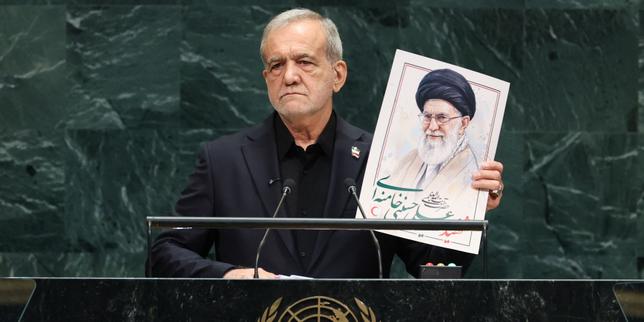
Iranian President Masoud Pezeshkian didn't come to New York to whisper. Standing at the podium during the 81st United Nations General Assembly, he held up photographs of schoolchildren killed in recent airstrikes and pushed back hard against Washington's narrative. Yet, right after calling out Donald Trump by name and rejecting the label of state-sponsored terror, Pezeshkian left the door wide open for negotiations. It's a classic diplomatic tightrope walk, but one driven by severe economic and political survival.
If you look past the fiery rhetoric coming out of New York, a clear pattern emerges. Tehran is caught between a military stalemate it cannot afford to lose and an economic collapse it cannot survive. Let's break down what's actually happening behind the scenes of Pezeshkian's UN appearance.
The Rhetoric of Defiance Versus Reality
Pezeshkian's speech was designed for two distinct audiences. Domestically, he needed to project ironclad strength to hardliners back home. When a country's supreme leadership and infrastructure have faced direct kinetic strikes, any sign of weakness from a president is political suicide. By displaying images of civilian casualties from Minab and Lamerd, Pezeshkian rallied his base, claiming that Iran was the true victim of western aggression rather than the aggressor.
The U.S. delegate walked out of the General Assembly chamber while Pezeshkian spoke, signaling just how low diplomatic trust has sunk. Trump had threatened total annihilation of the Islamic Republic just a day prior, creating a volatile backdrop for any international engagement.
Yet, beneath the posturing, the Iranian delegation pursued a very different track behind closed doors. Indirect talks involving regional and international mediators continued in New York throughout the week. Why? Because the Iranian economy is gasping for air.
Why Tehran Still Craves a Deal
You can't eat anti-western slogans. Years of heavy sanctions, combined with the immense costs of regional proxy conflicts and direct military confrontations, have gutted Iran's currency and inflated basic living costs for everyday citizens. Pezeshkian ran on a platform of economic reform and easing tensions with the West. He knows that without some form of sanctions relief, his administration will fail.
This explains the paradox of his UN visit. He must sound like a wartime leader who will "never bend the knee," while simultaneously signaling to European and American interlocutors that he's ready to talk. It's an exhausting dance, but it's the only play he has left.
What Comes Next for U.S.-Iran Relations
Expect more shadowboxing rather than a grand breakthrough. While Washington and Tehran are talking through backchannels, neither side trusts the other enough to make foundational concessions. Trump wants total capitulation or a complete dismantling of regional influence, while Tehran demands respect for its sovereignty and immediate economic relief.
Watch the backchannel communications closely rather than the public speeches. That's where any real movement will happen, long before cameras are allowed in the room.