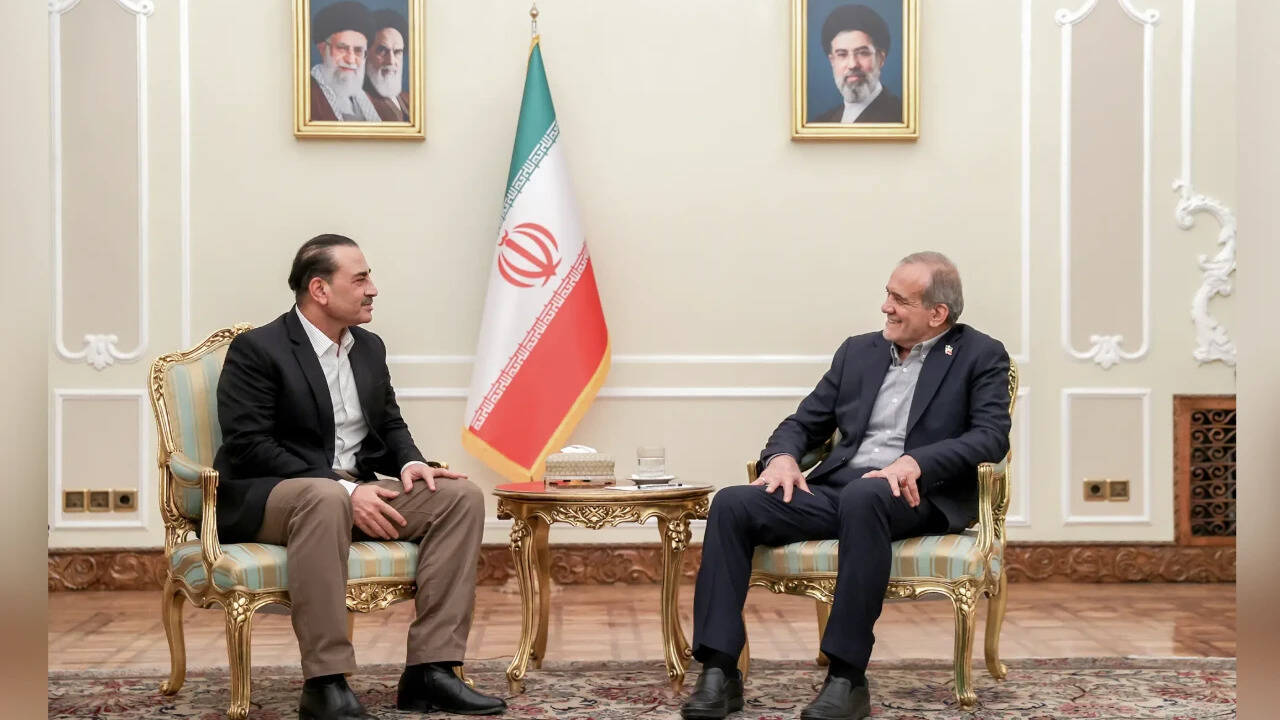
Geopolitics rarely shifts quietly. When Iranian President Masoud Pezeshkian sat down with Pakistan Army Chief General Asim Munir in Tehran, the message delivered to Washington was blunt. Washington needs to change its tone.
If you've been watching Middle Eastern diplomacy lately, you know that threats and economic pressure have been the default Western playbook for decades. Pezeshkian made it clear that this specific approach is dead on arrival.
Let's look at what actually happened behind closed doors, why this meeting matters right now, and what it signals for regional stability.
The Core Message from Tehran
Pezeshkian didn't mince words during the high-profile encounter. He pointed out that relying on coercion and bullying only complicates diplomatic processes and stalls international implementation frameworks.
"The United States must correct its tone and approach in its interactions with Iran," Pezeshkian stated, emphasizing adherence to international law and standing commitments.
This stance isn't entirely new, but the timing is everything. The meeting happened against a backdrop of mounting regional friction and fresh economic pressures. By speaking directly to a key regional military leader like General Munir, Tehran is actively seeking broader alliances and diplomatic alignments across Islamic nations to counter Western pressure.
Why Pakistan in the Middle of This Equation?
You might wonder why the Pakistani army chief is playing a prominent role in these high-stakes discussions.
Pakistan and Iran share deep historical, religious, and cultural ties. More practically, both nations are navigating complex security dynamics along their shared borders and economic corridors. During the talks, both leaders highlighted the 14-point Memorandum of Understanding (MoU) aimed at deepening bilateral cooperation.
General Munir's visit to Tehran underscores Islamabad's ongoing diplomatic balancing act. Pakistan maintains crucial strategic partnerships globally while heavily prioritizing regional stability with its immediate neighbors. Munir noted that achieving comprehensive agreements requires meticulous attention to diplomatic channels, signaling a shared desire to keep communication lines open despite external pressures.
The Domestic Resilience Factor
Western strategy often assumes that economic sanctions and political isolation will force total compliance or internal collapse. Tehran's leadership constantly pushes back against this narrative.
Pezeshkian leaned heavily on the concept of internal national solidarity. He argued that the Iranian public absorbs external pressure by leaning into domestic cohesion. Whether you view that official stance through a skeptical lens or accept it as political reality, it defines how Tehran approaches any negotiating table. They aren't walking into talks looking like a defeated party. They expect to be treated as an equal sovereign entity.
Regional Unity as a Strategic Deterrent
Beyond the bilateral exchange with Pakistan, the broader takeaway from the Tehran talks was a renewed call for Islamic solidarity.
Pezeshkian framed regional cooperation not just as a diplomatic choice, but as a primary shield against external interference and hostile plots. By strengthening economic, political, and security ties with immediate neighbors, Tehran aims to dilute the impact of unilateral Western sanctions.
When nations facing similar external pressures start building tighter economic and security loops, traditional leverage tools like secondary sanctions start losing their bite.
Watch how Washington responds to this growing pushback. If the United States refuses to alter its diplomatic tone, expect regional mediation efforts from capitals like Islamabad to become even more vital for keeping communication channels alive. Keep an eye on how these bilateral agreements translate into actual trade and security protocols over the coming months.