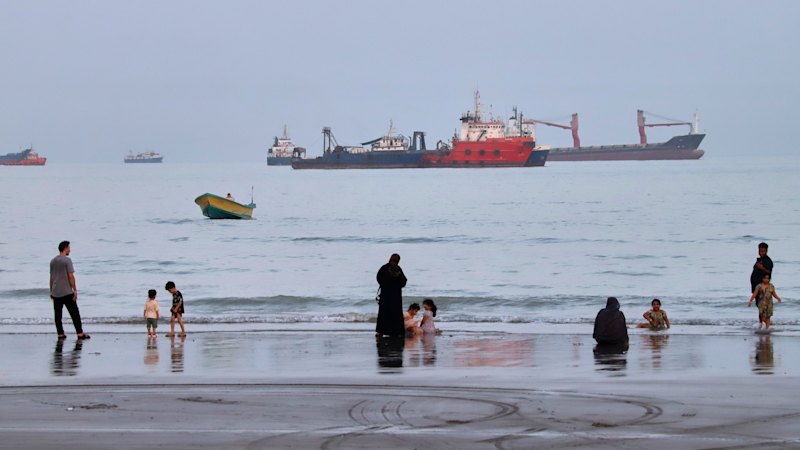
The Strait of Hormuz is the literal throat of global energy shipping. Right now, Tehran has its hands firmly locked around it.
If you are tracking global energy markets or international diplomacy, you already know the stakes. Iran's Supreme National Security Council just dropped a heavy list of sweeping preconditions that must be met before the critical waterway fully reopens to commercial traffic. While foreign ministers chat about transit logistics with Omani mediators, hardliners inside the Islamic Revolutionary Guard Corps are making sure everyone understands a basic reality: technical navigation deals mean nothing if Washington doesn't bend to broader geopolitical demands.
Let's break down what is actually happening behind the diplomatic curtain, why Tehran's maximalist demands complicate a fragile peace, and what this means for the global economy.
The Reality Behind the New Iranian Demands
Talks mediated by Oman have inched close to an interim agreement on establishing a safe transit route. Under this tentative framework, ships would transit the corridor through designated lanes near Oman and Iran without being slapped with direct tolls.
Yet, Iranian officials have separated technical navigation from ultimate geopolitical surrender. The Supreme National Security Council issued a stringent set of stipulations for Washington:
- Permanent cessation of military threats against Iran and its regional allies.
- Immediate termination of the active United States naval blockade targeting Iranian ports.
- Complete withdrawal of American military assets from the immediate coastal vicinity.
- Financial compensation for war damages.
- The lifting of sweeping economic sanctions and the unconditional release of frozen financial assets.
This isn't just routine posturing. It is a calculated push by hardline factions inside Iran to lock in maximum strategic concessions while they still hold a chokehold over a quarter of the world's seaborne oil trade.
Why Washington Faces a Brutal Choice
The White House wants a clean reopening of commercial shipping lanes before any comprehensive economic sanctions are unwound. US Vice President JD Vance recently noted that Washington received assurances from Tehran regarding plans to avoid charging arbitrary tolls on vessels passing through the narrow channel.
Even so, accepting Iran's newly minted list of demands is politically toxic in Washington. Analysts note that the administration cannot simply capitulate to a list that looks less like a local navigation fix and more like a total geopolitical reset.
The economic friction is real. The US naval blockade has severely constrained Iran's ability to export crude, leaving storage facilities strained and bleeding billions in lost petroleum revenues. Yet, economic pressure hasn't forced Tehran to back down. Instead, it has hardened their stance.
The Regional Spillover and Kinetic Risks
Diplomacy in the Persian Gulf never happens in a vacuum. Just as negotiators pointed toward progress in Muscat, the United Arab Emirates reported that an Iranian missile struck an oil tanker affiliated with Abu Dhabi's state-owned energy sector inside the strait.
This incident highlights the volatile nature of the theater. Iran continues to use a mix of localized naval coercion and kinetic force to remind regional neighbors and Western powers that it dictates the terms of engagement on its maritime doorstep.
For global shipping firms, insurance underwriters, and energy traders, this dynamic creates a permanent state of anxiety. Even if a temporary transit agreement gets signed, the threat profile remains elevated.
What Comes Next for the Global Energy Corridor
The current standoff hinges on a ticking clock. Interim understandings are fragile, and hardline political elements in Tehran show little appetite for backing down without securing financial and security guarantees.
If you are monitoring these supply chains, stop expecting a quick, clean resolution. The standoff over the Strait of Hormuz is a prolonged bargaining match where every mile of water is leveraged for political survival. Keep a close eye on the implementation of the Omani-mediated transit corridors, but prepare for continued volatility as Washington and Tehran test each other's breaking points.