When Iranian Foreign Ministry spokesperson Esmaeil Baghaei publicly declared that Tehran is "counting down the minutes to welcome" American troops, he wasn't offering a diplomatic olive branch. He was daring Washington to commit to one of the most dangerous military blunders in modern Middle Eastern history.
The rhetoric followed reports that the White House and US military planners are reviewing options to seize Kharg Island, the tiny piece of land in the Persian Gulf that handles around 90 percent of Iran's crude oil exports. With President Donald Trump publicly suggesting that US or allied forces could take control of key Iranian energy hubs, the rhetoric on both sides has hit a fever pitch.
Is Tehran actually eager for a ground fight? Or is this classic military posturing designed to scare Washington away from an amphibious invasion? Understanding what is happening on Kharg Island reveals why a ground assault could easily spiral out of control for everyone involved.
Why Kharg Island Is the Real Center of Gravity in the Conflict
If you look at a map of the Persian Gulf, Kharg Island looks almost insignificant. It sits roughly 55 kilometers off the coast of Iran's Bushehr province, spanning just a few square miles. Yet this small patch of land anchors the entire Iranian economy.
Its deep-water maritime lanes allow ultra-large crude carriers to dock and load millions of barrels of crude oil. Cut off Kharg Island, and you effectively choke off Tehran's primary revenue stream overnight.
That makes the island an irresistible target for planners looking to apply maximum pressure on Tehran. Reports indicate that Washington has reviewed operational plans ranging from heavy airstrikes to a physical amphibious invasion designed to seize control of the island's oil terminals. Military strategists have also weighed precision strikes against Pickaxe Mountain, a fortified subterranean complex linked to Iran's nuclear program.
Taking the island on paper looks like a decisive blow. In practice, putting boots on the ground on Iranian territory changes the fundamentally limited nature of the conflict.
The Reality Behind Iran Threat to US Ground Forces
Tehran knows it can't match the United States in a conventional dogfight or blue-water naval battle. What it can do is turn an amphibious landing into an absolute meat grinder.
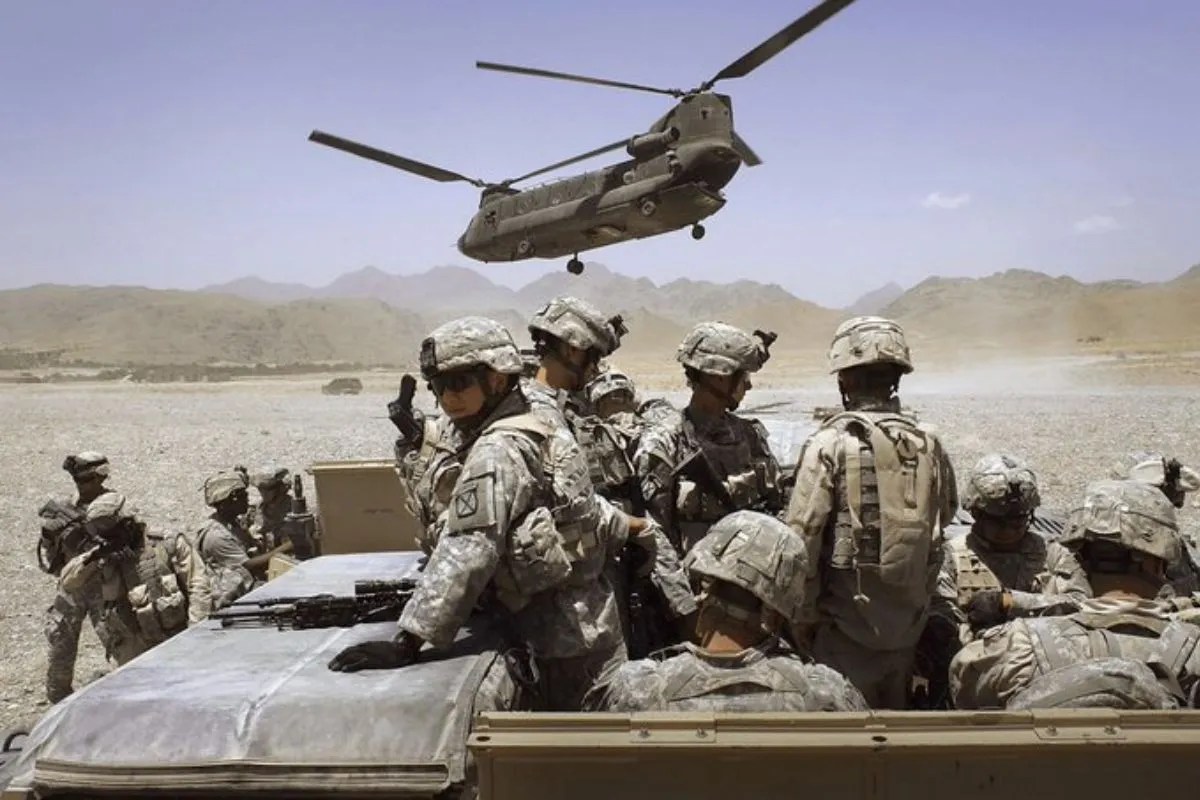
The Islamic Revolutionary Guard Corps (IRGC) has spent decades preparing for this exact scenario. Over the past few weeks, military intelligence shows that Tehran has heavily fortified Kharg Island. They've moved in additional air defense systems, shoulder-fired surface-to-air missiles, and laid extensive anti-personnel and anti-armour minefields along the shorelines.
Iranian strategy doesn't rely on holding fixed positions forever. It relies on decentralization and subterranean warfare. Academic and political advisor Seyed Mohammad Marandi noted that Iran's military arsenal has been spread out and buried deep underground to survive heavy American bombing campaigns.
Retired Admiral James Stavridis, former NATO Supreme Allied Commander, warned that Iranian forces are "clever and ruthless" and would aim to inflict maximum casualties on US personnel. Armed with fast-attack boats, kamikaze drones, and shore-to-ship ballistic missiles, Iranian forces don't need to defeat an American fleet. They just need to sink a few transport ships or amphibious assault vessels.
When Baghaei says Iranians are "counting down the minutes," he's banking on the idea that American public support for a ground war will collapse the moment casualties start mounting.
What Trump Administration Is Calculating
From Washington's perspective, air strikes alone haven't completely halted Iranian military action or regional missile launches. Centcom forces have conducted consecutive nights of strikes hitting air defense facilities, coastal radars, and drone storage facilities. Yet Iran continues to threaten shipping corridors in the Strait of Hormuz.
President Trump noted in a recent interview that he told military commanders to "attack everything except oil" in earlier operations, but left the door open to seizing Kharg Island if Iranian resistance persists. The logic is simple: taking physical possession of the island gives the US total leverage over Iran's economic survival.
However, this calculation ignores the massive geopolitical backlash. Neighboring Gulf states have privately urged the White House to pull back from any ground invasion plans. Countries in the region fear that an invasion of Kharg Island would force Iran to strike regional energy infrastructure in places like Saudi Arabia or the UAE, dragging the entire Persian Gulf into a prolonged economic freeze.
Global Energy Markets Are Standing on a Powder Keg
An escalation around Kharg Island doesn't just threaten military assets. It directly threatens global energy stability.
Roughly 20 percent of the world's petroleum supply passes through the Strait of Hormuz nearby. If fighting around Kharg Island destroys the loading jetties or sets crude storage tanks ablaze, oil prices won't just tick up—they will skyrocket.
We've already seen what happens when oil infrastructure burns in this conflict. Strikes on fuel storage units near Tehran previously sent thick plumes of smoke across the sky and caused immediate market panic. A full-blown battle on Kharg Island could shut down millions of barrels per day of global supply, creating severe energy shortages for major import markets in Asia and Europe.
Key Takeaways for Following the Escalation
If you're watching this crisis unfold, ignore the political grandstanding and focus on these critical operational indicators:
- Watch troop deployments in the region. An amphibious assault on a fortified island requires dedicated marine expeditionary units and naval support craft positioned nearby.
- Track commercial shipping in the Strait of Hormuz. Increasing insurance premiums or diverted tankers will signal that a major military action is imminent.
- Keep an eye on public statements from Gulf Cooperation Council (GCC) members. Heavy diplomatic pushing from regional allies remains the biggest barrier to a US ground landing.
- Monitor energy price fluctuations. Crude oil markets react faster to Persian Gulf military movements than official government press briefings.
The Iranian Foreign Ministry's dare isn't an invitation to peace—it's a warning that any attempt to take Kharg Island on the ground will turn into a long, bloody fight. Whether Washington takes that bait or sticks to air power will determine the trajectory of the Middle East for years to come.