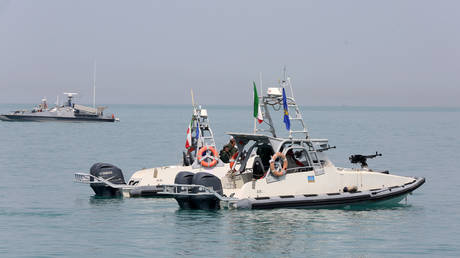
The ongoing war with Iran is no longer trapped inside the Persian Gulf. Over the weekend, the theater of combat expanded sharply toward the Red Sea and the Caspian Sea, catching military analysts off guard even as the United States suddenly halted its aerial bombardment campaign.
If you are wondering why the conflict is morphing into a multi-front regional crisis, the answer lies in shifting energy routes and proxy maneuvers. The United States military confirmed that its naval blockade against Iran remains fully active, yet Washington abruptly stopped a streak of 13 consecutive nights of escalating airstrikes.
Why did the White House hit pause? Reports indicate that top officials, including Vice President JD Vance and Joint Chiefs of Staff Chairman Gen. Dan Caine, raised urgent concerns during a White House meeting regarding depleted defense stockpiles and the mounting risk to global energy supplies. President Donald Trump opted to hold back for now, signaling a preference for diplomatic openings while maintaining the naval squeeze.
The Red Sea Becomes the New Flashpoint
While the immediate airspace over the Persian Gulf experienced a rare weekend lull, the conflict found new oxygen hundreds of miles away. Yemen's Houthi movement, closely aligned with Tehran, launched coordinated strikes targeting Saudi oil installations along the Red Sea coast.
Houthi military spokesperson Yahya Saree stated that the group targeted facilities belonging to Saudi state oil company Aramco in Jizan and Yanbu. Social media footage verified by international news agencies showed thick black smoke billowing near the Jizan refinery, a crucial site capable of processing up to 400,000 barrels of crude daily.
Further north in Yanbu, Saudi Arabia's primary Red Sea oil port, defensive systems intercepted incoming missiles. Yanbu has served as an essential lifeline, allowing Saudi oil shipments to skirt the Strait of Hormuz where Iranian blockades have choked normal tanker traffic.
These Red Sea assaults change the economic equation entirely. Tankers attempting to navigate the Bab el-Mandeb strait face doubled insurance costs and severe disruptions. When Houthi forces struck two Saudi tankers earlier in the week, benchmark oil prices spiked past $100 per barrel. By dragging the Red Sea into the crossfire, the conflict threatens a second major shipping artery, risking a resurgence of Yemen's fragile civil war.
Accusations on the Caspian Front
The geographical footprint of the war widened further north. Iran's Foreign Ministry formally accused Ukraine of executing a targeted attack against an Iranian commercial vessel operating in the Caspian Sea. Tehran claimed the blast resulted in the death of one sailor and injuries to another, prompting the foreign ministry to summon Ukraine's chargé d'affaires to register a formal protest.
This accusation follows statements from Ukrainian President Volodymyr Zelenskiy praising long-range strikes targeting military logistics in the Caspian region, alongside intelligence reports suggesting Moscow and Tehran share satellite intelligence. The inclusion of the Caspian Sea proves that the fallout from the Middle East confrontation is grazing European and Eurasian borders, pulling distant actors into the orbit of the crisis.
What Happens Next for Global Energy Markets
The current pause in direct US strikes does not mean peace is around the corner. The underlying structural blockades remain intact.
- Strait of Hormuz Restrictions: Commercial vessel crossings have fallen to historic lows as shipping lines weigh the steep risks of detention or missile fire.
- Infrastructure Vulnerability: Refineries and pipelines outside the immediate Gulf zone, such as those in Yanbu and Jizan, are now frontline targets.
- Munitions Inventory Constraints: Washington's internal debate over defense reserves highlights the hidden cost of prolonged high-intensity missile campaigns.
The conflict has evolved from a localized standoff into a sprawling logistical nightmare. Watch the insurance rates in maritime choke points and monitor whether diplomatic backchannels can survive the widening circle of proxy skirmishes.