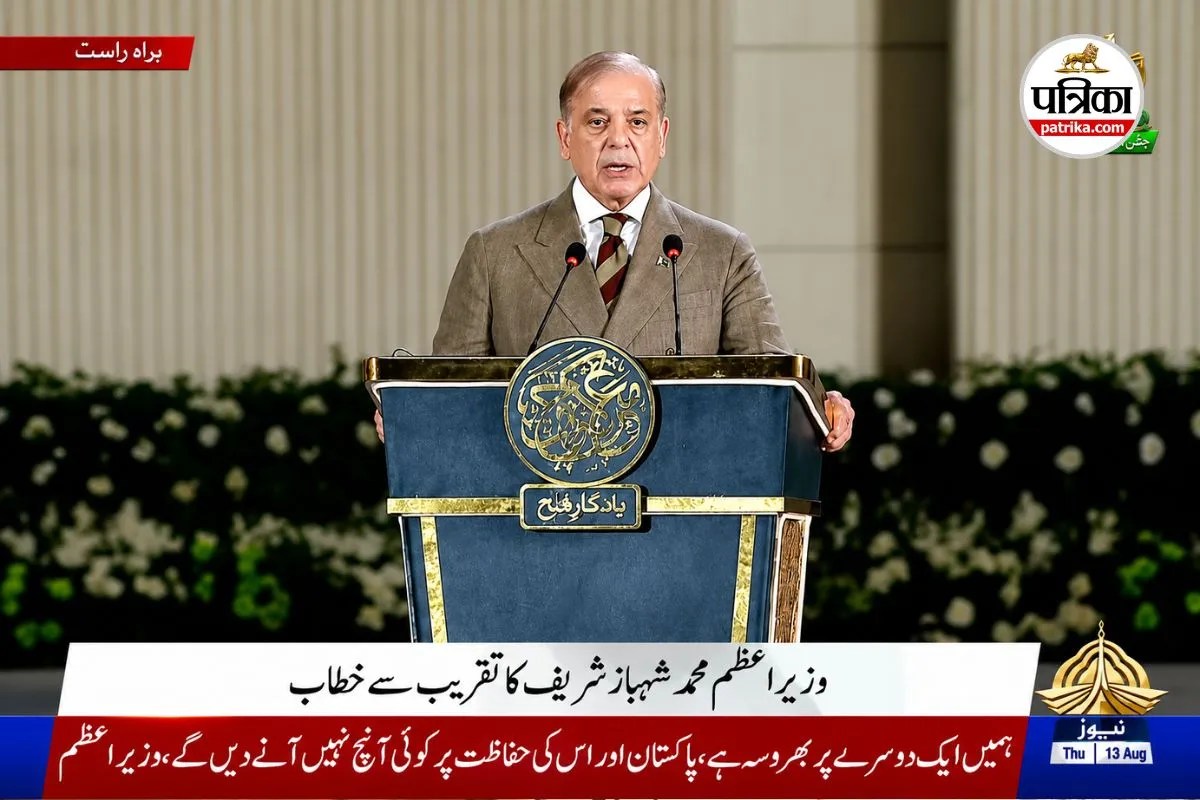
The 1960 Indus Waters Treaty was once the gold standard of diplomacy. It survived three major wars and countless diplomatic freezes. But in 2026, it’s basically on life support. If you've been watching the headlines, you’ve seen Pakistan’s Prime Minister Shehbaz Sharif recently warning that "every drop of water" is a red line. He’s promising a "direct response" if India continues to hold the treaty in abeyance.
It’s easy to dismiss this as just more cross-border rhetoric. Don't. We are witnessing the most significant breakdown in India-Pakistan water relations since the pact was signed. Recently making news recently: Why The Energy Crisis In Bangladesh Is Breaking The New Government.
The Trigger Behind The Rhetoric
Why is this happening now? It started with a nightmare in April 2025. After a terror attack in Pahalgam took 26 civilian lives, New Delhi snapped. The government put the treaty in abeyance, effectively stating that blood and water cannot flow together.
This wasn’t just a political jab. It was a formal policy shift. India decided that if Pakistan couldn't stop the flow of militants, India wouldn't guarantee the flow of water under the old terms. This led to a short, intense four-day conflict in May 2025. While a ceasefire eventually held, the legal and diplomatic fallout is still exploding. Additional insights on this are explored by Reuters.
The Legal Chaos You Aren't Hearing About
You might be wondering: can a country just "suspend" an international treaty? India says yes, arguing the circumstances have changed. Pakistan disagrees, and they’ve taken the fight to the Permanent Court of Arbitration in The Hague.
Here is what most news reports miss: the Court of Arbitration keeps issuing rulings that India simply ignores. In May 2026, for instance, they issued an award on "maximum pondage"—basically how much water India can store for its own hydropower projects. India called it null and void.
This puts us in a dangerous spot. When two nuclear-armed neighbors stop playing by the rules of their only shared framework, the room for error shrinks to almost zero.
What Shehbaz Sharif Is Actually Signaling
When Sharif warns that "every drop is a red line," he’s playing to two audiences. Domestically, he’s under immense pressure to show he isn't buckling under Indian pressure. Internationally, he’s trying to paint India as the "enemy of peace" that is weaponizing a basic human necessity.
But look at the subtext. He’s referencing the May 2025 conflict as a baseline for his threats. By saying future responses will be "stronger than in 2025," he’s effectively admitting that the previous military standoff was just a preview. It’s a direct warning that the next time this boils over, it won't just be about diplomatic protests at the UN.
Why This Matters To You
You might think, "I don't live in the Indus basin, so why should I care?"
The reality is that regional stability in South Asia is the bedrock of global supply chains and economic security. When the world's two largest nuclear powers in the region start targeting each other's dams and infrastructure, the risk of miscalculation is massive.
India’s strategy, led by the push to fully utilize its share of the western rivers (Indus, Jhelum, and Chenab), is a hard pivot toward self-interest. They are no longer waiting for bilateral consensus. They are building, they are diverting, and they are ignoring the old status quo.
What Comes Next
Don't expect a sudden thaw. The institutional trust is gone.
- Expect more "gray zone" conflicts. We’ll likely see more legal battles that lead nowhere, combined with localized skirmishes along the border.
- Infrastructure becomes a target. Both sides are now hyper-aware of the vulnerability of their dams. If you hear reports of increased security around hydroelectric sites in Jammu and Kashmir, that’s why.
- The diplomatic stalemate will persist. India has signaled it won't return to the table until Pakistan "credibly and irrevocably" ends cross-border support for militants. Pakistan has signaled it won't negotiate while the treaty is in abeyance. It's a classic deadlock.
This isn't a story that ends with a neat signature on a new agreement. It’s a slow-moving crisis that is redefining how the two nations coexist. Watch the Chenab river projects closely. That is where the next flashpoint is being built, literally.
The era of the "durable treaty" is over. We’re in the era of unilateral moves and calculated risks. Pay attention to the ground reality rather than the official press releases, because in 2026, the water is becoming just as volatile as the politics.