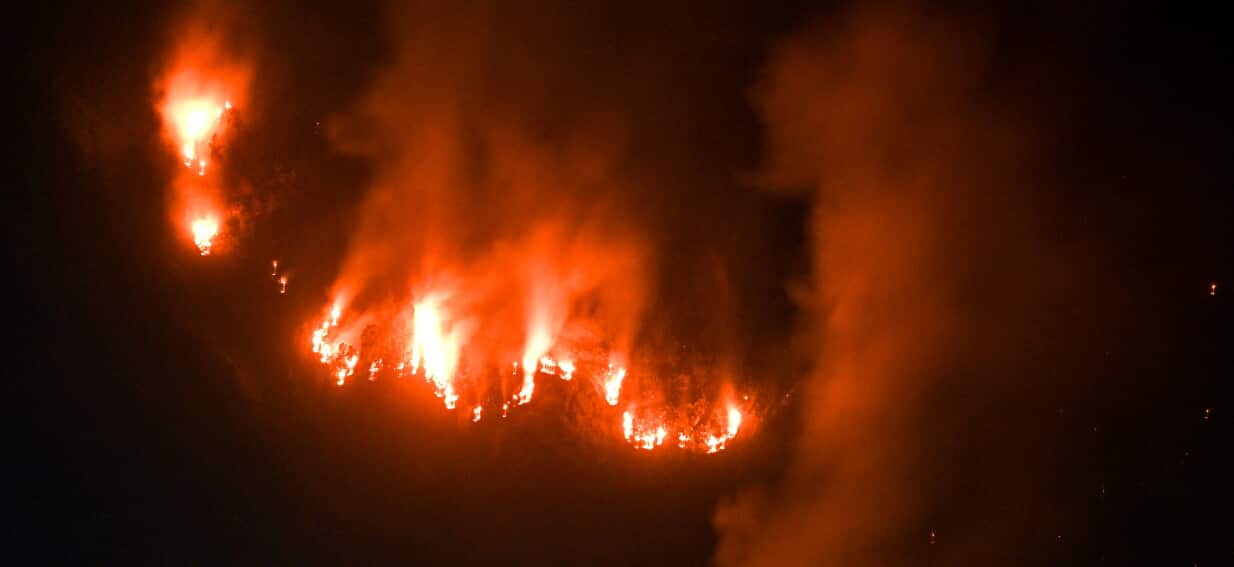
Thousands of hectares of land are currently burning across Indonesia, and most people don't realize how quickly this crisis is spiraling out of control. If you look at the raw data provided by Indonesia's forestry ministry, the numbers are staggering. Over 107,000 hectares have already turned to ash this year. That is double the destruction seen during the same period in 2023, a year already notorious for extreme global heat.
The El Niño Engine Driving the Flames
Why is this happening on such a massive scale? You can point directly to the strengthening El Niño weather pattern. The BMKG, Indonesia's official meteorology agency, recorded an average air temperature of 27 degrees Celsius in July, comfortably beating the historical average of 26.2 degrees Celsius.
This extra heat bakes the vegetation, dries out peatlands, and strips moisture from the soil. When an intense dry season collides with El Niño, the landscape becomes a tinderbox.
- The Mount Bromo Crisis: On the island of Java, flames have ripped through the Bromo Tengger Semeru National Park for over a week. Nearly 900 hectares of protected grasslands and unique edelweiss flowers have vanished.
- School Closures and Haze: Thick, yellow-gray haze has already blanketed cities like Pontianak on Borneo. Local authorities shut down dozens of schools, forcing tens of thousands of children to learn from home because the air quality is toxic to breathe.
The Logistical Nightmare of Fighting Fires on This Scale
You can't just throw a bucket of water on an Indonesian peat fire and expect it to go out. Peatlands store massive amounts of carbon underground, meaning fires can smolder beneath the surface for weeks, invisible to overhead spotters.
The government has mobilized nearly 50,000 personnel, including firefighters, soldiers, and police officers, across six high-risk provinces. Coordinating Minister for Political and Security Affairs Djamari Chaniago confirmed that 43 helicopters and up to 15 fixed-wing planes have been assigned to the region.
Yet, firefighters face severe bottlenecks. Deep peat soil, limited ground water supplies, and strong winds make direct suppression nearly impossible in remote areas.
Why Cloud Seeding Isn't Always the Silver Bullet
When ground teams struggle, authorities often turn to weather modification. Planes spray salt particles and silver iodide into clouds to trigger artificial rainfall.
It sounds like a neat technological fix. Honestly, it rarely works out neatly in practice. During intense El Niño cycles, the skies stay frustratingly clear. If there are no suitable rain clouds overhead, cloud seeding is useless. Forestry Minister Raja Juli Antoni noted that unfavorable weather forced officials to rely entirely on water-bombing helicopters and grueling ground lines.
What Comes Next for the Region
August and September mark the absolute peak of the dry season in Indonesia. The fires burning right now are merely an ominous preview.
If you live in Southeast Asia or track regional climate trends, pay close attention to air quality indices and emergency declarations in provinces like Riau, Jambi, and South Sumatra. Governments are scrambling to enforce bans on open burning and land clearing, but enforcement is tough when local agriculture relies on traditional methods.
Keep an eye on how quickly these blazes are contained over the next few weeks. The health of millions hangs in the balance.