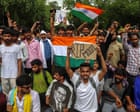
When authority figures start calling frustrated, unemployed young people "cockroaches," they usually expect those young people to hide in the dark. They don't expect tens of thousands of them to march into the capital carrying signs with giant insects painted on them.
That's exactly what's happening across India right now.
What started as widespread outrage over leaked examination papers has mutated into the most volatile youth political movement India has seen in years. Millions of students and job-seekers have rallied under an unexpected banner: the Cockroach Janta party. They've taken an insult aimed at silencing them and turned it into a rallying cry against government corruption and systemic unemployment.
If you're trying to figure out why streets from New Delhi to Ladakh are filled with protesting youth, the explanation isn't complicated. It comes down to broken promises, stolen futures, and an official class that completely miscalculated the anger of an entire generation.
How a Classist Insult Built a Political Army
To understand how a slur became a brand, you have to look at how political elites talk down to youth in India. Reports surfaced that a top judicial authority referred to unemployed young protesters as "cockroaches" and "parasites" who were disrupting public order.
Instead of backing down or issuing polite press releases, young people leaned straight into the insult.
They formed the Cockroach Janta party. They wore antennae headbands. They painted massive roaches on cardboard signs and held them outside government offices. The message was clear: If you treat us like pests, we will swarm like them until you listen.
It's a classic case of political reclamation. When ruling elites use dehumanizing rhetoric to dismiss legitimate grievances, they hand their critics a powerful psychological tool. By embracing the label, Indian students stripped the insult of its power. They forced the public to look directly at the actual problem: millions of educated young adults with zero job prospects and no reliable way to climb the socio-economic ladder.
The Paper Leak Crisis Broken Systems and Lost Lives
The slur was just the match. The fuel had been piling up for years in the form of ruined national examinations.
In India, passing competitive tests like the National Eligibility cum Entrance Test (NEET) or state public service exams is often the only route out of poverty for working-class families. Young people sacrifice years of their lives, studying 14 hours a day in cramped rooms, just to secure a fair shot at a government position or a medical seat.
Then came leak after leak.
Test papers were bought and sold on Telegram groups for thousands of dollars. Exams were canceled hours before scheduled start times. Millions of candidates were forced to re-sit tests they had already poured their hearts into.
The consequences aren't abstract policy debates. They're human tragedies.
Repeated exam cancellations and rampant corruption have been directly linked to dozens of student suicides over recent years. Imagine spending three years studying for a single test, taking out loans to afford coaching centers, only to find out the answers were leaked to wealthy buyers the night before. The sense of hopelessness is suffocating.
When exam integrity collapsed, student patience went with it. The anger erupted into full-scale street demonstrations that paralyzed transit lines and forced police into heavy-handed responses.
Sonam Wangchuk and the Standoff with the State
As protests spread beyond student hubs, prominent figures joined the fray, giving the movement serious political weight. Activist Sonam Wangchuk went on a prolonged hunger strike to draw attention to local governance failures, youth marginalization, and regional corruption.
By the time Wangchuk reached day 20 of his fast, his health was visibly deteriorating. Images of his frail frame circulated rapidly on social media, turning him into a symbol of quiet resistance against a defiant state apparatus. When he was finally moved to a hospital and later ended his fast after 26 days as protests expanded, the movement had already achieved momentum that police barricades couldn't stop.
Opposition politicians quickly recognized the shift. Opposition leader Rahul Gandhi tried to join the student marches in Delhi, leading to chaotic scenes where police detained him and hauled him onto a bus. Opposition parties effectively shut down parliamentary proceedings, demanding full accountability for paper leaks and widespread youth joblessness.
Prime Minister Narendra Modi tried to calm the waters. He publicly promised severe punishment for officials involved in exam leaks. The government offered concessions, including proposed legal overhauls to penalize paper traffickers and promises of restructured testing agencies.
For many protesters, those promises arrived far too late.
Why Technical Fixes Won't Solve a Structural Disaster
The government wants you to believe this is a technical issue about test security. It isn't. It's an economic crisis wrapped in an administrative failure.
India often boasts about its "demographic dividend"—the fact that over half its population is under 25 years old. On paper, that sounds like an economic engine. In reality, if you don't create jobs for those young people, that dividend turns into a pressure cooker.
Consider these figures:
- Millions of college graduates compete for a few thousand entry-level civil service jobs.
- Millions of candidates were affected by recent exam cancellations and leaks.
- Youth unemployment among educated graduates remains persistently higher than the national average.
When high-level officials dismiss these millions of struggling adults as "parasites," they ignore a basic truth: the system failed the students, not the other way around.
Slashing test leak scandals by adding security cameras or harsher fines doesn't fix the reality that there simply aren't enough legitimate jobs waiting at the end of the process. Young Indians aren't just angry about cheated exams. They're angry that even if they pass, the economic engine isn't generating the work they were promised.
Concrete Steps to Track What Happens Next
If you want to follow this crisis as it unfolds over the coming months, ignore the political grandstanding and keep your eyes on these specific metrics:
Legislative Action on Exam Security
Watch whether Parliament passes enforceable federal laws with strict mandatory sentencing for exam leaks, or if the proposed bills get bogged down in committee debates.Re-examination Transparency
Track the execution of rescheduled national exams. If leaks occur during the secondary test rounds, expect protests to double in size.Job Creation Indicators
Monitor official job creation figures in the public sector. Promises of clean exams mean very little if the total number of advertised seats continues to shrink.Street Mobilization in Regional Hubs
The movement started in major cities, but its real power lies in tier-2 and tier-3 education hubs like Kota, Patna, and Prayagraj. Continued agitation in these towns signals long-term political instability for the ruling party.
The Cockroach movement proved one key lesson: you can't insult a generation's struggles and expect them to remain quiet. Whether Modi's government can regain the trust of India's youth depends entirely on whether it delivers structural economic changes rather than temporary political band-aids.