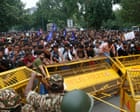
When thousands of young people hit the streets of Delhi on a sweltering Monday morning, tearing through police barricades and taking tear gas canisters to the chest, they weren't just venting about a leaked exam paper. They were exposing a fundamental breach of trust between India's ruling establishment and its youth.
The Cockroach Janta Party, or CJP, didn't start as a traditional political movement. It began as a biting piece of online satire in May 2026 after Chief Justice of India Surya Kant publicly dismissed protesting students and unemployed youth as "cockroaches". Instead of wilting under official condescension, Gen Z embraced the slur. They turned a derogatory label into a rallying point that has now triggered the biggest domestic crisis Prime Minister Narendra Modi's government has faced in years.
If you've been following mainstream news coverage, you might think this is just another flash-in-the-pan student demonstration. You'd be wrong. What played out across central Delhi on July 20—with internet blackouts, shut metro stations, and riot police wielding batons near Parliament—is the culmination of years of structural failure in higher education, runaway youth unemployment, and reckless political arrogance.
The Broken System Driving Millions of Gen Z Indian Students to the Edge
To understand why an eighteen-year-old candidate would face down police batons at Raisina Road, you have to look at the numbers. They're downright brutal.
This year's national medical entrance test saw more than 2 million candidates competing for roughly 130,000 university seats. For teenagers across India, passing this single exam isn't just a personal milestone. It's often the entire family's ticket out of financial precarity. Students spend years studying sixteen hours a day in high-pressure coaching hubs, carrying the weight of massive household loans on their shoulders.
Then came news that the exam papers were leaked to the highest bidder on messaging channels before test day.
The government's initial response? Denial, delay, and eventually scrapping the entire exam, forcing millions of exhausted kids to sit for retakes. Worse, this wasn't an isolated incident. Exam paper leaks have plagued state and central testing agencies across India for years, wiping out thousands of hours of intense preparation and pushing vulnerable students into deep despair. Public reporting has already linked the recent testing fiascos to more than twenty student suicides.
Harion Sharma, an 18-year-old medical aspirant who took part in Monday's Delhi march, put it candidly. "Because of those leaks, students have died," he said while standing in a crowd of thousands. "We are here to call for accountability and for the education minister to resign."
That direct demand for the resignation of Education Minister Dharmendra Pradhan has become the core catalyst of the movement. Rather than addressing their grievances with empathy, Pradhan previously dismissed the protesting students as "terrorists." That single comment ignited a firestorm across social media, turning a localized campaign into a nationwide revolt.
From Internet Satire to Street Resistance
Political movements in India usually rely on well-oiled party machinery, heavy funding, and regional political bosses. The CJP has none of those things.
Founded by Abhijeet Dipke, a postgraduate graduate who initially ran satire campaigns online, the CJP used memes, sharp humor, and viral video formats to build a decentralized network. When Dipke returned to India, critics told him that online anger wouldn't translate into real-world action.
They underestimated how fed up young people actually were.
Cockroach Janta Party Timeline
├── May 2026     : CJI remarks trigger online satire; CJP born
├── June 28, 2026: Activist Sonam Wangchuk begins hunger strike
├── July 18, 2026: Police forcibly move Wangchuk to hospital
└── July 20, 2026: Mass march on Parliament; police use tear gas & batons
The movement's moral weight exploded when 59-year-old engineer and renowned activist Sonam Wangchuk joined the cause. Known worldwide for his innovative climate work and educational reforms in Ladakh, Wangchuk launched an indefinite hunger strike at Delhi's Jantar Mantar on June 28. For three weeks, he survived on water alone, growing dangerously weak while demanding systemic educational reform and Pradhan's immediate resignation.
Wangchuk wasn't just another protest leader. He represented personal sacrifice. When Delhi police raided Jantar Mantar early on July 18 and forcibly removed a frail Wangchuk to Safdarjung Hospital, the move backfired completely. Images of police surrounding the activist and isolating him from his family sparked widespread anger. His wife, Gitanjali Angmo, publicly denounced the move as illegal detention rather than medical care.
Instead of crushing the protest, Wangchuk's forced removal galvanized the CJP. Organizers immediately announced a mass march on Parliament for July 20, the opening day of the legislative monsoon session.
What Actually Happened on the Streets of Delhi on July 20
If you relied on official statements, you'd think only a few hundred people showed up and police handled everything smoothly. The reality on the ground was starkly different.
By early Monday morning, thousands of students, young workers, and supportive citizens flooded into central Delhi. Authorities had locked down multiple metro stations including Central Secretariat and Rajiv Chowk, cut off mobile internet access in parts of the city center, and deployed rows of steel barricades.
It didn't stop them. Protesters walked for miles from surrounding metro hubs, chanting slogans like "Dharmendra Pradhan quit" and "Narendra Modi quit" in Hindi.
Key Events During the July 20 Standoff
- Barricade Breaches at Sansad Marg: Crowds pressed through several layers of security barricades, pushing within 200 meters of the Parliament complex at Raisina Road.
- Heavy Police Action: Security forces deployed batons (lathi charge) and fired multiple rounds of tear gas into dense crowds near Sansad Marg police station.
- Political Support: Major opposition figures, including Priyanka Gandhi and Mallikarjun Kharge, raised the violence inside Parliament, condemning the government for using chemical irritants and batons against unarmed students.
- Brief Ministerial Meeting: Under immense public pressure, government officials invited CJP representatives for talks. CJP spokespeople Ashutosh Ranka and Saurav Das waited two hours before receiving a brief 10-minute meeting with Cabinet Minister J.P. Nadda, where they submitted a formal list of demands.
Even older voters who previously supported the ruling party showed up in solidarity. Shubhi Tyagi, a 37-year-old architect who voted for the BJP in 2024, put it simply. "It's not just about education or the prime minister anymore. It's about accountability," she noted. "Any government will fail if it is in power for too long."
Common Misconceptions About the CJP Movement
Myth 1: It is just an online meme group with no real substance
While the name began as a joke based on the Chief Justice's insult, the movement's demands are deadly serious. The CJP has published detailed policy documents demanding centralized testing transparency, independent auditing of national exam bodies, strict legal penalties for paper leaks, and immediate relief for affected students.
Myth 2: The protests are driven purely by opposition parties
Opposition parties have tried to ride the wave, but the CJP remains fiercely independent. In fact, student leaders have repeatedly asked politicians not to hijack their stage at Jantar Mantar. The core organizers are students, young professionals, and non-partisan activists who feel let down by the entire political establishment.
Myth 3: Sonam Wangchuk is leading a regional Ladakhi protest in Delhi
Although Wangchuk is famous for his work in Ladakh, his hunger strike in Delhi was explicitly focused on national education reform and exam integrity. He joined the cause because he saw the systemic breakdown of public education as a direct threat to the country's youth.
What Needs to Happen Next
The confrontation in Delhi isn't going to disappear just because police cleared a few streets. The government's hardline approach has only deepened resentment among Gen Z voters who represent a massive voting block.
If Indian authorities want to resolve this crisis, they need to take immediate concrete steps:
- Transparent Investigation: Launch an independent, judicial-led probe into national testing security and prosecute individuals running exam leak syndicates.
- Ministerial Accountability: Address the direct demand regarding Education Minister Dharmendra Pradhan rather than brushing off student grievances.
- Immediate Health & Civil Freedoms: Release Sonam Wangchuk from involuntary hospital detention, grant him full medical autonomy, and respect citizens' rights to peaceful assembly.
- Structural Testing Overhaul: Transition to secure, decentralized testing protocols with end-to-end encryption and audit trails to prevent future leaks.
The Cockroach Janta Party proved that when you mock, dismiss, and push an entire generation to the wall, they won't just hide in the shadows. They will march right up to your front door.