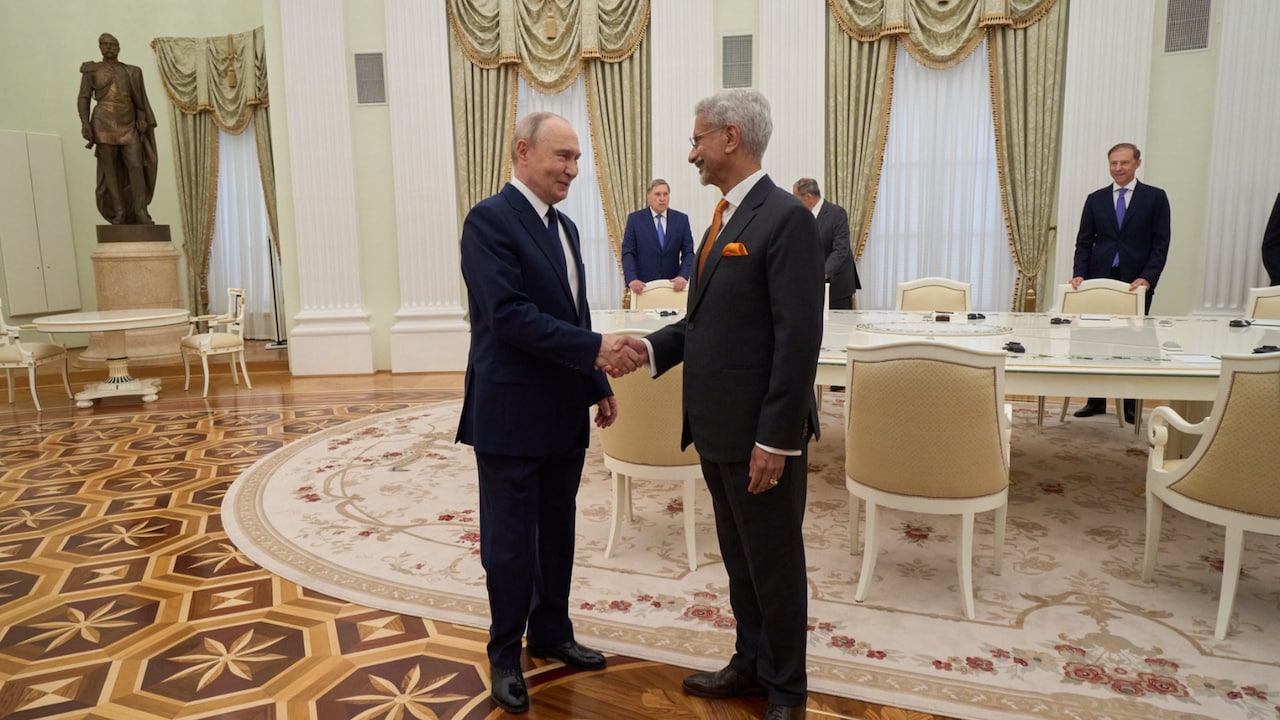
International relations rarely follow the neat scripts written by foreign policy pundits in Washington or London. When Indian External Affairs Minister S. Jaishankar walks into the Kremlin to hand over a personal message from Prime Minister Narendra Modi to Vladimir Putin, Western capitals twitch. They want a unified global freeze against Moscow. Instead, New Delhi does what serves its own national interest, keeping channels wide open with both sides.
If you look at how traditional diplomacy operates, the optics of high-ranking ministers exchanging sealed notes might feel like old-world pageantry. It is anything but. This ongoing diplomatic dance reveals how middle powers navigate a fractured multipolar world without bending the knee to external lectures. Meanwhile, you can read similar developments here: Why The Deadly Ambush On Un Peacekeepers In South Sudan Changes Everything.
The Real Agenda Behind the Moscow Handshake
Trade figures tell a much clearer story than political rhetoric ever could. Bilateral commerce between India and Russia has smashed past historical ceilings, comfortably clearing fifty billion dollars. Energy imports and military-technical cooperation remain the bedrock of these exchanges, even as external actors threaten secondary sanctions.
India didn't build this relationship overnight. It spans decades of strategic autonomy, dating back to periods when Western nations routinely armed New Delhi's adversaries. Jaishankar often points out the double standards of foreign critics with absolute clarity. When European nations buy discounted energy or maintain commercial ties of convenience, it is labeled pragmatism. When India does the exact same thing to feed its population of 1.4 billion people, foreign media outlets cry foul. To explore the full picture, we recommend the detailed article by USA Today.
Why Strategic Autonomy Actually Works
Most casual observers misread India's foreign policy as fence-sitting. That is a lazy interpretation. New Delhi's strategy is active balancing, not passive neutrality.
- Economic Survival: Buying affordable resources keeps inflation down at home and shields domestic industries from global supply chain shocks.
- Defense Independence: Decades of joint manufacturing and spare parts maintenance mean India cannot simply cut off its primary military supplier overnight.
- Countering Regional Pressures: Maintaining a cooperative baseline with Russia prevents Moscow from sliding entirely into an exclusive, uncritical axis with Beijing.
When Jaishankar meets Putin, he isn't just delivering pleasantries or schedule updates for an upcoming annual summit. He is reinforcing a baseline of trust that allows India to talk to Moscow, Washington, and Kyiv on its own terms. Case in point: Modi traveled straight to Ukraine shortly after visiting Russian soil, carrying peace messaging directly to President Volodymyr Zelenskyy. Very few global leaders maintain that kind of dual access today.
What Western Critics Miss About the Global South
Western foreign ministries often struggle to grasp why nations outside the Trans-Atlantic alliance refuse to treat European security crises as universal existential threats. The perspective from New Delhi is grounded in historical realities. India's primary security challenges lie along its northern and maritime borders, areas where Western assistance has historically been muted or conditional.
When Jaishankar fields sharp questions from foreign journalists about why India keeps trading with Russia, his answers are characteristically blunt. He doesn't apologize for putting Indian citizens first. That refusal to adopt moral posturing frustrates foreign commentators, but it resonates deeply across domestic audiences and developing economies alike.
Looking Ahead at the Bilateral Playbook
The relationship between Moscow and New_Delhi is entering a mature, transactional phase. Romance is gone; strict utility remains. Both governments understand the limits of their alignment, especially as Russia grows closer to China. That precise friction point is precisely why regular high-level touchpoints matter so much.
Stop expecting India to fold under diplomatic pressure or alter its independent posture to appease foreign editorial boards. As long as these backchannels deliver tangible economic and security benefits, ministerial handshakes in the Kremlin will remain a regular feature of modern geopolitics.
Look past the headlines about personal letters and diplomatic protocol. Watch the trade ledgers and energy corridors instead, because that is where the real future of Eurasian power gets negotiated every single day.