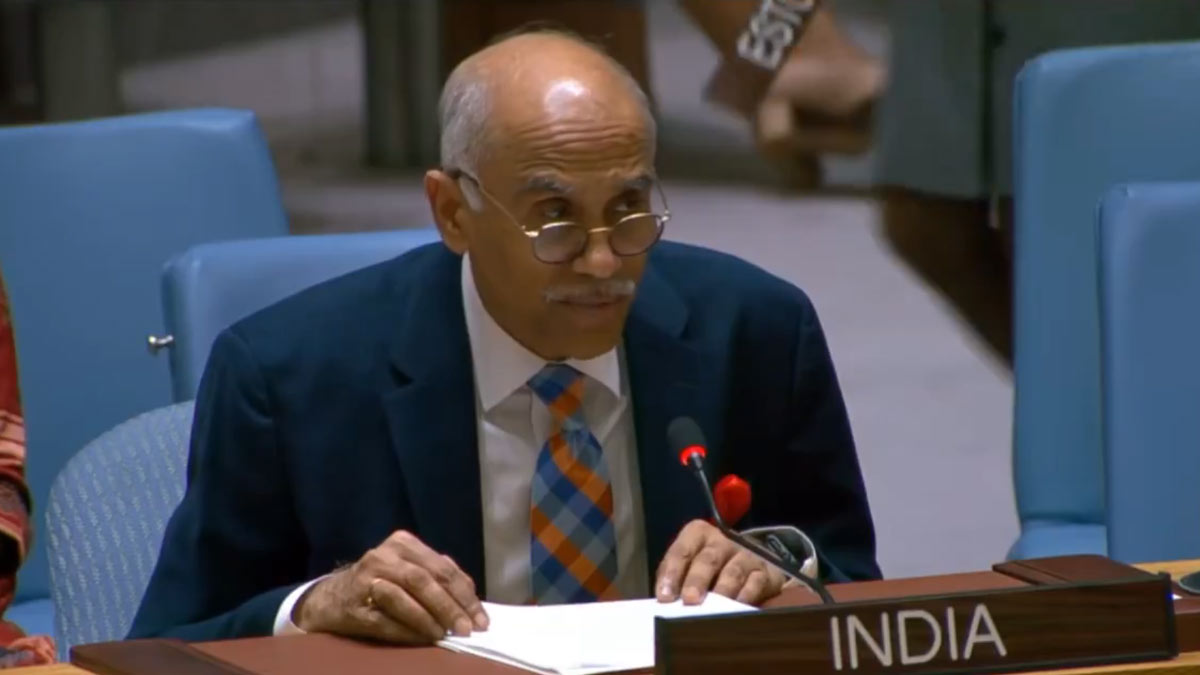
When commercial vessels like the GFS Galaxy, MT Al Bahiyah, and MT Mombasa take hits in international waters, the shockwaves don't just stay in West Asia. They hit New Delhi right where it hurts. India’s Permanent Representative to the UN, Ambassador Parvathaneni Harish, didn't mince words at the United Nations Security Council open debate. He laid it out plain and simple: the targeting of commercial shipping and civilian infrastructure has to stop.
If you've been wondering why New Delhi is suddenly shifting to a much sharper diplomatic tone at the UN, look at the human and economic toll. This isn't just an abstract geopolitical chess match. It's about real lives and fragile supply chains.
The Human Cost Behind the Headlines
Let's address what gets lost in formal diplomatic statements. These aren't just empty hulls drifting across blue water. They are crewed by working mariners, many of them Indian nationals.
Recent strikes in the Strait of Hormuz claimed the life of at least one Indian seafarer, left another missing, and severely injured several others. When you employ roughly 10 million citizens across the Gulf Cooperation Council countries, a secure maritime corridor isn't a luxury. It's a frontline domestic security issue.
Ambassador Harish made sure the Security Council understood that violence targeting innocent civilian crews violates basic international law. You can't separate the safety of global trade from the safety of the individual human beings steering those ships.
Why the Strait of Hormuz Matters to India's Bottom Line
Numbers tell the real story here. India's annual bilateral trade with West Asia hovers around $180 billion, while foreign direct investment from the region crosses $31 billion. Add over $52 billion in annual remittances coming home from Gulf nations, and you realize why New Delhi takes maritime stability personally.
When maritime traffic bottlenecks or gets blockaded, energy security takes an immediate hit. Retail inflation climbs, shipping insurance premiums spike, and industrial production feels the squeeze. India relies heavily on stable transit through these critical chokepoints to keep its domestic economy humming.
Beyond the Middle East Crisis
India's UN address didn't stop at condemning regional vessel attacks. New Delhi used the platform to call out structural failures at the global level. Ambassador Harish pointed out the glaring frustration shared by member states regarding the UN Security Council's paralysis.
When permanent bodies stay deadlocked due to the narrow, divisive interests of a select few, actual crisis intervention fails. India's stance is clear: comprehensive UNSC reform isn't a distant bureaucratic wish list item. It's an urgent necessity if international bodies want to remain relevant in stopping conflicts before they boil over.
At the same time, India kept its focus broad, reminding the international community not to abandon the humanitarian crisis in Gaza, while backing a sovereign Palestinian state living side-by-side with Israel. On Yemen, New Delhi reiterated support for territorial integrity while condemning Houthi disruptions in the Bab al-Mandab Strait and the Red Sea.
What Comes Next for Maritime Security
Dialogue and diplomacy remain the only viable exit ramps from this mess. Military posturing and retaliatory strikes only shrink commercial margins and raise the risk for civilian crews.
Protecting global commerce requires collective international pressure on hostile actors to respect maritime boundaries. Until real diplomatic guardrails are enforced, nations heavily reliant on imported energy will keep pushing for structural accountability at every global forum available.
India Condemns Iran Over Strait of Hormuz Ship Attacks | US Launches Fresh Strikes
This video provides a detailed breakdown of India's diplomatic response and the broader geopolitical escalation surrounding the Strait of Hormuz shipping crisis.