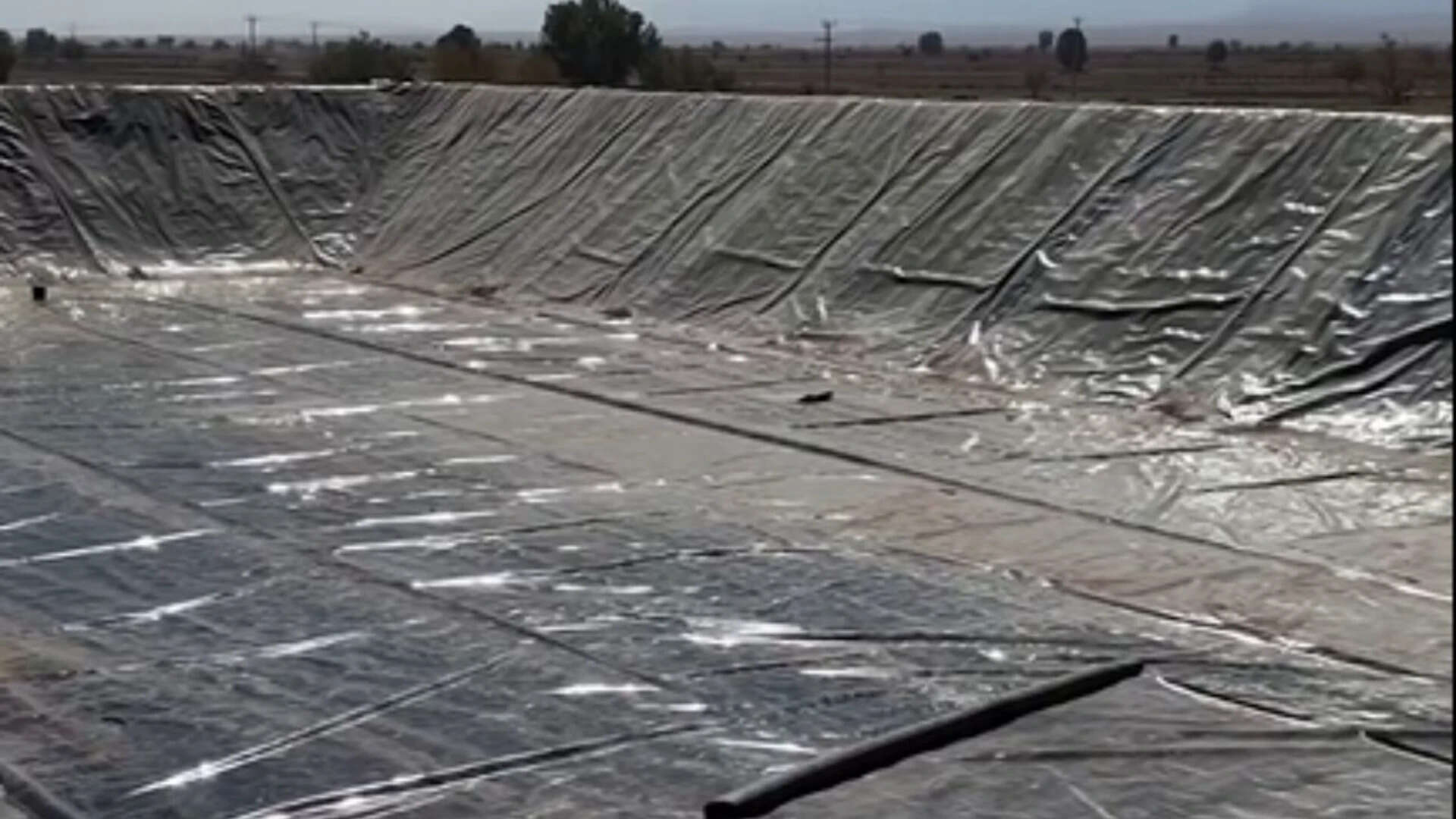
The headlines sound like a joke or a catastrophic environmental blunder. India just finished digging a massive 28 kilometer artificial reservoir right in the middle of the scorching Thar Desert and lined the entire thing with a giant plastic sheet.
When people hear "plastic sheet," they picture trash bags or cheap tarps blowing away in the wind. Critics immediately started questioning the sanity of the engineers. Won't the sun melt it? Won't it leak toxic microplastics into the drinking supply of five million people?
The reality is a masterclass in aggressive civil engineering. This isn't a careless mistake. It's a calculated, 242 crore rupee blueprint designed to save the cities of Jaisalmer and Barmer from running completely dry during the hottest months of the year.
The Crisis of Naharbandi
To understand why Rajasthan state engineers did something this radical, you have to look at how the desert stays alive. The Thar Desert is brutal. Temperatures routinely cross 50 degrees Celsius, and water vanishes almost instantly. For decades, millions of people here have survived because of the Indira Gandhi Canal, a massive 650 kilometer engineering feat that channels water all the way from the rivers of Punjab down into the heart of the desert.
The canal is a lifeline. But lifelines need repairs.
Every single year, the canal shuts down for essential maintenance. This annual closure is known locally as Naharbandi. For weeks at a time, the flow of water stops completely. When the water stops, the vulnerability of communities in Jaisalmer and Barmer peaks.
Until now, there simply wasn't a storage facility big enough to hold backup water for millions of people during the shutdown. The towns relied on smaller local ponds, underground taankas, or expensive government water trucks. It was a logistical nightmare that left residents scrambling every summer.
The state water supply department built this new zigzag-shaped reservoir specifically to break that cycle. It serves as a gigantic tactical reserve, holding 1.41 billion liters of water to keep the taps running when the main canal goes dark.
The Problem With Desert Sand
Digging a massive hole in the desert is easy. Keeping water in it is nearly impossible.
The ground in Jaisalmer is hyper-porous sand. If you pour a bucket of water onto a sand dune, it disappears in seconds. If engineers filled a raw, unlined 28 kilometer trench with water, billions of liters would seep straight down into the earth long before a single drop reached a water filtration plant.
They needed an absolute barrier between the water and the thirsty desert floor.
This is where the controversial "plastic sheet" enters the picture. Mainstream news outlets oversimplified the engineering by calling it a plastic liner, which sparked instant panic online.
It is not consumer-grade plastic. The project uses a high-density polyethylene geomembrane. This industrial material is specifically engineered for heavy civil works. The team laid down roughly 76 lakh square meters of this 300-micron thickness barrier across the entire base of the lake.
To protect the liner from the punishing desert sun and mechanical wear, workers didn't just leave it exposed. They covered the entire base with an 80-centimeter protective layer of soil. On the sloped embankments, they installed specialized tiling over the liner. This design shields the material from intense ultraviolet radiation, preventing it from turning brittle or breaking down into microplastics. Engineers estimate this setup will keep the reservoir secure for nearly a century.
Massive Scale and Military Utility
The scale of this project under the national Jal Jeevan Mission is hard to visualize. The lake stretches across a 28 kilometer perimeter, covering nearly 7,500 hectares. Executive Engineer Rampal Moondhiyara noted that it would take a person nearly 24 hours to travel entirely from one end of the reservoir to the other.
The water isn't just sitting there stagnant either. It connects directly to an existing escape channel from the Indira Gandhi Canal. When the canal has excess water, it gets diverted into this mega reservoir. From there, the water passes through heavy-duty filtration stations before being distributed as safe drinking water to 50 lakh people across the region.
The project has an interesting secondary purpose. The engineers designed a specific section of the artificial lake to accommodate the heavy training needs of the Indian Army. The military will use the deep water zones to conduct combat drills involving floating amphibious tanks and specialized water training operations, maximizing the utility of the massive infrastructure investment.
Moving Past the Misconceptions
Public skepticism about large infrastructure is healthy, but the panic over the plastic lining misses how modern water management works. Using geomembranes to prevent seepage in artificial lakes is standard practice in water-scarce regions globally. Building a concrete base for a lake that is 28 kilometers long would have driven the budget to impossible heights and slowed construction down by years.
The true test of the project begins now as filling operations conclude. If the engineering holds up against the extreme summer heat and shifting desert dunes, it sets a brand new template for how hyper-arid regions can capture and hold seasonal water surpluses.
If you want to track how these massive water projects change regional geography, keep an eye on open-source satellite data for western Rajasthan over the coming seasons. Watching the balance between seasonal water storage and evaporation rates will show exactly how effectively this artificial oasis alters the local climate and stabilizes the region's drinking supply.