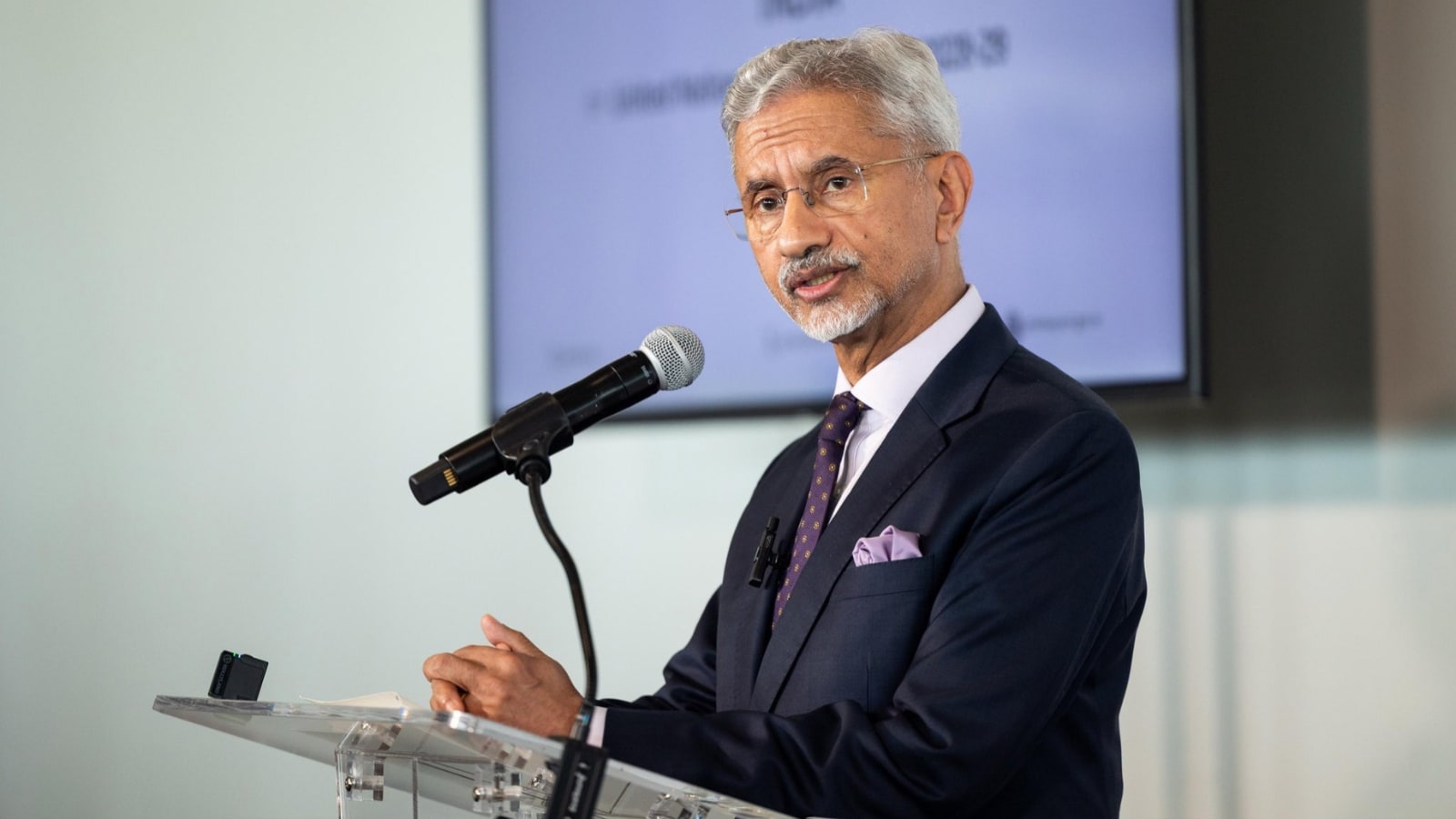
You can't pretend a hostile frontier is just background noise while you try to build a normal economic partnership. For years, New Delhi made that exact point to Beijing, and now, the diplomatic reality is finally starting to catch up with the rhetoric. External Affairs Minister S Jaishankar pointed out during his recent visit to New York that India-China relations look noticeably better today than they did back in 2024 or 2025.
If you remember the severe chill that settled across the Himalayas after the 2020 border standoff, this shift feels significant. But don't mistake a thaw for a total reset. Statecraft is rarely about sudden friendships; it is about calculating interests and removing friction points that drain national energy.
The Core Rule of Himalayan Statecraft
India kept its messaging remarkably consistent throughout the worst of the crisis. You simply cannot have ongoing military friction on the border while expecting trade, tourism, and diplomatic talks to hum along normally.
Jaishankar laid out this logic very plainly at the Asia Society in New York following the United Nations General Assembly high-level week. The state of the border dictates the state of the relationship. Once the military standoffs began to resolve and disengagement moved forward, it was only natural for bilateral dynamics to crawl back toward a working baseline.
This is practical diplomacy in action. Vague optimism about Asian century solidarity never solved a territorial dispute. Concrete troop disengagements and patrolling agreements do.
Avoiding the Trap of Third-Party Advantage
Another piece of New Delhi's quiet strategy involved warning Beijing about unintended consequences. When two massive neighboring economies stay locked in a bitter feud, they waste diplomatic capital and open up vulnerabilities that other global players are happy to exploit.
India's leadership understood a basic truth of international relations: don't stay trapped in a bilateral deadlock that benefits everyone else in the room. Nations like diversification, de-risking, and finding optimal solutions in a messy global economy. Dragging out a perpetual Himalayan freeze didn't serve China's long-term interests either, especially as Beijing deals with its own heavy economic headwinds and shifting Western trade barriers.
Recent high-level optics reflect this recalibration. Chinese President Xi Jinping's visit to India for the BRICS Leaders Summit in New Delhi signaled that both capitals are willing to sit at the same table and manage optics without pretending all underlying suspicions have vanished overnight.
What Normalcy Actually Means on the Ground
We need to be clear about what this improvement isn't. It isn't a return to the pre-2020 era of uncritical bonhomie or shared strategic visions. Deep structural differences regarding sovereignty, military posture, and regional influence remain entirely intact.
What has changed is the management of risk. Both sides realized that endless hostility creates unnecessary friction when global instability is already pushing every major economy to its limits. When you de-escalate a flashpoint, you free up intelligence resources, military readiness, and diplomatic bandwidth to focus on domestic growth and wider international partnerships.
Take a look at how India handles its broader foreign policy today. It buys oil from Russia, partners heavily with the United States and the Quad, deepens economic ties across the Middle East, and now stabilizes its longest contested land border. That isn't contradiction; that is multi-alignment at its peak.
Where the Relationship Goes From Here
If you want to track where India-China ties are heading next, ignore the ceremonial speeches and watch the ground-level patrolling protocols. The return to normalcy depends entirely on whether local commanders can maintain trust and prevent minor misunderstandings from blowing up into full-scale crises again.
India has shown it can hold its ground militarily while keeping diplomatic channels open. Beijing has shown it can adjust its posture when it realizes a permanent cold war on the Himalayas hurts its own strategic calculus.
Manage your expectations, keep an eye on the frontier, and remember that in modern geopolitics, a working relationship is often the best you can hope for.