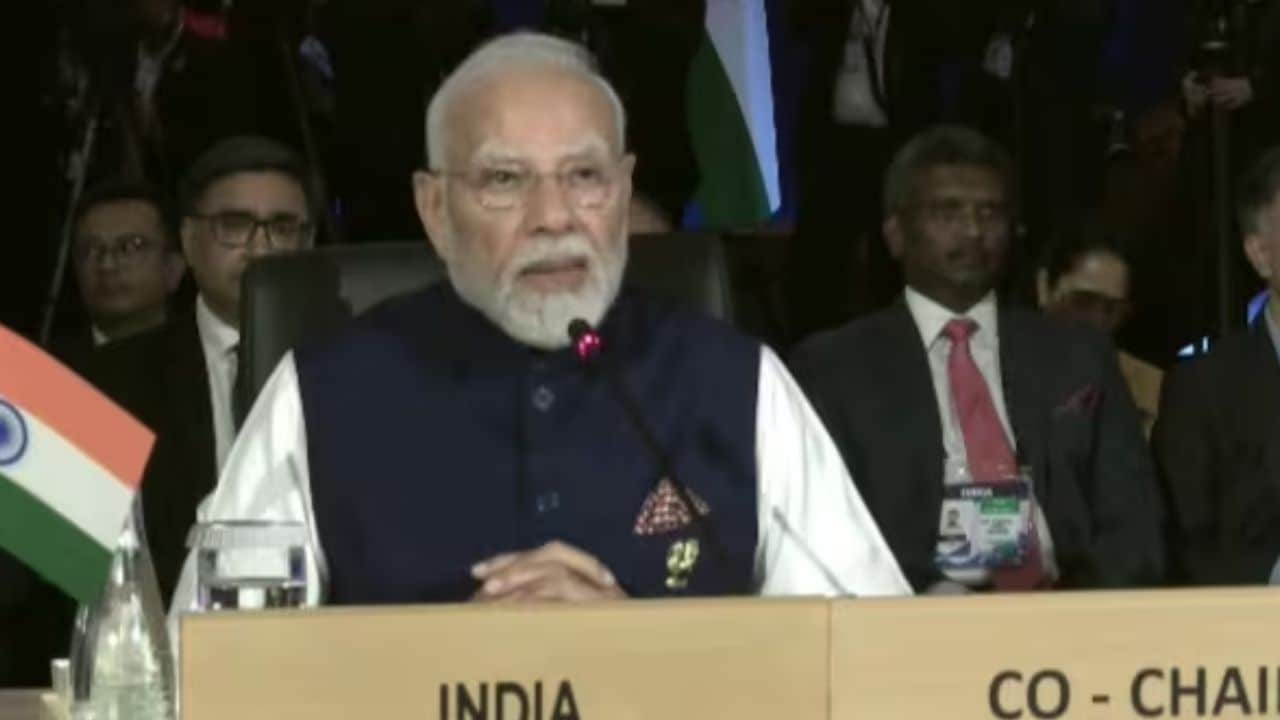
International diplomacy usually sounds like a high-stakes chess match where every move is designed to checkmate a rival. But during the 23rd ASEAN-India Summit in Manila, Prime Minister Narendra Modi threw out that playbook entirely. Standing before leaders of the eleven-nation bloc, he argued that the Indo-Pacific's future shouldn't be defined by cutthroat competition or zero-sum games.
When nearly a quarter of the global population shares a geographic and economic ecosystem, fighting over turf is a bad bet. Instead, Modi's pitch rested on a simple premise: shared growth and predictability. If you look at how diplomatic fault lines are hardening elsewhere in the world, this push for regional cohesion stands out as a sharp counter-narrative.
The Real Stakes Behind the Act East Policy
For years, critics dismissed regional forums as mere talk shops where leaders pose for photos and sign toothless communiqués. But India's approach under its Act East Policy has quietly moved past empty rhetoric into hard infrastructure and digital connectivity.
Over the last decade, the relationship has expanded far beyond shared cultural heritage into domains that actually move the needle. Think about direct flight routes connecting Indian cities to nine different ASEAN nations, or the rollout of more than two hundred and fifty Quick Impact Projects funded to improve grassroots community welfare.
When you're dealing with supply chain volatility and unpredictable global markets, having reliable trading partners right next door isn't just a diplomatic perk. It's an economic lifeline.
Aligning Long-Term Economic Visions
Diplomacy requires looking past short-term election cycles and matching long-term economic roadmaps. During the Manila meetings, Modi explicitly linked two massive domestic and regional frameworks: the ASEAN Community Vision 2045 and India's own long-range development goals for 2047.
Connecting these timelines creates an institutional anchor. It means infrastructure investments, digital payment system linkages, and maritime security protocols aren't built on a whim. They are part of a synchronized strategy designed to protect the region from external economic shocks.
Moving Beyond Bureaucratic Hurdles
Skeptics often ask whether these international summits translate into actual benefits for everyday businesses and citizens. The answer depends entirely on execution speed. Red tape has historically slowed down joint manufacturing initiatives and cross-border digital transactions.
To make cooperation work in practice, member nations have to cut through bureaucratic friction. Faster customs clearances, harmonized digital standards, and robust maritime trade agreements are the nuts and bolts that keep the partnership moving forward. Without them, grand speeches about unity remain just that—speeches.
The upcoming years will test whether regional blocs can genuinely resist the gravitational pull of polarization. If India and ASEAN stick to their current trajectory, they might just prove that building bridges beats building walls every single time.