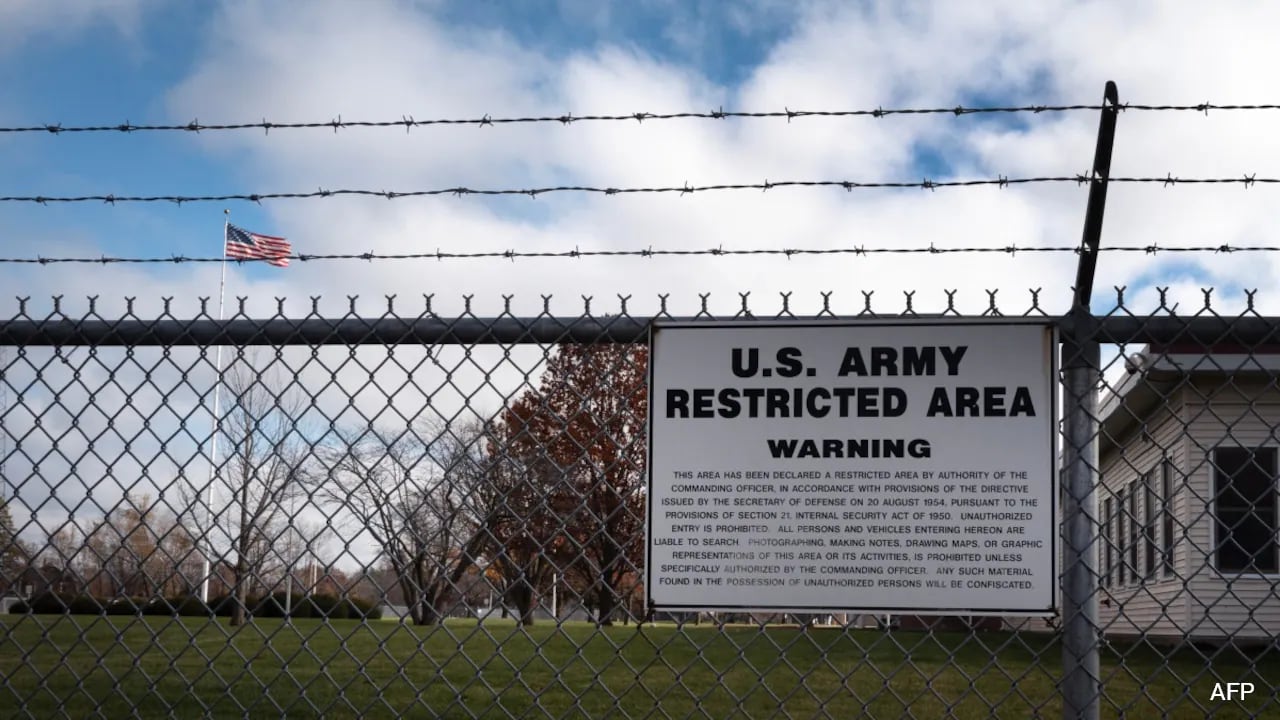
Blowing up nearly five tons of degraded explosives on the day before Thanksgiving sounds like a recipe for chaos, and honestly, the rollout in southeastern Iowa has been messy enough to justify the anger.
The U.S. Army scheduled controlled detonations of 68 barrels of lead azide at the Iowa Army Ammunition Plant near Middletown for Wednesday, November 25, 2026. Families in the middle of holiday travel prep suddenly found themselves weighing evacuation advice, closed windows, and airborne lead dust. If you're reading headlines and wondering why the military is setting off lead-heavy blasts right before Turkey Day—or whether blowing up lead actually "destroys" it—there's a lot more going on beneath the surface than a quick wire summary lets on.
First, the straightforward answer: the Army says the stockpile of degraded, crystallized lead azide has become too volatile to store safely or transport, risking an uncontrolled chain-reaction explosion as temperatures drop. And no, an explosion doesn't wipe out lead. Lead is a heavy metal element, so a blast breaks it down or disperses it as fine particulate dust that settles onto surrounding soil, water, and surfaces.
Why Blowing Up Lead Azide in Iowa Sparked Such a Fight
Lead azide isn't a casual material. Roughly 71 percent of its mass is lead, and it's used as a primary explosive to initiate munitions. According to the Army, officials discovered the degraded and crystallized stockpile during a March safety review inside magazines and earth-covered concrete storage containers at the Middletown facility, roughly 90 miles south of Cedar Rapids and near the Mississippi River.
Once a primary explosive degrades and crystallizes, it can become unpredictable. A single spark, shock, or temperature swing can trigger what engineers dread most: an unplanned detonation that doesn't follow safety plans. That's the core argument the military and the U.S. Environmental Protection Agency leaned on when justifying an emergency disposal route rather than a slow chemical neutralization or long-distance haul.
Yet timing and communication turned a technical disposal job into a political and public-health flashpoint. The EPA issued an emergency permit on November 13, 2026, and residents in Middletown reported getting only about five days of warning ahead of the initial November 20 plan. Three date shifts later, the operation landed on the Wednesday before Thanksgiving—one of the busiest travel and family days of the year—with plume modeling pointing toward dust drifting southwest toward Missouri.
Courts, Politics, and a Strange Detour
Anyone tracking this story over the last week probably got whiplash. Environmental groups—including Earthjustice representing the Iowa Environmental Council and the Sierra Club's Iowa chapter—sued to challenge the EPA emergency permit. A federal court briefly put the brakes on, prompting Justice Department lawyers to argue that the Army could invoke emergency powers even without the permit.
Then came an unusual political twist. President Donald Trump initially said he ordered a pause without court approval and posted on social media that he wanted incoming Democratic Governor-elect Rob Sand to sign off, even though Sand doesn't take office until January 12, 2027. Sand pushed back, noting that the decision rested with the administration and warning that past choices had left "no good options". Current Republican Governor Kim Reynolds activated the State Emergency Operations Center and voiced support after speaking with military leaders, while U.S. Senator Joni Ernst said Iowans had every right to be frustrated over delayed risk details. On Monday, the 8th U.S. Circuit Court of Appeals declined to block the plan further, clearing the way for Wednesday's blasts.
From a practical standpoint, here's the nuance environmentalists and legal experts highlighted: the lawsuit challenged the validity of the EPA permit and the neglect that created the emergency, not the military's authority under emergency provisions once the risk escalated. Even critics of the rollout acknowledged that leaving unstable explosives sitting in cold weather carries severe risks of its own.
What Actually Happens to Lead During a Controlled Blast
Let's clear up a common misconception right away. People hear "controlled detonation" and sometimes picture heat burning toxic chemicals away. Lead doesn't burn up. Heat can melt, vaporize, or fragment it, and detonation sends lead-containing particles into a plume that disperses downwind and deposits on the ground.
Army officials told Senator Ernst that the detonation itself lasts only seconds and that the dust cloud dissipates within an hour. Still, "dissipates in the air" doesn't mean "vanishes." Heavy particles settle onto outdoor playsets, porches, vehicles, soil, and surface water, and tiny amounts can be tracked indoors on shoes or pets.
Lead is toxic to both humans and animals, and children are especially vulnerable because their bodies absorb more lead relative to their size and their developing nervous systems are sensitive to exposure. There's no safe blood lead level in children, according to public health consensus from groups like the Centers for Disease Control and Prevention. That's why researchers from the University of Iowa's Center for Health Effects of Environmental Contamination mobilized to deploy air monitors, collect soil samples, and track potential residue on high-touch outdoor items like playground equipment.
Why Alternatives Weren't Simple Plug-and-Play Fixes
When news broke about the 9,500 pounds of lead azide, a fair question popped up everywhere: why not just chemically neutralize it in a tank or ship it somewhere remote?
In munitions engineering, degraded primary explosives are finicky. Chemical neutralization requires mixing reactive agents safely without generating friction, heat, or shock—hard to guarantee if crystals have become unstable over time. Moving degraded explosives across highways or rails adds transit hazards and routes through other communities. Judges on the 8th Circuit noted that the Army evaluated alternatives, including chemical neutralization and thermal treatment, before concluding that controlled detonation under safety controls was the most viable path to prevent an uncontrolled blast.
Still, knowing why engineers picked a method doesn't erase how it was communicated. Waiting until days before a holiday to roll out evacuation recommendations for Middletown residents and protective advisories for surrounding communities understandably made people feel blindsided.
Common Mistakes People Make When Lead Dust Is a Risk
Having worked around environmental safety advisories and hazard communication, I see the same mistakes happen whenever a sudden plume or industrial release hits a community. Good intentions can still backfire if you don't pay attention to the mechanics of dust.
- Dry-sweeping or vacuuming dust with a standard household vacuum: Sweeping kicks settled particles right back into the air, and a regular vacuum without a true HEPA filter can blow fine lead dust straight out the exhaust. Wet wiping with soap and water is far more effective at trapping particles instead of suspending them.
- Forgetting the mudroom and entryways: People wipe off a windowsill and miss the doormat, shoe soles, or dog paws. If you're inside for 24 to 48 hours as advised by health authorities, keep outdoor footwear near the door and wipe down pets if they went outside.
- Running HVAC on outside-air intake: Turning heating, ventilation, and air conditioning systems off or setting them to recirculation mode helps keep outdoor airborne particles from being pulled inside while a plume passes.
- Assuming "it's over" means "it's clean": Even if the visible plume clears within an hour, residue left on exterior surfaces, cars, or kids' outdoor toys doesn't clean itself. Waiting until official all-clear updates are issued matters.
There's also a legitimate debate worth stating plainly: agencies emphasize rapid risk reduction from an unstable explosive, while local residents and environmental advocates point out that better upfront monitoring, earlier public notice, and strict post-blast soil and surface testing are essential to earn trust. Both concerns can be true at once.
Practical Next Steps If You're Near the Blast Zone or Following Updates
Whether you live in southeastern Iowa or across the river in Illinois or Missouri, treat the situation with calm, practical caution rather than panic.
- Check official state and Army advisories first: Follow updates from the Iowa Department of Health and Human Services, Iowa's emergency management portal, and the U.S. Army regarding evacuation return times and any localized guidance.
- Follow indoor air and shelter guidance: Keep exterior doors and windows closed during the advised window, and set HVAC systems to recirculate or turn them off if instructed.
- Wet-clean exposed surfaces once cleared: Once officials confirm it's safe to clean up, wash outdoor surfaces that could collect dust—such as windowsills, cars, patio furniture, and children's play equipment—using soap and water rather than dry dusting.
- Watch for post-event environmental testing data: Track pre- and post-detonation sampling results reported by state officials, the Army, and university researchers at the University of Iowa Center for Health Effects of Environmental Contamination to see whether local soil, water, or surface residue requires follow-up action.
- Ask your doctor about blood lead testing if concerned: If your household was in the evacuation or fallout path and you have young children or pregnant household members, reach out to a healthcare provider to ask whether a blood lead test makes sense for your situation.