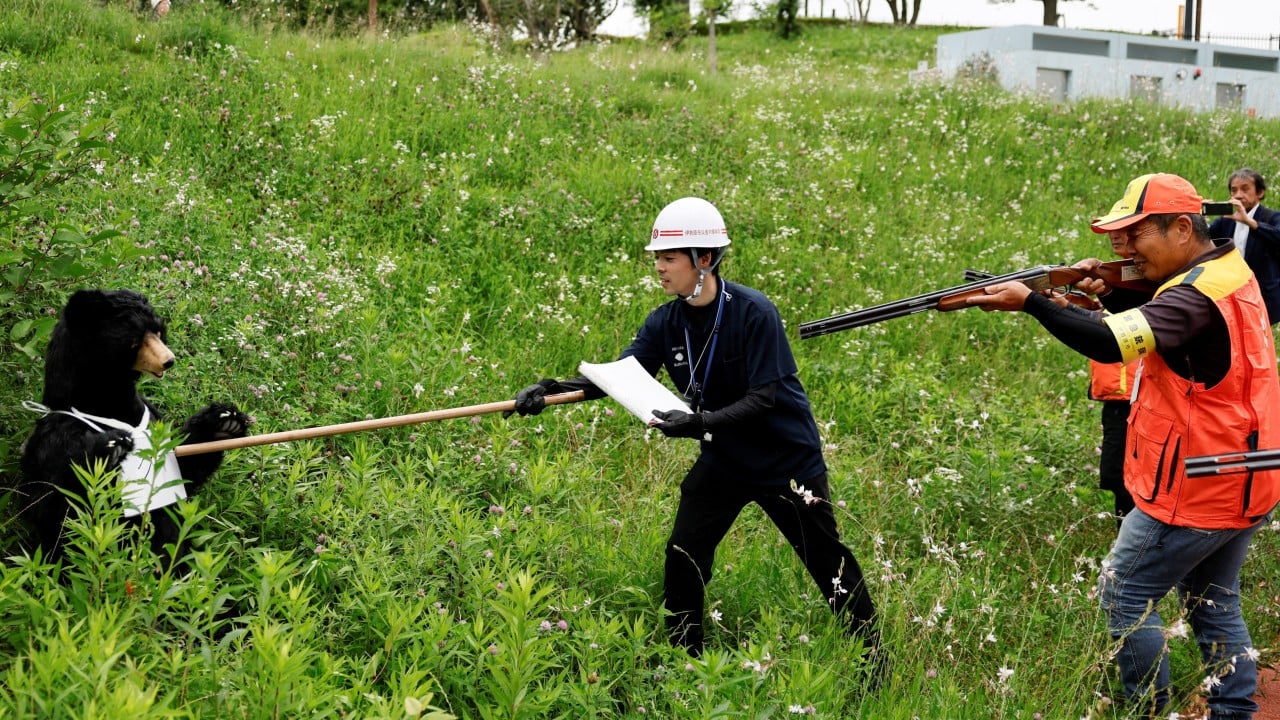
Japan is facing an unprecedented wildlife crisis. Walk into any convenience store or school zone in northern Honshu right now, and the conversation inevitably turns to one thing. Bears. The numbers coming out of the Ministry of the Environment paint a harrowing picture. A record number of attacks, expanding habitats, and local communities left living in constant fear. While national authorities scramble to deploy hundreds of trail cameras baited with honey and wine across the mountains of Tohoku, one western prefecture has quietly quieted the chaos using a different approach.
Hyogo Prefecture didn't wait for the crisis to reach a boiling point. Decades ago, local officials realized that blind culling doesn't solve a wildlife crisis, and neither does absolute protection. They chose data instead. By embedding microchips into the skin of captured Asiatic black bears, Hyogo built a tracking system that provides an incredibly clear picture of how these animals move, reproduce, and interact with humans. It's a method that balances safety with survival, setting a population target of about 800 bears to prevent local extinction while aggressively managing problem animals.
Understanding how Hyogo pulled this off requires looking past the sensational headlines. It means looking at the data, the mistakes made along the way, and why this regional playbook might be the only way forward for the rest of the country.
The Death of the Satoyama and the Rise of Urban Bears
You can't talk about Japan's bear problem without talking about the collapse of the countryside. Historically, the boundary between wild mountain forests and dense urban centers was maintained by the satoyama. These were transitional zones of managed woodlands, small farms, and rural villages. The constant human activity in the satoyama acted as a natural barrier. Bears stayed up in the deep mountains because the foothills were occupied by active, working humans.
That barrier is gone. Japan's rural areas are shrinking fast. As the younger generation moves to mega-cities like Tokyo and Osaka, rural towns are left with aging populations. Farmland gets abandoned. Fruit trees in backyard gardens go unharvested. Persimmons and chestnuts rot on the branches, creating an irresistible, easily accessible buffet for hungry wildlife.
When the satoyama reverts to wild brush, the bears move in. They aren't just passing through anymore. They are moving their permanent territories closer to human settlements. Biologists call these "urban bears." They have lost their natural fear of humans because they associate human environments with high-calorie food rewards. In years when natural mountain foods like beech nuts and acorns fail entirely, these animals push directly into shopping arcades, train stations, and school yards.
How Microchips Turned Guesses Into Real Science
Most wildlife management plans fail because governments are flying blind. Counting wild animals in dense, mountainous terrain is notoriously difficult. For a long time, Japan relied on crude estimates based on hunter reports and random sightings. The numbers were all over the place, leaving policy hanging between over-culling and absolute negligence.
Hyogo changed that by implementing a strict capture-and-release research protocol. When a bear gets caught in a nuisance box trap near a village, it isn't automatically euthanized. Instead, wildlife technicians sedate the animal and perform a thorough medical check. They record its weight, check its teeth to determine age, and look for signs of reproductive activity in females.
Before the bear wakes up, technicians insert a small microchip subcutaneously.
This microchip gives every individual bear a permanent, unique digital ID. If that same bear gets caught again three months later in a completely different village, the scanned chip reveals exactly where it came from and how fast it traveled. Combining this mark-recapture data with advanced statistical modeling allowed Hyogo to map out population trends with extreme precision.
The data revealed something startling. Between 2005 and 2016, the bear population in Hyogo was steadily climbing. By 2015, the median population estimate surpassed 800 individuals. This was the magic number. Biologists determined that 800 black bears represented a stable, self-sustaining population that was no longer at immediate risk of local extinction.
Because the microchip data proved the population had fully recovered, Hyogo officials made a bold decision in 2016. They lifted a 20-year ban on bear hunting. It wasn't an act of aggression, but a calculated, data-driven adjustment to keep the population stable.
The Reality of Aversive Conditioning
One of the biggest misconceptions about Hyogo's plan is that it's a soft touch approach. People think the prefecture just tags the bears and lets them go with a pat on the back. It doesn't work that way. When a bear is released, it undergoes a harsh process called aversive conditioning.
The goal is simple. Make the bear associate humans and villages with terror and pain.
Before release, the sedated bear is placed in a transport cage. When it wakes up completely, team members use loud noises, firecrackers, and barking dogs to terrify the animal. In some variations of the practice, bears are shot with rubber bullets or hit with pepper spray as they flee back into the forest. The idea is to create a powerful psychological barrier. The bear needs to think that stepping out of the woods means entering a nightmare.
It works, but it isn't perfect. Studies tracking Hyogo's released bears showed a maximum success rate of around 60 percent. That means more than half of the conditioned bears learned their lesson and stayed in the mountains. The remaining 40 percent, however, became repeat offenders.
Hyogo's guidelines for these repeat offenders are remarkably direct. If a microchipped bear ignores the conditioning and returns to a human village a second or third time, the data proves that the animal is food-conditioned and dangerous. The scanned chip acts as a green light for euthanasia. There's no second-guessing, no bureaucratic delay, and no emotional debate. The data makes the call.
Why Other Prefectures Are Struggling to Catch Up
The current situation in northern regions like Tohoku highlights just how advanced Hyogo's system really is. Right now, prefectures in the north are experiencing an intense spike in maulings and fatalities. Their response has been reactive, relying heavily on emergency culling, setting thousands of new box traps, and putting up hundreds of trail cameras.
The national government even stepped in to allow the use of hunting rifles in urban areas under specific conditions. They are treating it like a sudden emergency, but it's actually the predictable outcome of decades of neglected rural management.
Tohoku's camera project relies on catching individual chest markings. Asiatic black bears have a distinct, crescent-shaped white patch on their chests. By baiting cameras with wine and honey, researchers hope to get the bears to stand up, snap a photo of the chest mark, and use it like a fingerprint to count the population.
It's a clever trick, but it doesn't match the utility of a microchip. A photograph can't tell you the exact age, reproductive health, or movement history of an animal with the absolute certainty of an embedded transponder.
Many northern municipalities don't have the staff or budget to duplicate Hyogo's framework. An Environment Ministry survey showed that before the recent staff expansions, fewer than 800 local government employees nationwide were tasked with managing bear operations. Many towns had zero dedicated wildlife experts. They relied entirely on aging volunteer hunters who are quickly retiring.
Next Steps for Sustainable Coexistence
You can't fix a decades-long ecological shift overnight. If Japan wants to stop the rise in bear attacks without wiping out an essential forest predator, local governments need to move beyond emergency hunts and embrace long-term asset management.
First, municipalities must rebuild the physical boundaries between wild spaces and towns. This doesn't mean building massive concrete walls. It means clearing out the brush along rivers where bears love to travel under cover. It means organizing community clean-ups to remove abandoned fruit trees and securing outdoor trash bins. If there is no food at the edge of town, the bears have no reason to come down.
Second, prefectures need to standardize their data collection. Fragmented tracking methods across borders make it impossible to manage a species that travels dozens of miles a week. Adopting a unified tracking protocol using microchips and GPS collars would allow neighboring regions to share data seamlessly, catching problem animals before they cross prefecture lines.
Finally, funding must shift toward professionalizing wildlife management. Relying on volunteer hunting clubs composed of retirees is a recipe for disaster. Local governments need to hire full-time, trained wildlife technicians who can handle trapping, data collection, and aversive conditioning safely.
Hyogo proved that humans and apex predators can live in the same region without constant bloodshed. They showed that when you follow the numbers rather than raw emotion, you can protect an endangered population while protecting human lives. It's a hard, expensive, and unglamorous process. But looking at the rising conflict across the rest of Japan, the alternative is far worse.

/origin-imgresizer.eurosport.com/2025/08/08/image-eae19531-0fdd-43a9-915e-596214d9dbc5-85-2560-1440.jpeg)