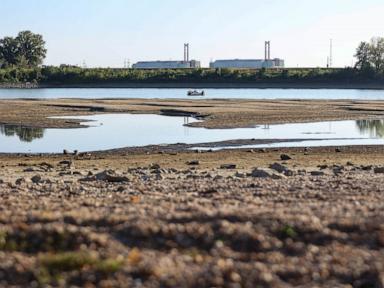
Climate reality just hit Hungary right where it hurts. When a scorching summer drops Central Europe's largest river to historic lows, electricity grids panic.
Prime Minister Peter Magyar’s government didn't just sit back and watch. They launched emergency engineering interventions on the Danube River to keep the country's backbone power source running. If you think climate change is just a talking point, look at what’s happening at the Paks Nuclear Power Plant right now.
The Paks Vulnerability No One Expected
The Paks facility generates roughly 40% of Hungary's electricity. It relies entirely on drawing millions of gallons of water from the Danube River to cool its four reactors. When the river level drops, the intake pumps struggle.
Without water, you get a reactor meltdown risk. It’s that simple.
Earlier in August 2026, prolonged drought pushed water levels down to dangerous thresholds. The plant had to scale back power drastically. Hungary stared down the barrel of its first complete nuclear shutdown in a 44-year history.
Emergency Engineering Operations on the River
Waiting for rain isn't a strategy. The Hungarian government took radical steps to manipulate the riverbed itself.
Engineers began building a submerged weir on the Danube between Paks and Dunaszentbenedek. Crews are dumping tens of thousands of cubic meters of rock into the channel. This structure blocks water from draining away too fast. It keeps the intake channel deep enough to protect the pumps, aiming to raise local water levels by up to one meter.
The emergency plan didn't stop with rocks. Officials put two heavy 80-meter barges on standby. If water levels plummet further before the weir is finished, authorities are ready to deliberately sink these barges across the river to force a temporary 20-centimeter bump in water height.
That is extreme engineering. It shows how desperate the energy situation has become.
The Real Cost of a Dry Riverbed
Why go to such expensive lengths? A complete shutdown of Paks costs the state budget around 50 billion forints every single month. That doesn't even count the massive spike in expensive imported electricity needed to keep homes running.
To bridge the gap, the government had to squeeze industrial power consumption. Big factories faced tight restrictions. Public services trimmed down use. Rail cargo stopped at peak hours. Budapest even slowed down its trams.
Building the weir costs roughly 6 billion forints, roughly 18 million U.S. dollars. Spending that cash upfront is a bargain compared to an entire national grid blackout or months of industrial stagnation.
What This Means for Europe's Energy Future
Thermal power plants across the continent are facing the exact same trap. Nuclear and coal facilities need massive cooling sources. As rivers warm up and dry out during intense summer heatwaves, design flaws from decades past are coming home to roost.
You can't generate low-carbon energy if your water source disappears.
Hungary's aggressive intervention buys time. It proves that aging Soviet-built infrastructure requires modern, aggressive adaptation to survive extreme weather.
The next few weeks will test whether piled rock and sunken barges can hold back a drying climate. Don't expect governments to sit idly by while their power grids fry. Expect more radical river engineering across Europe as the weather gets worse.