When a politician spends a decade handing state cash to a foreign corporation and then immediately takes a high-paying executive job at that same company, people notice. That's exactly what just went down in Budapest, and it's turning into one of the biggest political and corporate scandals in Central Europe this year.
On July 15, 2026, former Hungarian Foreign Minister Péter Szijjártó announced on Facebook that he was resigning his parliamentary seat. His reason was simple enough. He accepted an international executive offer to become director of external relations and new business development at Chinese electric vehicle giant BYD.
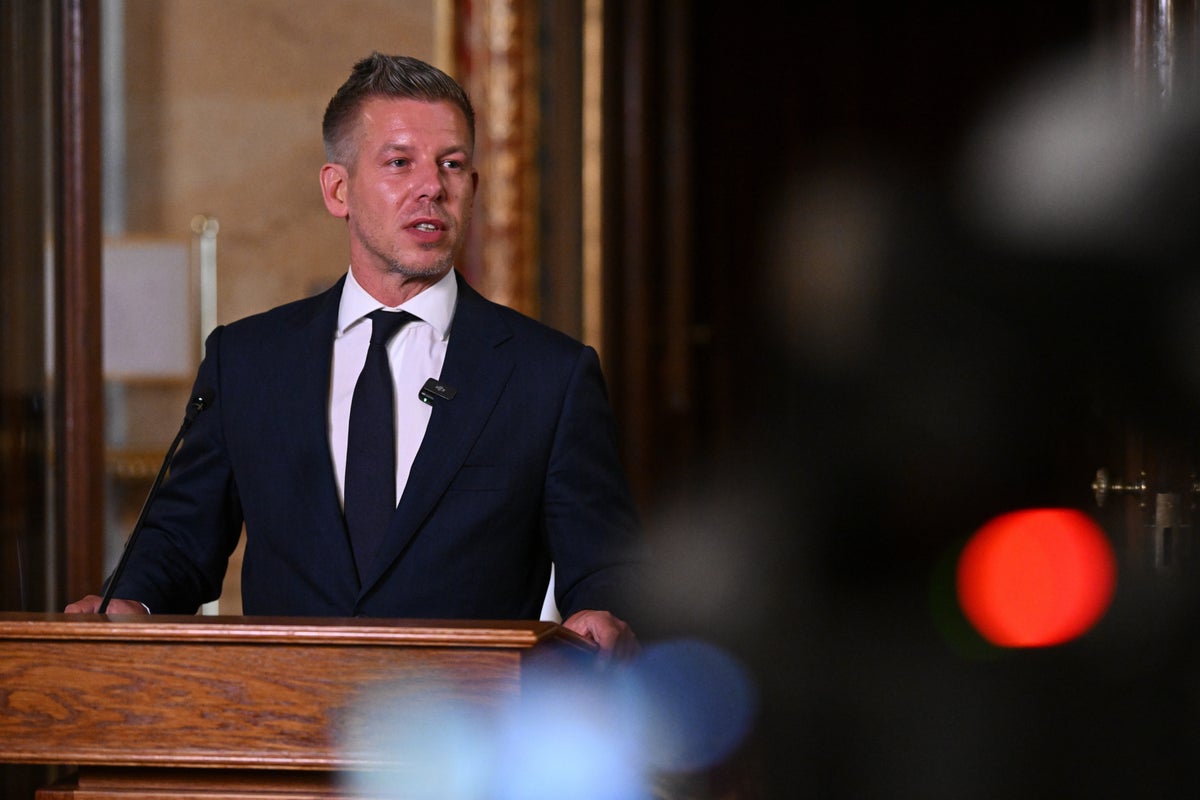
Just five days later, Hungary's new Prime Minister, Péter Magyar, launched a sweeping state investigation into every single deal, subsidy, tax break, and environmental permit Szijjártó handed to BYD while in office.
This isn't just local political drama. It's a massive clash over state subsidies, Chinese economic power in Europe, and the revolving door between government offices and corporate boardrooms.
The Revolving Door That Triggered a State Investigation
Szijjártó didn't just happen to land a job at BYD. He spent nearly twelve years as Hungary's Minister of Foreign Affairs and Trade under former Prime Minister Viktor Orbán. During that time, he was the primary architect of Hungary's aggressive move to welcome Chinese investment with open arms.
The numbers involved aren't small. Over the past few years, Orbán's government poured roughly $450 million in public money, state infrastructure, and direct subsidies into BYD's Hungarian operations.
Here is what that money bought:
- BYD chose Szeged in southern Hungary for its very first European EV passenger car manufacturing plant in 2023.
- In 2025, Szijjártó announced that BYD would move its European headquarters and R&D center from the Netherlands to Budapest.
- That headquarters move alone came with a direct state grant of 20 billion forints, which equals roughly $64 million in taxpayer funds.
When Szijjártó lost his ministerial post following the April 2026 election rout that ended Orbán's 16-year rule, he kept his seat in parliament. He barely showed up for sessions. Then came the announcement that he was moving straight to BYD's global executive team.
The public backlash was instant. Magyar didn't pull any punches when addressing lawmakers on July 20, 2026. He pointed out that Szijjártó had spent years helping BYD using hundreds of billions of forints in public money. The only difference now is that instead of Hungarian taxpayers paying his salary, BYD is covering his paycheck directly.
What the Hungarian Probe Is Actually Looking For
The government investigation isn't just a symbolic gesture. Magyar made it clear that the state audit will go line by line through every commitment made during Szijjártó's tenure.
Investigators are focusing on four specific areas:
- Taxpayer subsidies and direct financial grants awarded to BYD and other large foreign firms.
- Environmental exemptions granted to Chinese industrial projects, including lithium-ion battery mega-factories that angered local communities over water usage fears.
- Fast-tracked building permits and state-funded infrastructure projects built specifically to serve Chinese factory sites.
- Internal professional warnings or economic objections from career civil servants that political leadership ignored during negotiations.
Szijjártó framed his move as a prestigious personal milestone, calling BYD one of the greatest success stories in the automotive industry. His former party colleagues in Fidesz even released a statement congratulating him with "joy and pride," claiming he would represent Hungarian interests inside a global giant.
That defense falls apart when you look at how standard corporate governance works. Executive directors owe a fiduciary duty to their company's shareholders, not to the taxpayers of their home country.
How Hungary Became China's Trojan Horse in Europe
To understand why this probe matters so much, you have to look at the bigger picture across the European Union.
For years, Brussels has watched Hungary with growing alarm. While the European Commission was busy setting up tariffs against subsidized Chinese electric vehicles to protect domestic European automakers, Orbán and Szijjártó were actively building a back door.
By building cars inside Hungary, BYD can assemble vehicles right inside the EU single market. That lets them skip import tariffs entirely.
Hungarian taxpayers effectively helped fund the very facilities designed to bypass EU trade protections. It was a brilliant move for BYD, but it put Hungary directly at odds with its European partners.
The previous administration's policy was simple. They wanted Hungary to become a global production hub for lithium-ion batteries and Chinese electric cars. They welcomed massive battery plants from companies like CATL alongside BYD's car factories.
Local citizens weren't always onboard. Protests broke out in several Hungarian cities over fears that heavy industrial plants would drain local water tables and create environmental hazards. But the government pushed the projects through anyway, using special economic zones and expedited state approvals.
Now, those rushed approvals are coming back under the microscope.
The Russian Connection That Made Things Worse
Szijjártó's move to BYD didn't happen in a vacuum. It comes right on the heels of major national security questions about his past actions while serving as foreign minister.
During his time in office, Szijjártó regularly broke ranks with EU allies over Russia. He traveled to Moscow repeatedly after 2022 to negotiate oil and gas deals, publicly calling Russian Foreign Minister Sergey Lavrov his friend.
During the 2026 election campaign, reports surfaced revealing that Szijjártó had placed regular phone calls to Lavrov during sensitive EU meetings, providing live updates on internal discussions. Szijjártó denied leaking sensitive secrets, but he admitted to talking with Lavrov right before and after high-level EU meetings.
Just last week, Magyar confirmed that Hungarian intelligence services launched an official probe into Szijjártó's ties with the Russian government.
When you stack a national security investigation right next to a corporate conflict-of-interest probe, you get a political firestorm that won't blow over quickly.
What This Means for BYD and Future Foreign Investments
BYD finds itself in an uncomfortable spot.
The company is preparing to start rolling cars off its Szeged assembly lines toward the end of 2026. It needs stability, regulatory clarity, and a quiet working relationship with local authorities.
Instead, its most high-profile European hire just put a massive spotlight on every dollar of government support BYD ever received in Hungary.
If Magyar's government finds serious irregularities, several things could happen:
- Subsidies that haven't been fully paid out could be frozen or clawed back.
- Environmental permits for battery suppliers and factory sites could face strict legal reviews, leading to construction delays.
- Other EU member states could push Brussels to inspect Hungary's state aid grants to see if they broke EU fair-competition rules.
Multinational corporations love using government subsidies to expand into new markets. But when those subsidies are negotiated behind closed doors with politicians who later join the company payroll, the reputational risk can outweigh the savings.
Practical Lessons for Observers and Investors
This saga in Budapest holds crucial lessons for anyone following global trade, geopolitical shifts, or corporate governance.
First, watch government subsidies closely. When state financial incentives lack transparency or bypass normal legislative oversight, political shifts can wipe out the expected benefits almost overnight.
Second, the revolving door between politics and business carries immense regulatory risk. Companies think hiring former high-level officials gives them an advantage. Often, it just attaches a giant political target to their operations.
Third, expect Hungary's trade stance to shift back toward Brussels. With Magyar's pro-European administration in power, the days of unchecked state backing for foreign conglomerates without rigorous environmental and economic scrutiny are over.
If you're tracking European electric vehicle markets or Chinese corporate expansion, keep a close eye on the findings coming out of Budapest in the coming months. The results of this investigation will set a precedent for how Europe handles state-subsidized foreign investments moving forward.