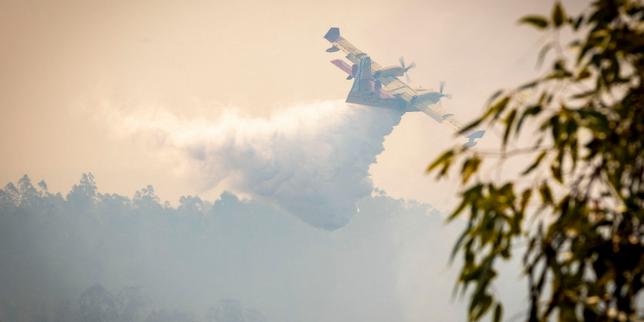
Flames don't care about borders. They don't care about tourist seasons. When a wildfire tears through over four thousand hectares of pristine forest in the Andalusian province of Huelva, it isn't just a local emergency. It's a flashing red light for an entire continent grappling with a dangerously shifting climate.
You've probably seen the headlines. Another blaze, another evacuation, another scarred piece of the European map. But the reality on the ground in southwest Spain is far more complex than a quick news alert suggests. If you want to understand why these intense fires keep happening and what they mean for the future of southern Europe, you have to look past the smoke.
The Brutal Reality of Huelva
Southern Spain is burning. That's not a metaphor. It's a statistical reality that emergency responders face year after year, but the scale of the recent Huelva fire has caught even seasoned firefighters off guard. Over four thousand hectares of woodland turned to ash in a matter of days.
People living in the affected zones faced sudden displacement. Local authorities had to coordinate rapid evacuations under blistering heat and erratic winds. Honestly, it's a miracle that casualties have been kept to a minimum, but the ecological and economic toll is staggering. Cork oak groves, pine forests, and local agricultural lands vanished overnight.
Why Huelva? The region combines a volatile mix of dry vegetation, soaring summer temperatures, and long-term drought conditions. When a spark hits tinder-dry soil, the fire moves faster than ground crews can react.
What Most People Get Wrong About Modern Wildfires
There's a common misconception that forest fires are purely natural disasters. Lightning strikes, dry brush, nature takes its course. We wash our hands of the blame.
That narrative is dangerously outdated.
Most fires in the Iberian Peninsula don't start by accident in a vacuum. Human activity plays a massive role, whether through agricultural negligence, discarded cigarette butts, or poorly managed land. Worse still, decades of fire suppression have actually backfired. By stopping every small, natural burn, land managers allowed massive amounts of dead undergrowth to accumulate. When a fire finally breaks through containment, it feeds on a decades-old buffet of fuel.
It burns hotter. It burns faster. It defies traditional firefighting tactics.
"A modern crown fire doesn't crawl along the forest floor. It jumps from treetop to treetop, creating its own weather system, complete with firestorms and erratic wind shears that make aerial drops look like spitting into a volcano."
The Climate Pressure Cooker
You can't talk about Huelva without talking about the climate metrics. Southern Spain has baked under persistent heatwaves for years now. Winter rainfall is down. Underground aquifers are dropping.
When trees suffer from extreme water stress, they produce less resin and dry out from the inside out. They become living torches.
Scientists tracking the Mediterranean basin have warned about this exact scenario for decades. The region is turning into a climate hotspot at a rate faster than the global average. Summers are starting earlier and ending later. Fire seasons used to be a distinct three-month window. Now, emergency services are practically on high alert year-round.
The Economic And Social Fallout
Forests aren't just pretty green patches on a map. They are economic engines for rural Andalusia.
When a fire destroys four thousand hectares, it wipes out generations of traditional forestry work. Cork harvesting takes decades to mature. Once a cork oak forest burns, the local economy takes a multi-decade hit. Beekeepers lose their hives. Livestock farmers lose grazing pastures. Rural depopulation accelerates because people simply cannot rebuild their livelihoods after back-to-back environmental shocks.
Tourism takes a hit too. Travelers booking idyllic rural getaways in Andalusia don't want to smell smoke or see charred mountain ranges. Local business owners watch helplessly as cancellations roll in during peak holiday weeks.
How Firefighting Strategy Must Adapt
We can't just throw water at the problem anymore. The old playbook is broken.
Ground crews and aerial units are essential, but prevention is where the real war is won or lost. That means embracing proactive landscape management.
- Controlled Burns: Setting small, deliberate fires during the off-season to clear out excess brush and dead wood.
- Agroforestry Buffers: Creating natural firebreaks using grazing animals like goats to naturally eat down flammable undergrowth.
- Early Detection Tech: Deploying AI-driven thermal cameras and sensor networks to spot smoke plumes within minutes of ignition.
It's tedious work. It doesn't generate dramatic television footage like water-dropping planes do. But it's the only way to stop Huelva from becoming the new normal.
The Path Forward
The Huelva fire is extinguished, but the underlying vulnerability remains entirely intact.
Governments need to pour resources into long-term prevention rather than just reactive emergency response. Landowners need support to manage their plots safely. And citizens need to wake up to the reality that a warmer Europe requires a complete shift in how we live alongside nature.
Stop treating these fires as isolated anomalies. They are structural failures of a system that refuses to adapt fast enough to the world we've created. Stay vigilant, support local reforestation efforts, and demand better land management policies before the next ridge goes up in smoke.


