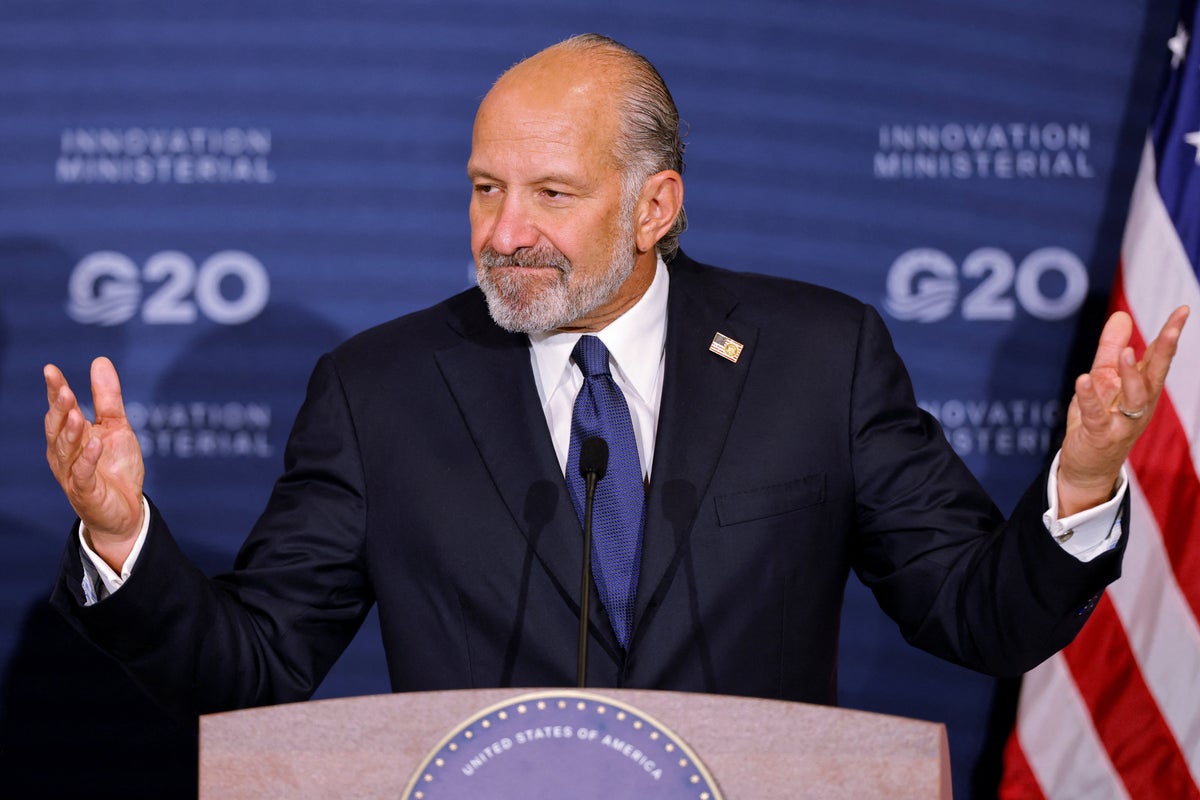
Politics runs on message discipline. Right now, Commerce Secretary Howard Lutnick is making that discipline nearly impossible. When you have a cabinet official publicly claiming that zero Americans have died in an active military engagement while families are actively mourning fallen service members, you have an instant crisis. Donald Trump had to take to Truth Social to do immediate damage control.
This latest gaffe is not an isolated incident. It highlights a growing pattern of seat-of-the-pants communication errors, contradictory statements on critical infrastructure, and lingering controversies that continue to pull the White House into unnecessary defensive loops. If you look at how this latest firestorm erupted, it reveals a lot about the friction inside high-stakes executive management.
The Costly Slip on Iran and the Quick Spin Cycle
During a televised appearance on CNBC, Lutnick tried to spin the administration's economic chokehold strategies regarding Tehran. He casually stated that no American lives had been lost in the ongoing military conflict with Iran.
That statement ignored reality. The conflict has already seen 18 American service members return home in flag-draped transfer cases to Dover Air Force Base. Families are grieving. Public sentiment is sensitive.
The backlash was immediate and brutal. Trump jumped online to clean up the mess, writing that Lutnick had mixed up his theatres and supposedly had Venezuela on his mind instead. Soon after, Lutnick posted an apology on X, claiming he misspoke and parroting the Venezuela talking point.
Cabinet secretaries cannot afford memory lapses of this magnitude. When you manage multi-billion dollar trade policies and face intense public scrutiny, casual TV appearances require absolute precision. Lutnick failed that basic test.
Shifting Stances on AI Infrastructure and Water Usage
Lutnick didn't stop with foreign policy missteps. During the exact same interview cycle, he waded into the fierce national debate over artificial intelligence data centers. He claimed these massive facilities don't actually use water, dismissing community concerns and local pushback as foreign propaganda designed to slow down American technological dominance.
That claim created immediate whiplash. Just a year prior, Lutnick acknowledged the staggering resource demands of these tech hubs, openly admitting that they suck up massive amounts of water.
Communities across the country are fighting local zoning boards over grid capacity and water scarcity tied to these server farms. Local officials and environmental planners deal with these realities daily. When a high-ranking federal official dismisses concrete resource limits as fake news while contradicting his own prior statements, it alienates local leaders who are trying to balance tech growth with municipal survival.
The Lingering Shadow of Past Associations
These policy gaffes compound an already fragile political standing. Lutnick has spent months fighting off scrutiny regarding his past connections to Jeffrey Epstein.
For months, public statements from the Commerce Secretary attempted to distance him from the disgraced financier, claiming a single 2005 encounter left him so disturbed that he cut off all contact. But released Justice Department documents told a different story, showing interactions stretching as far as 2018.
During Senate Commerce Committee questioning led by Senator Chris Van Hollen, Lutnick conceded that he had visited Epstein's private island in 2012 with his family. While he maintained it was just a casual stop during a boat trip, the slow drip of admissions has damaged his credibility. Opponents use these inconsistencies to attack administration transparency, forcing the White House to constantly manage distractions instead of pushing legislative priorities.
Managing Executive Hubris
Inside Washington, Lutnick remains insulated largely due to his decades-long personal friendship with the president and his heavy lifting during the 2004-era and 2024 transition efforts. Yet, career bureaucrats and fellow administration officials frequently clash with his corporate, wall-street style management approach.
Running a massive federal agency requires bureaucratic finesse and strict message alignment. Treating press appearances like off-the-cuff board meetings creates chaos. When executive leadership spends half its morning correcting cabinet statements on national television, governance turns into a daily fire drill.
Governments survive on competence and clear signals. Cabinet secretaries are supposed to absorb pressure, not create new vectors of outrage. Until message discipline becomes standard operating procedure for every corner of the cabinet, the White House will keep finding itself on the defensive. Keep a close eye on future media rollouts. Watch who gets vetted before the cameras start rolling next time.