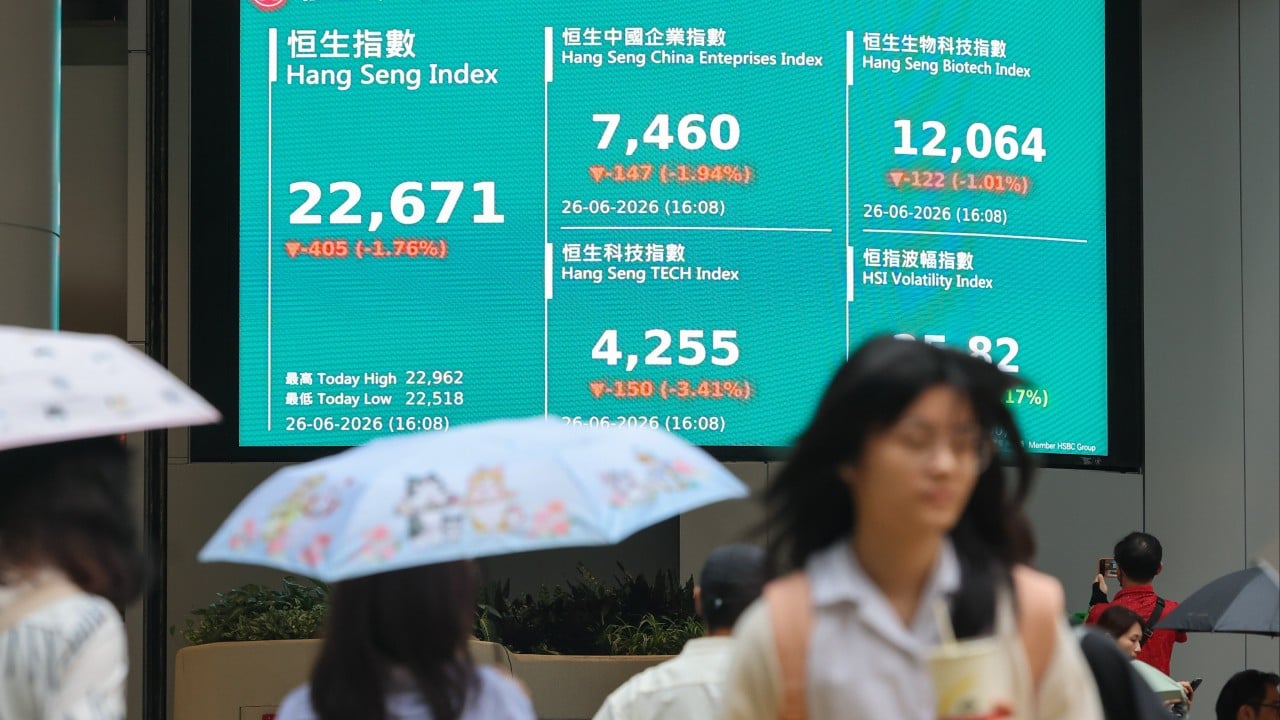
Hong Kong's financial safety net just took a noticeable punch to the gut. The city's massive Exchange Fund pulled in an investment income of HK$134.7 billion for the first half of the year. That sounds like a lot of cash until you look at the rearview mirror. It represents a sharp 37.1 percent drop compared to the HK$214 billion hauled in during the same period last year.
So, what happened? Markets got messy. Local equities dragged things down while bond returns faced persistent headwinds.
Breaking Down the Numbers
If you dig into the report released by the Hong Kong Monetary Authority (HKMA), the picture gets clearer. The fund didn't lose money everywhere, but the weak spots hurt badly.
Hong Kong equities hemorrhaged HK$11.8 billion due to ongoing local market volatility and broad declines. At the same time, overseas markets told a completely different story. Other equities—fueled heavily by global artificial intelligence demand, semiconductor rallies, and tech hardware surges in the US and Asia—raked in HK$53.7 billion.
Bonds brought in HK$49.1 billion as US dollar bond yields stayed elevated, providing steady interest income. Currency translation effects also chipped in a positive HK$34.3 billion from non-Hong Kong dollar assets, alongside HK$9.4 billion from other investments.
The Broader Economic Realities
HKMA Chief Executive Eddie Yue pointed out that global markets had to navigate serious speed bumps early in the year. Geopolitical tensions in the Middle East sparked sudden volatility back in March. Meanwhile, sticky inflation fears pushed the US Treasury yield curve upward.
People often forget how tightly bound Hong Kong’s financial health is to global monetary shifts. When US interest rate expectations fluctuate or supply chains wobble, the Exchange Fund feels the shockwaves immediately. Even with the drop in first-half earnings, the fund's total assets actually climbed by HK$302.4 billion since the end of last year, landing at HK$4.46 trillion. Its accumulated surplus sits comfortably at HK$862.7 billion.
What This Means Moving Forward
Volatility is the default setting now. You cannot expect the kind of uniform, record-breaking bull runs we saw previously to repeat every single quarter. Currency translation gains can vanish just as quickly as they appear when foreign exchange rates pivot.
If you are managing institutional capital or tracking macroeconomic trends in Asia, keep a close eye on US inflation data and tech sector valuations. Those two variables dictate the short-term trajectory of Hong Kong's primary financial buffer. Adjust your risk tolerance accordingly and stop treating safe-haven assets as immune to global market corrections.