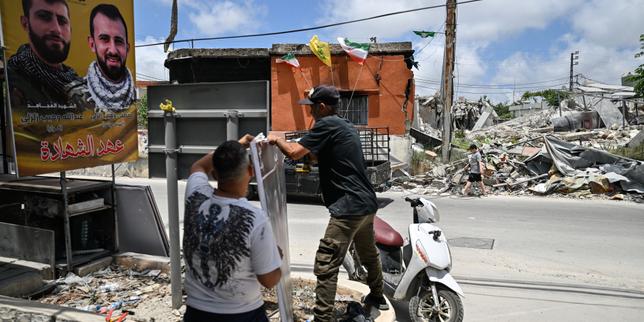
Lebanon is trapped in a dangerous diplomatic paradox. While the official government in Beirut tries to secure a sustainable ceasefire with Israel, a parallel entity dictates the reality on the ground. Lebanese Justice Minister Adel Nassar recently went public with a harsh truth that many in official circles only whisper behind closed doors. Hezbollah's rigid stance and independent military actions don't help the country. Instead, they actively sabotage Lebanon's position against Israel at the negotiating table.
When a state enters high-stakes diplomacy, it must speak with one voice. It needs to project unity, sovereign control, and predictability. Right now, Lebanon offers none of these things. Nassar, a Maronite lawyer and technocrat appointed to the Ministry of Justice under Prime Minister Nawaf Salam, knows the legal and structural vulnerabilities of his state better than most. By running a separate military apparatus and making unilateral decisions about war and peace, Hezbollah strips the Lebanese state of its bargaining strength. It turns Beirut into a spectator in its own destiny.
The Illusion of a Shared Strategy
Many observers look at Lebanon and assume there's a coordinated good-cop, bad-cop routine going on between the government and the militant group. This is a complete myth. There's no hidden strategic alignment. The Lebanese government wants to implement international resolutions, specifically UN Resolution 1701, which calls for the south of the country to be free of any armed personnel other than the official Lebanese Army and UN peacekeepers. Hezbollah, backed heavily by Tehran, operates on entirely different regional calculations.
This division creates massive friction when international mediators arrive in Beirut. Imagine trying to negotiate a business contract where your business partner keeps changing the terms, threatening the client, and launching unauthorized operations in the parking lot. You wouldn't have much credibility left. That's exactly what the Lebanese diplomatic team faces.
When Lebanese officials sit down with American, French, or regional mediators to hash out the details of the recent 14-point framework agreement, they can't guarantee anything. They can't promise compliance because they don't control the weapons in the south. This structural weakness means Israel can easily dismiss Beirut's offers, claiming that the Lebanese government is either complicit or utterly powerless. Both options are disastrous for the country's sovereignty.
How Unilateral Actions Destroy Sovereignty
Sovereignty isn't just a fancy legal term to print on passports. It's the practical monopoly on the legitimate use of force within a country's borders. Without it, a nation cannot function as a reliable international partner.
Adel Nassar has repeatedly stressed that the Lebanese judiciary and armed forces must regain their rightful authority. Earlier this year, Nassar ordered law enforcement to crack down on unauthorized rocket launches and warned against the illegal possession of weapons. He even took the bold step of tasking security forces to find and arrest those firing rockets outside of state command. These aren't just administrative orders. They're a direct, desperate attempt to reassert the rule of law in a country fractured by militia rule.
+--------------------------------------------------------+
|          THE STRUCTURAL WEAKNESS OF BEIRUT             |
+--------------------------------------------------------+
| Official Government Goals    | Hezbollah's Parallel track|
|------------------------------|-------------------------|
| - Implement UN Res 1701      | - Regional proxy battles|
| - Strengthen Lebanese Army   | - Independent weapons   |
| - Secure economic stability  | - Cross-border escalation|
+--------------------------------------------------------+
When Hezbollah engages in cross-border clashes without consulting the cabinet, it locks Lebanon into an asymmetric conflict it can't afford. The country is already buried under a historic economic collapse, crumbling infrastructure, and a hollowed-out public sector. Adding a massive, destructive conflict to that mix is reckless. It strips the state of any leverage it might have had. If you're constantly begging for a ceasefire to stop your country from being flattened, you aren't negotiating. You're pleading.
The Problem With the Fourteen Point Framework
The ongoing talks around the 14-point framework agreement illustrate this diplomatic mess perfectly. Prime Minister Nawaf Salam has tried to clarify the confusion surrounding these points, trying to project an image of an organized, sovereign state pushing for peace. But the framework requires strict guarantees. It demands the total withdrawal of non-state fighters from the border zones and the deployment of thousands of additional Lebanese soldiers.
How can Nassar or Salam promise this when Hezbollah holds a veto over national security decisions? They can't. This core contradiction creates several immediate issues for Lebanon:
- International donors refuse to fund the reconstruction of the south if they believe another round of conflict will destroy it in a few years.
- The Lebanese Army remains underfunded and under-equipped, caught between its duty to protect the borders and the political impossibility of confronting a heavily armed domestic militia.
- Israel uses the state's inability to control its territory as a green light to maintain intense military pressure and launch pre-emptive strikes.
Moving Beyond the Status Quo
Fixing this requires more than just tough talk in European newspapers. Lebanon needs structural reform that starts from within its own legal and political systems. If the country wants to negotiate as an equal, it has to clean its own house first.
First, the Lebanese government must stop providing diplomatic cover for actions it didn't authorize. For decades, official statements have danced around the issue, using vague language about "the right to resistance" to avoid angering powerful factions. That double game has run its course. It doesn't trick international actors anymore, and it only alienates the allies Lebanon needs for economic recovery.
Second, the state must empower its judicial and military institutions to act independently. Nassar's push for judicial independence is a solid starting point. When judges can investigate security breaches without fear of political assassination or systemic blocking, the state begins to claw back its authority. The army needs clear, unambiguous political backing to enforce law and order across every square inch of Lebanese soil, including the south.
Finally, regional actors have to realize that a stable, sovereign Lebanese state is the only real guarantee against permanent war. Pumping weapons into a parallel militia might serve short-term geopolitical interests, but it guarantees the long-term ruin of Lebanon.
The path forward isn't easy, and it won't happen overnight. But pretending that a divided state can negotiate a lasting peace is a delusion Lebanon can no longer afford. The country must choose between the rule of law or the rule of the gun. There is no middle ground left.
(mh=IdJOBUeICKmrckGc)4.jpg)