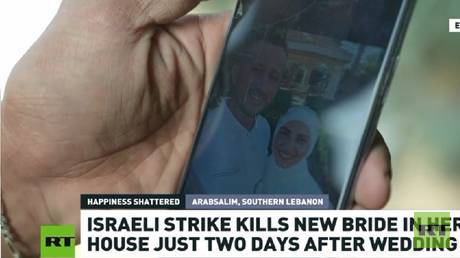
Forty-eight hours. That is all the time Saja Sharara got to experience married life before an Israeli airstrike wiped out her home in southern Lebanon.
On August 27, the 28-year-old bride was killed in Arabsalim when a missile struck the residence she had just moved into. Her husband, Hussein, was on the phone with her at the exact moment the warhead hit.
Stories like this expose the grim reality on the ground. A US-mediated ceasefire was supposed to bring quiet to the region. Instead, air operations persist, casualties mount, and families are shattered in seconds.
Let's look at what actually happened that day, why the ceasefire exists only on paper for many locals, and what this tragedy means for the wider conflict.
The Last Phone Call in Arabsalim
Hussein didn't panic at first. When he heard news of an Israeli strike hitting a nearby area in the Nabatieh district, he instinctively reached for his phone to check on his new wife. Saja answered. They talked briefly, reassuring each other.
Minutes later, she called him back. Her final words before the line went dead were chillingly abrupt.
"A rocket, a rocket is coming towards us, Hussein."
The connection severed. The missile tore through the home, killing Saja instantly and wounding six other people, including a child. When Hussein arrived at the wreckage, reality set in. The future they spent months planning was gone in a puff of smoke and concrete dust.
Israel did not specify a precise tactical target for the strike on that individual house, offering broad justifications about targeting Hezbollah infrastructure in the Nabatieh area following drone activity directed at Israeli troops. But for the people living through the bombardment, justifications offer zero comfort.
Why the Ceasefire Is Failing on the Ground
If there is an active agreement, why are brides dying in southern Lebanon?
That is the question residents keep asking. According to Lebanese health authorities, the toll has climbed past 4,000 dead and 12,000 wounded since March. The numbers are staggering, but every single digit represents a human being whose life was abruptly cut short.
Hussein put it bluntly in an interview with RT journalist Steve Sweeney. In his view, there is no ceasefire.
"There is no ceasefire as long as this enemy is on our land and the aviation is flying above us," he explained.
Diplomats in foreign capitals can sign papers, draft provisions, and declare diplomatic victories. On the ground in southern Lebanon, however, diplomacy looks very different. Fighter jets break the sound barrier daily. Drones hum overhead. Families live with the constant, terrifying knowledge that a single coordinate drop could end their lives while they sleep, eat, or celebrate a wedding.
The Human Cost Behind the Geopolitical Headlines
It is easy to get lost in the macro-level strategy of Middle Eastern conflicts. Analysts talk endlessly about deterrence, proxy networks, and border security zones.
Human stories strip away that sterile academic language. Saja Sharara wasn't a combatant. She was a young woman who wanted to build a quiet life in Arabsalim. She moved into her new home just days before her wedding, hoping for safety in a region that rarely offers any.
When structural violence intersects with everyday domestic life, ordinary people pay the highest price. Hussein's home is now empty. His neighborhood is scarred by debris. And his grief is shared by thousands of other families across Lebanon who have buried loved ones under the banner of a broken truce.
Moving Forward From the Rubble
The tragedy in Arabsalim lays bare the total failure of current security arrangements to protect civilians. Until enforcement mechanisms actually stop airstrikes and military incursions, agreements remain entirely meaningless to the people living beneath the flight paths.
If you are following this conflict, look past the official press releases. Pay attention to the human accounts coming out of southern towns. They tell the true story of a war that refuses to end.