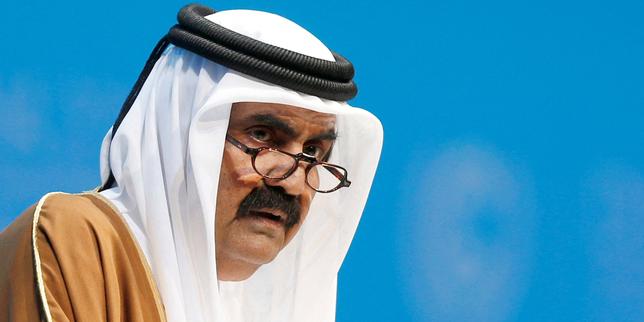
The death of Sheikh Hamad bin Khalifa Al Thani on July 12, 2026, marks the end of an era for the Middle East. Some early international reports put his age at 72, but the former Qatari leader was 74 when he passed away, leaving behind a legacy that completely re-engineered how small states wield influence on the global stage. He didn't just run Qatar. He built it from the ground up, transforming a sleepy, indebted peninsula into an financial juggernaut and diplomatic heavyweight that the rest of the world couldn't afford to ignore.
When he took power in 1995, Qatar was nearly broke. By the time he voluntarily stepped down in 2013, the country boasted the highest GDP per capita in the world. He understood that a tiny nation surrounded by aggressive giants couldn't survive on luck alone. It needed to make itself completely indispensable.
The Bloodless Coup That Changed the Gulf Forever
To understand how modern Qatar became a diplomatic crossroads, you have to look at how Sheikh Hamad took the throne. It wasn't a standard, peaceful succession. In June 1995, while his father, Emir Khalifa bin Hamad Al Thani, was vacationing in Switzerland, Hamad executed a flawless, bloodless palace coup. He didn't use violence. He simply secured the loyalty of the armed forces, the ruling family, and key tribal leaders, then called his father to break the news.
The old guard preferred a quiet life, moving slowly and keeping Qatar under the geopolitical shadow of neighboring Saudi Arabia. Hamad wanted something completely different. He saw that Qatar’s vast, undeveloped natural resources could buy ultimate security and total independence, but only if the country moved fast and took massive risks. His father tried to fight back from exile, launching a failed counter-coup attempt a year later, but Hamad had already consolidated power. The message was clear. Qatar was no longer playing second fiddle to anyone in the Gulf.
He immediately set out to change the internal political culture. He brought in a permanent constitution, gave women the right to vote in municipal elections, and eventually created the title of Father Emir when he passed the reins to his son. It was a calculated strategy to project stability to Western investors who were nervous about putting billions of dollars into a volatile region.
The Great LNG Bet and the Riches That Followed
In the mid-1990s, Qatar sat on a goldmine it couldn't use. The North Field was the largest non-associated natural gas field in the world, but the technology to transport gas across oceans didn't favor a small Gulf nation. Oil was king, and natural gas was mostly seen as an afterthought.
Sheikh Hamad ignored the skeptics. He poured billions into liquefied natural gas technology, partnering with Western energy giants like ExxonMobil and Total. It was a staggering financial gamble that nearly pushed the country to the brink of bankruptcy before the infrastructure was even built.
The bet paid off spectacularly. By 2006, Qatar surpassed all competitors to become the world's leading exporter of LNG. Annual production capacity skyrocketed to 77 million tonnes. The country's GDP expanded more than twenty-fourfold during his 18-year reign. The hydrocarbon sector went from generating a modest three billion dollars to well over 110 billion dollars.
This wealth wasn't just stuffed into bank accounts. Hamad established the Qatar Investment Authority in 2005. The strategy was simple: buy up pieces of the outside world so that the outside world would always have a vested interest in protecting Qatar. The sovereign wealth fund began snapping up iconic global assets. They bought London’s luxury department store Harrods, major stakes in Volkswagen, Barclays Bank, and British Airways, alongside real estate developments across Europe. When Paris Saint-Germain football club was acquired, it wasn't just a sports investment. It was a massive branding exercise designed to put Doha on the map for regular citizens worldwide.
A Media Weapon Named Al Jazeera
Economic muscle wasn't enough to secure total sovereignty. Sheikh Hamad knew he needed a voice that could compete with Western media networks and regional heavyweights like Saudi Arabia. In 1996, he provided a 137 million dollar loan to launch Al Jazeera.
Before Al Jazeera, Arab state television was notoriously boring, consisting mostly of predictable broadcasts of aging monarchs receiving foreign dignitaries. Hamad’s new network changed everything overnight. It provided raw, unfiltered news, hosted fierce debates, and gave a platform to political dissidents from across the Arab world.
The network infuriated almost every government in the Middle East. Dictators and kings routinely shut down Al Jazeera bureaus and recalled their ambassadors from Doha in protest. But the channel achieved exactly what Sheikh Hamad wanted. It gave Qatar immense leverage. For the first time, a small nation controlled the narrative of the Arab street.
The network became a major political tool during the 2011 Arab Spring. Qatar used its media apparatus to support revolutionary movements and Islamist groups, particularly the Muslim Brotherhood, in Egypt, Tunisia, and Libya. While this strategy successfully elevated Doha's international profile, it deeply strained relations with Saudi Arabia and the United Arab Emirates, setting the stage for major diplomatic crises years down the line. Hamad didn't blink. He knew that true influence required making waves, not just blending into the background.
The Art of Contradictory Diplomacy
One of the most fascinating aspects of Sheikh Hamad's rule was his ability to hold entirely contradictory alliances at the same time. He turned Qatar into a diplomatic tightrope walker, maintaining open lines of communication with entities that openly hated each other.
He allowed the United States to build the Al Udeid Air Base, which eventually became the forward headquarters of the US Central Command and the largest American military facility in the Middle East. This move provided Qatar with an ironclad security guarantee against external invasion. Yet, at the exact same time, Hamad maintained close diplomatic and economic ties with Iran, sharing the massive North Field gas reservoir with Tehran.
He didn't stop there. Doha became a safe haven where the United States could talk to groups it officially categorized as terrorists. Hamad allowed the Taliban to open a political office in Doha, creating a channel that eventually led to the US withdrawal negotiations from Afghanistan. He hosted Hamas leaders while simultaneously allowing Israeli trade representatives to operate quietly in Doha during the late 1990s and early 2000s.
To outside observers, it looked chaotic, even hypocritical. To Hamad, it was pure survival. By being the only place where every global player could talk to their worst enemies, Qatar made itself completely unattackable. If you destroy Qatar, you destroy the only phone line you have to your adversaries.
Breaking Tradition With a Smooth Transition
In June 2013, Sheikh Hamad did something completely unheard of in the modern Arab world. At 61 years old, at the absolute peak of his power and influence, he went on national television and announced his voluntary abdication. He handed the throne to his fourth son, Sheikh Tamim bin Hamad Al Thani.
In a region where leaders typically leave office only in a coffin or a prison cell, this move sent shockwaves through the Gulf. It was a brilliant domestic maneuver. By stepping down early, he ensured a completely seamless transition of power, breaking the historical cycle of internal family rivalries that had plagued the Al Thani dynasty for generations.
It also allowed a younger, more modern leader to take the wheel just as the geopolitical blowback from the Arab Spring began to harden. Though Hamad took the title of Father Emir and stepped out of the daily spotlight, his foundational vision remained the blueprint for Qatar's survival during the intense diplomatic blockade launched by its neighbors between 2017 and 2021. The infrastructure, the wealth, and the international alliances he spent nearly two decades building allowed the country to withstand total economic isolation without breaking a sweat.
The Concrete Steps of a National Transformation
The story of the Father Emir isn't just about high-stakes international poker games. It is also about a radical restructuring of daily life on the peninsula. If you look at Qatar's domestic development under his watch, the transformation follows a deliberate sequence of institutional building.
- 1995: Established the Qatar Foundation for Education, Science and Community Development, chaired by his wife, Sheikha Moza bint Nasser, bringing elite American universities like Georgetown, Northwestern, and Cornell to Doha.
- 1996: Abolished the Ministry of Information, completely eliminating formal state censorship to clear the path for independent broadcasting.
- 2004: Issued the permanent constitution, establishing a framework for a partially elected advisory council and guaranteeing basic civil liberties.
- 2005: Formed the Qatar Investment Authority to diversify national wealth away from direct reliance on volatile energy markets.
- 2008: Launched the Qatar National Vision 2030, a comprehensive development blueprint focused on transforming the country into an advanced, sustainable society.
- 2010: Secured the hosting rights for the 2022 FIFA World Cup, cementing Qatar's position as a global hub for sports, tourism, and massive infrastructure development.
A Legacy of Absolute Defiance
Sheikh Hamad bin Khalifa Al Thani died knowing he had achieved exactly what he set out to do in the summer of 1995. He took a marginal, overlooked state and turned it into an international power player. He proved that true sovereignty isn't determined by geographical size or the size of your standing army. It is determined by your economic value, your strategic utility, and your willingness to take massive political risks.
For anyone tracking the future of Middle Eastern geopolitics, the playbook Hamad wrote remains essential reading. To truly understand how small states navigate a world dominated by superpower rivalries, look at the concrete diplomatic frameworks he left behind in Doha. Study how Qatar continues to position itself as an un-skippable mediator in conflicts from Gaza to Ukraine. The masterclass in statecraft he delivered over eighteen years reshaped the modern world, and its effects will be felt for decades to come.