Australia's luck just ran out. For years, our isolated geography acted as a natural shield against the highly pathogenic H5 bird flu strain that has decimated wildlife and poultry across every other continent since 2020. That shield officially shattered in June with cases in Western Australia and South Australia. Now, the virus has made its terrifying debut on the country's heavily populated east coast.
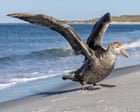
A migratory giant petrel found sick near the coastal town of Hawks Nest, north of Sydney, has returned a preliminary positive test for H5 bird flu. While health officials are quick to urge calm, this isn't just another routine biosecurity blip. It's a massive wake-up call for the nation's agricultural sector, wildlife conservationists, and everyday backyard chicken keepers.
Understanding what this development means requires looking past the standard media spin. The threat is no longer a distant possibility. It's right here on our doorstep.
The Hawks Nest Discovery and What Happens Next
The sick giant petrel was found on the New South Wales central coast and immediately triggered alarms. Preliminary testing at the Elizabeth Macarthur Agricultural Institute confirmed the presence of the H5 virus. Right now, those samples are sitting in a laboratory at CSIRO's Australian Centre for Disease Preparedness in Geelong for final confirmation.
Let's be clear about what a "suspected" case means in biosecurity terms. It means the state laboratory found the virus, but national protocols require the gold-standard federal lab to double-check the homework before it's officially logged into global databases. In almost all historical precedents with high-consequence animal diseases, these preliminary positives are rarely false alarms.
This marks the sixth time the highly pathogenic strain has been detected on the Australian mainland, all within a brutal few weeks. June saw four cases in Western Australia and one in South Australia. All involved wide-ranging migratory seabirds. This latest animal, however, brings the pathogen directly into the economic and ecological engine room of the country.
Why the East Coast Changes the Bio-Security Equation
Detecting a virus in a remote stretch of the Western Australian coastline is a tragedy for local wildlife. Detecting it in New South Wales is an existential threat to commercial industries. The eastern seaboard holds the highest concentration of commercial poultry farms, egg producers, and backyard bird owners in the nation.
NSW Agriculture Minister Tara Moriarty stood before cameras to assure the public that the poultry industry hasn't been impacted yet. She told consumers to keep buying chicken and eggs. That advice makes sense for preventing a supermarket panic, but behind closed doors, commercial producers are sweating.
The virus hasn't hit a commercial shed yet. That's the only good news here. If H5 bird flu manages to breach the biosecurity barriers of a major commercial egg or meat facility, the economic fallout will be swift and severe. We aren't talking about a few sick chickens. We are talking about mandatory, total flock eradication within a multi-kilometer radius. The supply chain shocks would make recent inflation look mild.
The Avian Highway We Cannot Close
You can't border-control a wild bird. Australia's unique ecosystems have evolved over millennia alongside massive migratory flyways. Seabirds like giant petrels and skuas travel thousands of kilometers, moving between the sub-Antarctic islands, the Southern Ocean, and the Australian coastline.
These birds act as highly mobile vectors. They don't respect state borders, and they don't care about quarantine zones. The fact that the first five cases were scattered across Esperance in WA and the Fleurieu Peninsula in SA, and now Hawks Nest in NSW, shows the virus is riding the natural movements of wild marine birds.
Biosecurity experts have feared this specific scenario for half a decade. When the virus made the jump to South America and eventually to the Antarctic region, it was only a matter of time before migratory species carried it north into Australian waters. The geographic isolation that protected us for so long has simply been bypassed by the natural world.
Inside the Emergency Response in Orange
The NSW government didn't start from scratch when this bird was found. A State Coordination Centre has been operating out of the Orange Agricultural Institute since mid-June, explicitly stood up when the western states started lighting up on the disease map.
More than 500 additional field officers from Local Land Services and the National Parks and Wildlife Service have been trained over the last year to handle this exact scenario. A dedicated H5 bird flu call center is managing incoming public reports.
Chief Veterinary Officer Jo Coombe stated that teams are using the best available data to target actions around high-risk wildlife species and critical natural locations. This means increased surveillance in wetlands, coastal roosting sites, and areas where wild birds are highly likely to mingle with domestic populations.
The strategy right now isn't eradication in the wild. You can't eradicate a virus in wild ocean-going birds. The strategy is containment, early detection, and separation. The goal is to build an invisible wall between the wild birds carrying this threat and the domestic birds that supply our food.
What Backyard Flock Owners Must Do Immediately
If you keep chickens, ducks, or geese in your backyard, you need to accept that the rules of engagement changed this week. You can no longer assume your birds are safe just because you live in a suburb or a regional town.
Small-scale backyard flocks are often the weakest link in biosecurity defense. They frequently have access to open yards, share water sources with wild ducks, and live under trees where wild birds roost. This creates an ideal transmission pathway.
Step one is simple. Restrict contact between your birds and wild birds. If your feeders are out in the open where wild pigeons, sparrows, or ducks can access them, move them inside a secure coop immediately. Clean your water troughs daily and ensure they aren't positioned under overhanging branches where wild bird droppings can contaminate them.
Step two involves changing your shoes. If you walk through a local park or along a beach where wild birds congregate, you can easily track traces of the virus back to your own property on the soles of your boots. Dedicate a specific pair of boots for your chicken coop, or use a simple disinfectant footbath before you walk into your flock's enclosure. It sounds paranoid, but it's exactly how commercial farms stay clean.
How to Spot the Signs of Infection
You need to know what to look for. H5 bird flu doesn't look like a mild cold in birds. It's a brutal, rapid killer.
In domestic poultry, the symptoms are stark and terrifying. You might notice sudden death without any prior signs of illness. Birds that survive the initial hours often show severe respiratory distress, gasping for air with open beaks. Their combs and wattles can turn a deep blue or purple color due to lack of oxygen.
Other clear signs include a drastic drop in egg production, watery diarrhea, swelling around the head and eyes, and distinct neurological issues like twisted necks, loss of balance, or inability to stand. If you walk out to your coop and find multiple birds dead or exhibiting these symptoms, do not touch them.
The Human Health Element
Let's address the elephant in the room. Can humans catch this?
The short answer is yes, but the risk to the general public remains incredibly low. The NSW Department of Primary Industries has explicitly stated that this strain does not easily infect humans. You aren't going to catch it by walking down the street or eating a properly cooked chicken breast from the supermarket.
The real danger is for people who have direct, unprotected contact with infected birds or highly contaminated environments. Think poultry farm workers, wildlife rescue volunteers, or veterinarians. When the virus does jump to humans, it's usually because someone handled a dying bird without gloves or masks, inhaling aerosolized viral particles.
Public health units are working alongside animal health teams to monitor anyone who was involved in retrieving the Hawks Nest petrel. For the average Australian, the risk isn't an immediate personal health crisis. It's an ecological and economic one.
Misconceptions Worth Correcting
A lot of bad information circulates when a high-profile virus hits the news cycle. Let's clear up a few common myths before they cause unnecessary panic.
First, this is not the same bird flu outbreak that hit Victorian poultry farms earlier this year. Victoria dealt with an H7 strain of avian influenza. While that was devastating for the farms involved and caused temporary egg shortages, it was a localized event driven by a different strain. The H5 strain currently moving through migratory birds is a completely different beast with global momentum behind it.
Second, buying chicken and eggs from the supermarket is entirely safe. The commercial supply chain is heavily monitored. Any flock suspected of harboring the virus is barred from entering the food supply immediately. Furthermore, standard cooking temperatures kill the virus completely. You don't need to alter your grocery list.
Third, don't assume a bird is safe just because it doesn't look like a seabird. While migratory marine birds are the current carriers bringing the virus to our shores, local land birds, black swans, and native ducks are highly susceptible. If the virus spills over into local ecosystems, it can move through our unique native bird populations with devastating speed.
Immediate Actions and Reporting Protocols
If you love the Australian bush or spend time along the coast, you are now on the front lines of surveillance. Do not ignore unusual animal behavior.
If you spot a dead wild bird, or notice multiple birds showing signs of illness in the same area, do not pick them up. Do not let your dog chase or sniff them. Keep your distance.
Take out your phone. Record the exact location using GPS coordinates if possible. Take clear photos or video footage from a safe distance to help authorities identify the species and assess the symptoms.
Report the sighting immediately to the Emergency Animal Disease Hotline on 1800 675 888. This is a free, nationwide number staffed 24 hours a day. Every hour counts when tracking the spread of a highly contagious pathogen. Your quick phone call could prevent a localized spillover from turning into a full-scale regional disaster. Clean your own boots, secure your backyard flocks, and keep your eyes open. This fight is just beginning.