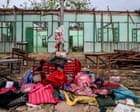
Schools aren't safe anymore. That's the brutal reality of a world where classrooms are treated like battlefields and students are targeted like enemy combatants.
If you think this is an exaggeration, a massive new study proves it's our grim global reality. For an alternative perspective, consider: this related article.
The Global Coalition to Protect Education from Attack (GCPEA) just released its flagship Education Under Attack 2026 report, and the numbers are sickening. Over 2024 and 2025, documented attacks on education surged by 40% worldwide compared to the previous two years. We're talking about at least 8,566 separate incidents where schools were bombed, pupils were kidnapped, and teachers were executed.
This isn't a localized problem. The GCPEA identified attacks stretching across 83 different countries. Even more alarming, 55 of those nations aren't even involved in active armed conflicts. Related reporting regarding this has been provided by TIME.
More than 10,600 students, teachers, and university staff were killed, maimed, abducted, or arrested over this two-year span. It is the highest volume of violence against education ever recorded.
As Lisa Chung Bender, the director of GCPEA, bluntly put it, the global norms that once kept children safe are collapsing. The world is drifting toward a state where the youngest are no longer off-limits. If we don't fix this immediately, we might lose these protective boundaries forever.
The Worst Zones for Classroom Warfare
While the crisis spans the globe, a few specific regions are bearing the brunt of this horrific trend. The sheer volume of violence concentrated in these hotspots reveals a calculated strategy to dismantle the future of entire societies.
Palestine and Ukraine
The destruction in these two regions is catastrophic. In Palestine, the report tracked at least 2,400 attacks targeting students and educational staff. Meanwhile, Ukraine suffered around 900 separate attacks on its schools. The primary weapon here isn't just small arms; it's high explosives and drone-borne munitions. These weapons don't just break windows. They collapse multi-story concrete school buildings, guarantee heavy casualties, and permanently shutter entire school systems.
Colombia and the Democratic Republic of the Congo
In Latin America and Central Africa, the threat looks slightly different but is no less lethal. Armed rebel groups and criminal cartels routinely target rural institutions. Colombia and the Democratic Republic of the Congo (DRC) ranked among the highest for overall incidents, alongside escalating crises in Ethiopia and Haiti. In these regions, schools are frequently the only state presence in remote areas, making them prime targets for groups looking to assert control.
The Human Toll in Myanmar and Nigeria
If you look at where the most people were actually killed or maimed, the data points squarely at Myanmar, Nigeria, Yemen, and Cameroon. Together, these four countries accounted for more than 1,700 student and teacher casualties.
Nigeria remains a nightmare for abductions. Over 700 students and staff were kidnapped during this reporting window. In Myanmar, the military junta's campaign of terror left at least 80 educational staff and students dead and 240 wounded.
The Strategic Occupation of Schools
One of the most disturbing trends in the report is how armies and rebel groups treat empty school buildings. Cases of military forces occupying schools or universities nearly doubled, spiking by 91% to 1,912 recorded cases.
Think about what happens when an armed group moves into a high school. They use the classrooms as barracks, the playgrounds as weapon depots, and the rooftops for snipers.
This creates a double-edged disaster. First, it instantly strips children of their right to learn. Second, it turns a civilian building into a legitimate military target for the opposing side. Even after the fighters leave, the buildings are left littered with landmines and unexploded ordnance.
Professor Tejendra Pherali from University College London notes that this pattern isn't accidental or episodic. It's systematic and strategic. Armed factions know exactly what they're doing when they target a school. They are destroying the community's sense of safety, its future, and its trust in local institutions.
Gender Targeted Violence and Vulnerable Kids
The violence isn't always blind; sometimes it's highly targeted. In at least 11 countries, women and girls were deliberately singled out because of their gender.
Look at what happened in Nigeria on November 17, 2025. Gunmen stormed a girls' boarding school, murdered the vice-principal, and dragged 25 female pupils into the bush. These aren't random crossfire incidents. They are deliberate campaigns to stop girls from getting an education.
The cruelty extends to the most vulnerable. On September 11, 2025, the Israeli military carried out a controlled detonation that completely leveled a school for children with special needs in Lebanon. When specialized infrastructure like this is blown up, those students don't just switch to remote learning. They are completely cut off from society.
Why Political Impunity is Fueling the Crisis
This surge didn't happen in a vacuum. It's happening because international law is losing its teeth. According to Uppsala University’s conflict data programme, there were 65 active conflicts during 2025, 13 of which qualified as full-scale wars. This is the highest number of conflicts since 1992.
Kieran King from War Child UK points out that the real driver of this crisis is impunity. Nations and armed groups are committing blatant war crimes without fearing sanctions, trade embargoes, or aid cuts.
Compounding the problem, major global powers like the US and the UK have slashed their humanitarian aid budgets. When the funding dries up, the monitoring systems disappear, and the groups on the ground have fewer resources to protect these kids.
Concrete Steps to Fix a Broken System
We can't just look at these numbers, feel bad, and look away. The GCPEA insists these attacks can be prevented if governments actually step up.
If you want to help move the needle or advocate for change, here's what needs to happen immediately:
- Enforce the Safe Schools Declaration: Over 110 countries have signed this political commitment to protect education during armed conflict. Governments must turn this paperwork into actual military doctrine, explicitly banning troops from using schools for military operations.
- Cut Funding to Violators: Wealthy nations must tie foreign aid and military assistance to a country's treatment of educational facilities. If a military uses a school as a base, their funding gets cut. Period.
- Invest in Early Warning Systems: Communities in high-risk zones need local monitoring networks, reinforced classrooms, and remote communication tools to track armed movements before they reach school gates.
- Fund Accountability Mechanisms: Support organizations like the International Criminal Court (ICC) and local legal bodies to investigate, name, and prosecute commanders who order attacks on schools.
Demand that your local representatives prioritize global education protection in foreign policy. Donate to or amplify the work of organizations on the front lines, such as War Child UK and the Global Coalition to Protect Education from Attack. The collapsing global norm protecting children won't rebuild itself.