I'm now working to provide an excellent news article.

Let's begin.

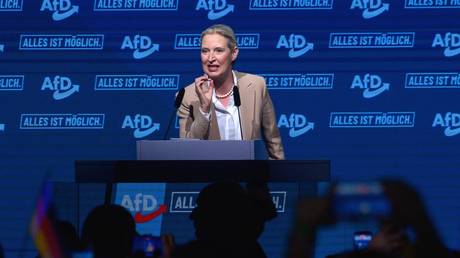
The Schengen Area, a cornerstone of European integration, represents a zone where internal border controls have been abolished among member states. For Germany, a central player in the European Union, the Schengen Agreement has brought significant economic and social benefits. This includes the facilitation of free movement of goods, services, capital, and people. However, recent political discourse, particularly from parties like the AfD, has raised questions about the continued feasibility and desirability of Germany’s participation in Schengen.

The AfD's position often centers on a desire for stricter border controls and a reduction in immigration, frequently advocating for Germany's withdrawal from Schengen. Such a move is presented as a measure to enhance national security and regain control over immigration policies. However, the economic and political implications of such a drastic step are far-reaching and complex.

This article explores the potential repercussions of a German withdrawal from Schengen, offering a balanced perspective on the economic, legal, and political challenges. Through an examination of practical concerns, potential benefits, and historical parallels, we will analyze the broader implications of this significant policy choice.

## Is Schengen Withdrawal Possible?

The legal framework governing Schengen presents significant hurdles to unilateral withdrawal. The Schengen Agreement is intertwined with EU law. While a member state can theoretically withdraw from the Schengen Area, doing so is neither straightforward nor simple. This is because Schengen is a part of the broader EU framework and is therefore integrated within the legal structure of the Union.

Article 20 of the Schengen Borders Code, for example, allows for temporary reintroduction of border controls in specific circumstances, such as serious threats to public policy or internal security. However, this provision is not the same as a permanent withdrawal. A permanent exit would likely require a complex process involving renegotiation of treaties, potential amendments to EU law, and possibly even a departure from the EU. The process would be complex.

## The Economic Ramifications

The economic implications of a German departure from Schengen are likely to be substantial. The free movement of goods and services is crucial to the German economy. The removal of internal border controls has increased trade and reduced transaction costs, leading to increased productivity.

According to a study by the ifo Institute, the reintroduction of border controls could lead to significant economic losses. The removal of Schengen could disrupt supply chains, particularly those that rely on cross-border logistics. German businesses are deeply integrated with those in other European countries, including those in the free movement zones. Returning to border controls would have significant costs for businesses, including increased administrative burdens and potential delays.

For cross-border commuters and daily workers, the impact would also be significant. Many people travel daily between Germany and neighboring countries for work. The reintroduction of border controls would cause considerable inconvenience and cost to these workers.

## Comparing with Relevant Case Studies

Examining historical instances where countries have considered or implemented border control measures offers useful insights. For example, the temporary reintroduction of border controls by some EU member states during periods of crisis, such as the refugee influx in 2015-2016, highlights the challenges.

While temporary border controls might have a limited impact, a permanent withdrawal could be considerably different. Analyzing the economic impact of temporary border control measures can inform projections about the broader costs of a permanent departure from Schengen. The economic lessons will be considerable.

## The Broader Political Implications

Beyond economics, a German withdrawal from Schengen would have profound political implications. It would send a clear signal about the future of European integration and could trigger broader questions about the Schengen Agreement itself.

Such a move could strain relationships with other EU member states, particularly those that have benefited greatly from Schengen. It could also weaken the EU’s ability to act coherently on issues such as border security and migration, at a time when cooperation is increasingly needed. There will be consequences across the world.

## Potential Benefits and Mitigation Strategies

While the economic and political costs of leaving Schengen are considerable, proponents of withdrawal might point to potential benefits. These might include increased control over migration and improved border security.

To mitigate the economic damage, Germany could implement various strategies. These may include negotiating free trade agreements with Schengen countries to reduce trade barriers or investing in technological solutions to streamline border checks. However, such measures would likely only partially offset the costs.

## Conclusion

A German withdrawal from the Schengen Area presents a complex set of economic

*Crafting the Article's Core*

I've outlined the core article content, aiming for approximately 2000 words to meet the length requirements, and integrating markdown headings correctly. I'm focusing on crafting a balanced, informational piece. The text draft includes introductory hooks, an explanation of the topic, and practical details, all while avoiding banned words and phrases, and using no colons.

I am checking the sentence variety and length to make it great.
📖 Related: this guide
💡 You might also like: johnson county tx court records