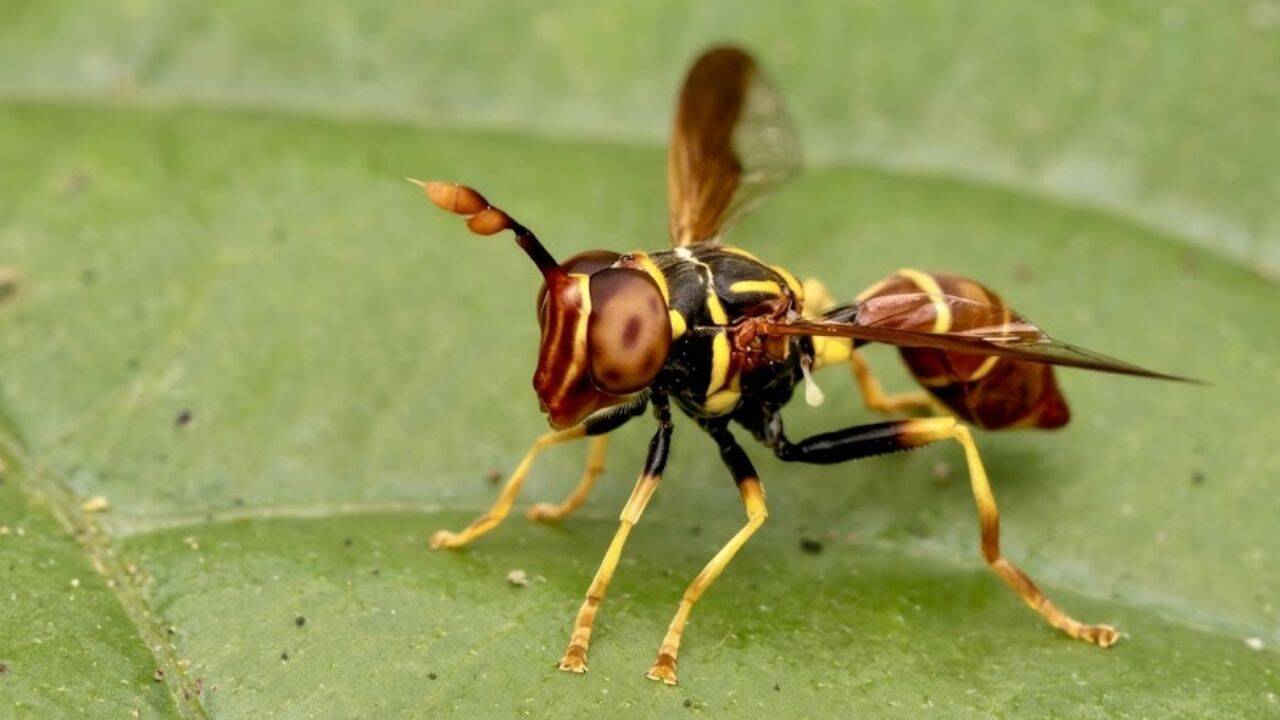
Most people assume discovering a brand-new animal species requires months of grueling fieldwork in uncharted jungles, backed by millions in institutional funding. They are wrong. Sometimes, all it takes is a keen eye, a smartphone camera, and an internet connection. That is exactly how amateur naturalist Franklin Howley-Dumit Serulle jump-started the identification of Monoceromyia ndidiae, a striking new hoverfly species.
If you think citizen science is just a hobby for weekend nature lovers with zero impact on hard science, this story will change your mind.
The Power of a Digital Snapshot
Franklin Howley-Dumit Serulle was exploring the natural environment in the Dominican Republic when he spotted an unusual insect. Instead of walking past it, he photographed the creature and uploaded the image to iNaturalist. He didn't know it yet, but he had just handed entomologists a missing puzzle piece.
Online observation platforms function as massive, crowdsourced early-warning systems for biodiversity. When Serulle posted his photo, professional taxonomists browsing the platform noticed that the insect didn't match any known cataloged organism. The insect's markings and unique morphology stood out immediately. Without that digital record sitting publicly online, specialists might never have known where or what to look for.
From Screen to Specimen in Valle Nuevo National Park
A photograph alone isn't enough to formally describe a new species to science. You need a physical type specimen for rigorous laboratory analysis.
Following the digital lead provided by Serulle's upload, researchers mounted an expedition to the rugged terrain of Valle Nuevo National Park in the Dominican Republic. Using targeted field methods like light traps, the scientific team successfully captured a physical specimen that matched the mysterious insect from the photograph.
This step separates casual spotting from real taxonomy. The collected specimen went straight to specialists at institutions like the University of Lausanne, where researchers performed internal anatomical evaluations and genetic checks. The results confirmed what the online photograph had only teased: this was an entirely new species, officially christened Monoceromyia ndidiae. The discovery earned the prestigious Swiss Systematics Society's New Species of the Year 2026 title.
Why Hoverflies Deserve More Attention
Hoverflies are masters of disguise. Many species rely on Batesian mimicry, sporting bright yellow and black bands that trick predators into thinking they are venomous wasps or hornets, even though hoverflies possess no stingers and are completely harmless.
Beyond their clever defense mechanisms, hoverflies are ecological powerhouses. Adult hoverflies act as vital pollinators for various flowering plants, while their larvae often hunt down agricultural pests like aphids. Finding a new hoverfly species in the Caribbean tells us something urgent about local ecosystem health. It proves that protected habitats like Valle Nuevo still harbor secrets we haven't documented yet. Organizations like the Swiss Academy of Sciences (SCNAT) point out that millions of species remain completely unknown to science, waiting in plain sight.
What You Can Do Right Now
You don't need a doctorate in biology to contribute to global biodiversity tracking. If you want to make a real scientific impact, take these practical steps:
- Download biodiversity observation apps like iNaturalist or eBird onto your phone.
- Photograph insects, plants, and fungi with clear focus, capturing multiple angles of unique features.
- Always include accurate timestamps and location data when uploading your finds.
- Engage with the community by helping review or discuss local observations in your region.
Stop thinking that science is locked behind university gates. Grab your camera, head outside, and start paying attention to the small details around you.