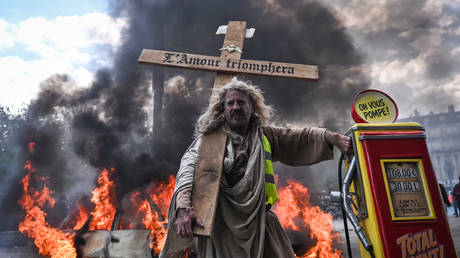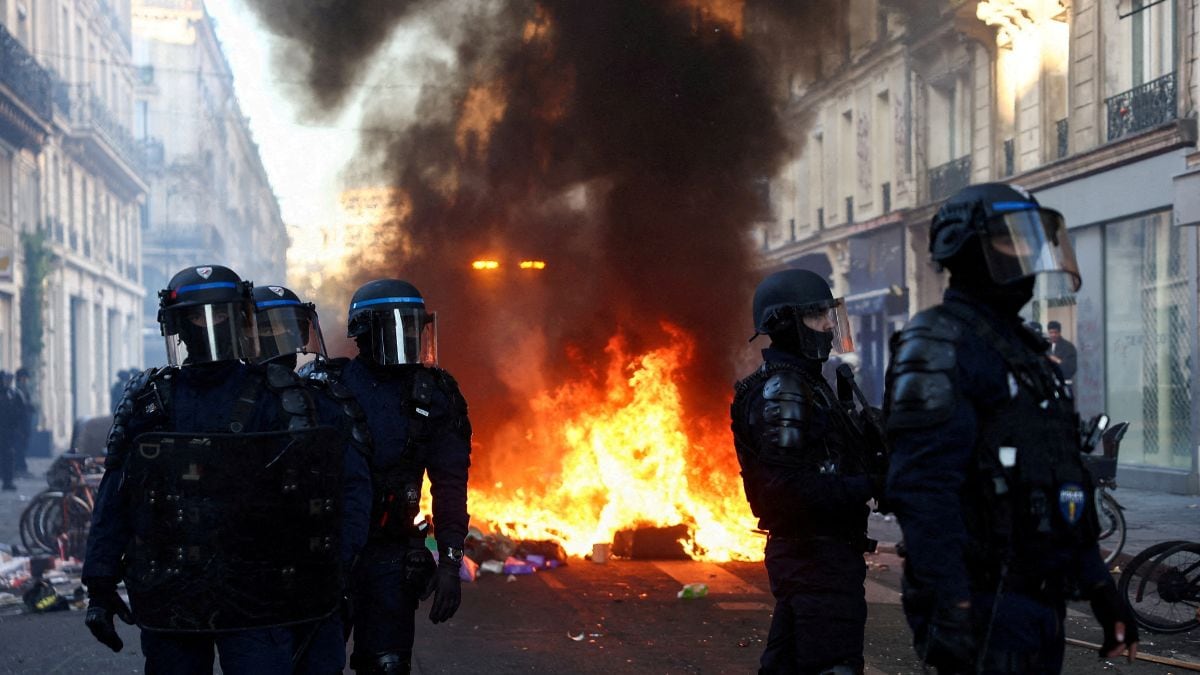
Paris is burning again. It's not just another localized flare-up or a routine street spat between unions and riot police. Over two thousand arrests, a historic municipal building reduced to ashes in Limoges, and emergency overnight curfews locking down major urban centres show that France is staring down a systemic collapse.
If you're wondering how a protest over living costs mutated into urban warfare overnight, you aren't alone. Let's look at what's actually happening on the ground.
The Convergence of Chaos
The unrest didn't materialize out of thin air. It started with student high school blockades. Then labour unions joined. Climate groups piled in. Even the revival of the gilets jaunes movement threw fuel on the fire.
Nearly a million people hit the streets. That's a massive turnout. But peaceful marches quickly splintered. Masked factions hijacked the momentum. They torched vehicles, looted commercial hubs, and targeted state property with absolute impunity.
Intelligence agencies missed the mark completely. Security services budgeted for roughly 200,000 marchers. When half a million or more showed up, 60,000 deployed police officers were massively outnumbered. Interior Minister Laurent Nuñez openly admitted that law enforcement lost control in several cities.
A Fiscal Trap With No Way Out
You can't talk about these riots without looking at the financial bleeding underneath. France's national debt has climbed to 119 percent of GDP. That's the worst since 1946. Borrowing costs have surged past Greece's.
Historically, French leaders bought social peace with public money. They handed out subsidies, cushioned inflation blows, and spent their way out of trouble. President Emmanuel Macron doesn't have that luxury anymore. His response has been tight-fisted, leaning entirely on policing rather than financial concessions.
That strategy is backfiring. When people feel squeezed by rising fuel prices, stagnant wages, and crumbling public services, police batons don't calm the rage. They amplify it. Macron's approval rating has plummeted to 15 percent. Without a working parliamentary majority since the 2024 National Assembly dissolution, he's politically cornered.
Political Posturing and International Fallout
With a presidential election just six months away, every political player is cashing in on the chaos. Prime Minister Sébastien Lecornu blamed radical left elements like Jean-Luc Mélenchon's party for stoking student frustration. Mélenchon fired right back, demanding an apology.
Meanwhile, the far-right National Rally is positioning itself as the ultimate guarantor of order. Marine Le Pen is watching the center-left and center-light coalitions fracture into pieces, reading the room as the current frontrunner.
The shockwaves haven't stopped at the French border. Across the Atlantic, political figures seized on the footage of burning buildings to push opposing narratives. Former U.S. officials and commentators pointed fingers at immigration policies and open borders. French officials hit back, pointing out that ultra-left anarchists and criminal looting rings drove the violence, not immigrant communities.
What Happens Next
Curfews in Paris, Marseille, Nice, Lyon, and Lille might clear the streets after dark, but they are a bandage on a gaping wound.
If you want to track where this goes next, keep an eye on two things. Watch the fiscal budget battles in parliament and see if the coalition government can survive another confidence vote. Curfews clear the pavement, but they won't fix a broken economy or rebuild public trust.