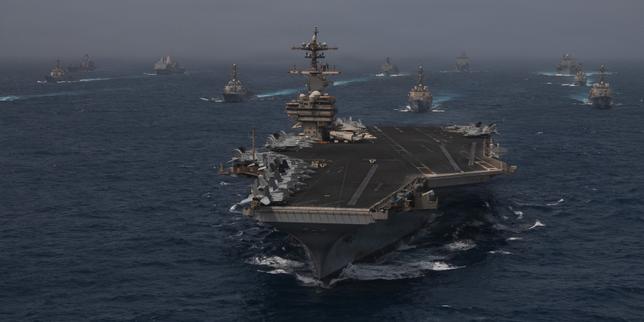
Another night of heavy missile exchanges in the Gulf has shattered what was left of the June memorandum of understanding between Washington and Tehran. Late last night, Iranian forces targeted HIMARS missile batteries at Camp Arifjan in Kuwait alongside regional radar installations. In response, US Central Command launched precise strikes against Iranian coastal defense networks, command nodes, and maritime infrastructure around the Strait of Hormuz.
The fragile ceasefire negotiated in Doha barely lasted a month. Now, direct military friction has returned to the strategic waterway where nearly a fifth of the world's petroleum transits. In related developments, take a look at: Tropical Depression Two Is Becoming Bertha And The Gulf Coast Needs A Plan.
How a Paper Truce Turned into Regional Escalation
The June 17 memorandum of understanding was designed to pause the air war that broke out early in 2026. However, the agreement suffered from a fundamental flaw: it never resolved the underlying dispute over navigation rights through the Strait of Hormuz.
Washington treated the memorandum as a guarantee for unrestricted commercial transit. Tehran viewed it as a conditional break from US-Israeli pressure, maintaining that it retained authority over shipping lanes off its southern coastline. The Guardian has also covered this fascinating topic in extensive detail.
That mismatch in expectations quickly turned dangerous. Over the past ten days, a series of naval incidents escalated into full-scale military exchanges:
- June 25: Drones struck the Singapore-flagged cargo vessel Ever Lovely and the Panama-registered tanker Kiku near the Omani corridor.
- Early July: Iranian forces seized two tankers navigating unapproved channels, while the UK Maritime Trade Operations (UKMTO) reported crew evacuations following missile impacts near Oman.
- Mid-July: Direct strikes resumed on coastal infrastructure, hitting power grids, water desalination plants, and military bases across southern Iran, Kuwait, and Qatar.
When the Iranian presidency announced that the country faces a state of "total war," it signaled that diplomatic efforts had officially stalled.
Economic Aftershocks in Energy Markets
The immediate consequence of military operations in the Gulf is felt directly in global energy markets. Ship-tracking data shows commercial traffic through the Strait of Hormuz dropping dramatically. Commercial vessels now face skyrocketing war-risk insurance premiums, forcing many operators to anchor outside the Gulf or attempt costly detours around the Cape of Good Hope.
Strait of Hormuz Transit Status (July 2026)
------------------------------------------------------
Normal Daily Flow:    ~20-21 Million Barrels / Day
Current Flow:          Dramatically Restricted
Commercial Risk:       Severe / War-Risk Surcharges Active
Primary Bottleneck:    Omani Corridor & Coastal Channels
The disruption extends far beyond oil shipping. Threat notices issued by Houthi forces in Yemen targeting Red Sea routes have effectively choked off both major maritime bypasses simultaneously. Combined with damage to regional energy infrastructure, oil prices hit monthly highs before settling into volatile trading sessions.
The Strategic Dilemma for Both Sides
Neither side can easily step back from the current escalation without suffering significant political damage.
For the United States, allowing Iranian forces to dictate commercial passage through international waters undermines its security commitments to Gulf allies and jeopardizes energy price stability. CENTCOM's strategy relies on targeted suppression strikes to degrade Iranian coastal surveillance and anti-ship missile sites. Yet air strikes alone rarely reopen narrow waterways if shipping companies deem the operational risk unacceptable.
For Iran, domestic political pressures run deep following months of military pressure and high-level leadership losses. Hardline factions within the Islamic Revolutionary Guard Corps (IRGC) view control over the Strait of Hormuz as their primary leverage point against Western sanctions and military presence. Giving up that leverage without substantial sanctions relief or security guarantees is politically impossible for Tehran's current leadership.
What to Watch Next
The coming days will indicate whether this round of strikes triggers an uncontained regional conflict or forces a return to active negotiations in Qatar.
If you're tracking the geopolitical and economic impact of this conflict, focus on these critical indicators:
- Maritime Risk Bulletins: Track daily updates from the UKMTO and International Maritime Organization regarding safe transit corridors in the Gulf of Oman.
- IAEA Safety Reports: Watch for official statements from the International Atomic Energy Agency concerning civilian and industrial sites near southern combat zones, such as the Darkhovin facility.
- Insurance Assessment Rates: Monitor hull and machinery war risk insurance premiums issued by Lloyd's Joint War Committee, which serve as the definitive measure for commercial shipping viability in the region.