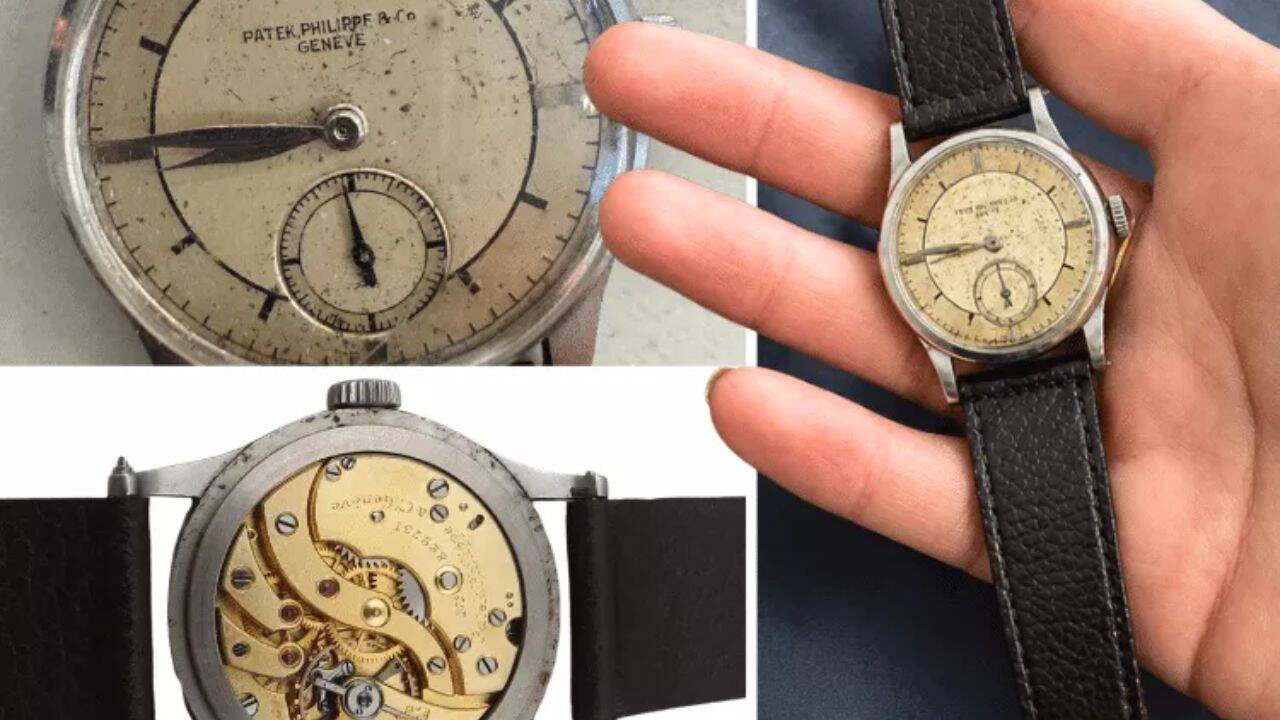
Most people clean out a dusty family property expecting cheap ornaments, faded linens, and worthless junk. Sometimes, you find something that completely rewrites the script. A vintage 1930s Patek Philippe watch discovered during an ordinary house clearance in Camborne, Cornwall, recently sold at auction for a staggering £59,000. It didn't just meet expectations. It destroyed them, fetching nearly twelve times its initial lower estimate of £5,000.
If you've ever wondered how an old timepiece sitting quietly in a drawer ends up commanding five figures on the global market, you need to look past simple sentimentality. You need to understand horological scarcity, material rarity, and how international collectors hunt for hidden treasures.
The Camborne Discovery That Stunned the Watch World
When Hansons Auctioneers stepped into the Cornwall home following the owner's passing, they expected standard valuation work. Instead, they pulled out a 28mm stainless-steel Patek Philippe & Co Calatrava Reference 448 dating back to the 1930s. The dial bore the classic signature, complete with a subsidiary seconds dial, while the internal jewelled movement carried serial numbers confirming its pedigree.
Better yet? It still ticked. After nine decades of bouncing between family members—starting with a Wadebridge grandfather who worked as a solicitor's clerk in Bodmin—the mechanical heart of the watch refused to quit.
The family knew the watch held some weight. A diary entry from 2011 even noted an expensive timepiece tucked away among old jewelry. Yet nobody anticipated that international high-net-worth bidders would turn the auction into a fierce global battleground.
Why Stainless Steel 1930s Patek Philippe Timepieces Command Fortunes
To understand why this specific watch fetched £59,000, you have to ignore modern luxury watch trends. Today, gold and platinum dominate high-end horology. Back in the 1930s, however, stainless steel was treated as an industrial, utilitarian metal.
Patek Philippe produced remarkably few steel wristwatches during this era. Most luxury houses reserved precious metals for their high-end mechanical creations. Because survival rates for early steel dress watches are low, collectors view them as the holy grail of vintage collecting.
When Darren Ashley, senior valuer at Hansons Cornwall, examined the piece, he knew he was holding something exceptional. Serial number 822731 and case number 610667 authenticated the watch immediately. In vintage watch collecting, provenance and originality drive value sky-high. Because this piece had remained inside a single family line for generations without being polished to death or repaired with aftermarket parts, it retained its original factory charm.
The Global Bidding War Behind the £59,000 Hammer Price
Auction day on August 25 turned into high theater. While three family members sat in the auction room watching nervously, relatives logged in via mobile phones and laptops from afar. Meanwhile, heavy-hitting international buyers dialed in.
A prominent New York collector fought hard, staying in the ring until the bidding crossed £52,000. From there, the contest narrowed down to an online bidder in Japan and a persistent telephone bidder based in China. As the price climbed toward sixty thousand pounds, the room held its breath. The Chinese buyer ultimately won the hammer drop at £59,000, ensuring the watch would soon catch a flight from Cornwall to Hong Kong.
This result smashed the upper auction estimate of £10,000 six times over, proving that elite collectors don't care where an item is found. They care about rarity, condition, and documentation.
What You Should Learn From This Cornwall Windfall
Most inherited items won't turn out to be ultra-rare Swiss masterpieces. But people throw away or heavily undervalue high-end antiques every single week simply because they fail to look closer.
If you are sorting through an estate or clearing out an older relative's home, stop treating every old watch or piece of jewelry as scrap. Do your homework before heading to a pawn shop or hosting a casual garage sale.
- Check the dial and movement: Look for maker signatures like Patek Philippe, Omega, Rolex, or Longines. Never try to force open a watch case yourself if you don't know what you're doing, as amateur scratches destroy collector value instantly.
- Look for paperwork and diaries: Old letters, receipts, service cards, or even casual family diaries can establish provenance. Buyers love a clean historical paper trail.
- Get professional eyes on rare items: Local charity shops and general house clearance firms miss things. Take suspicious or high-quality items to specialized regional auction houses that deal directly with international buyers.
The next time you open a dusty drawer at your grandparents' house, remember the Camborne watch. Sometimes history ticks louder than you think.