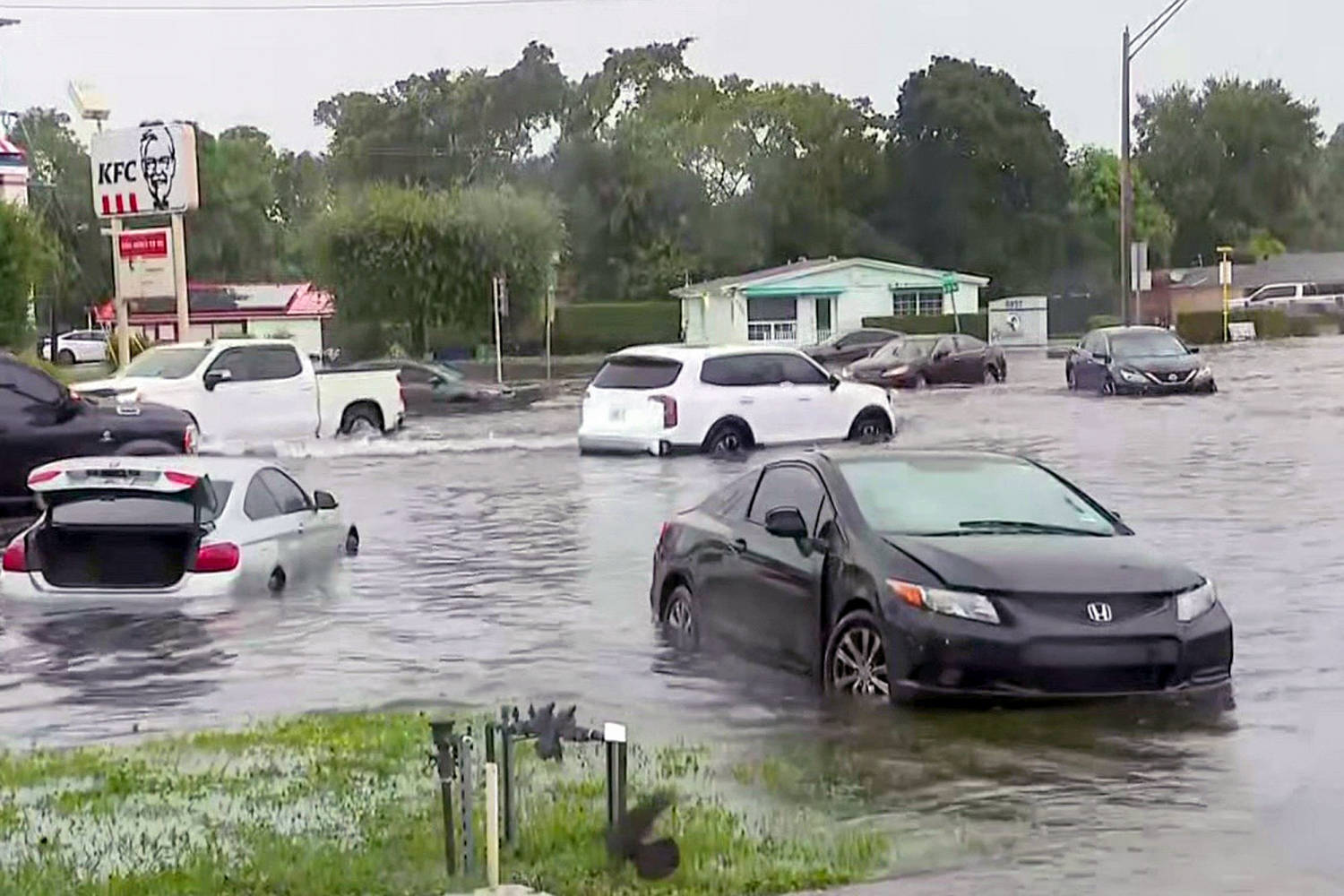
Water doesn't care about your holiday plans. Right now, coastal communities across Florida are finding out just how fast a foot of rain can turn daily life upside down. While everyone talks about massive hurricanes hitting the region, slow-moving atmospheric setups like this one often do far more localized damage. Broward County took the first brutal hit, dumping over twelve inches of rain in a matter of hours, stranding drivers on major routes like Interstate 95, and flooding homes before residents even had time to prep.
If you live anywhere along the Atlantic corridor, you're looking at a multi-day soaking that isn't letting up easily. Flood watches stretch north toward the Georgia border, and forecasters are tracking rainfall rates topping two inches per hour in localized zones. That's not a standard afternoon thunderstorm. That's a system that overwhelms urban drainage networks faster than municipal pumps can clear them.
The Mechanics Behind the Soak
Meteorologists call this an upper-level low sinking through the peninsula, fueled by a relentless moisture feed straight off the Atlantic. When that kind of persistent wind vector locks onto the coast, it drops bands of heavy precipitation over the exact same neighborhoods for days on end.
Think back to previous flooding events in places like Melbourne or South Florida. The pattern is painfully familiar. Ground that is already saturated simply refuses to take another drop. Once the retention ponds, canals, and street gutters hit capacity, every additional inch has nowhere to go except parking lots, living rooms, and low-lying intersections.
The real danger here isn't just the water volume. It's the prolonged duration. When heavy downpours happen in a single two-hour window
Why Coastal Flooding Keeps Catching Everyone Off Guard
news
category
Water does not care about your evacuation plan. When a double-barreled weather system squeezes both the Atlantic and Pacific shores simultaneously, normal routines shatter in minutes. People living near the water usually expect one bad storm at a time. Getting hammered on both sides of the country exposes just how fragile our coastal infrastructure actually is right now.
Severe weather events don't respect state lines or geographic norms. Heavy rain and historic flooding hitting both U.S. coasts at once isn't just an anomaly on the evening news. It is a loud wakeup call about shifting weather patterns that catch local emergency services flat-footed.
The Florida Reality Check
Florida deals with water better than almost anywhere else, yet heavy rainfall still turns major intersections into lakes. When atmospheric moisture surges from the Gulf of Mexico, drainage systems built decades ago simply max out. You see cars stalled in door-deep water on streets that looked completely dry an hour prior.
Storm drains clog with debris instantly. Local governments issue flash flood warnings, but warnings don't stop water from creeping over doorsteps. If you've ever watched a tide push water backward up a storm sewer, you know the helpless feeling of fighting gravity with sandbags.
Real preparation goes beyond moving your car to higher ground. It means accepting that standard municipal drainage cannot handle a multi-inch downpour falling in under sixty minutes.
The West Coast Whiplash
Out west, the script changes slightly, but the water volume stays terrifying. Atmospheric rivers slam into California and the Pacific Northwest, dumping months of rain onto slopes already charred by wildfires. Without vegetation to hold the earth, hillsides turn into sliding mud rivers.
People love living near the coast for the view. They rarely think about the geotechnical reality of saturation. When heavy rain hits clay-heavy soils or steep coastal bluffs, homes built on prime real estate suddenly slide down the cliff.
Cities like Seattle and San Francisco handle rain better than most, but even urban centers face massive transit delays, localized power outages, and sudden river crests. The sheer speed of the runoff catches commuters off guard every single time.
Why Traditional Infrastructure Falls Short
Most coastal drainage networks rely on gravity. They assume ocean levels stay low enough for stormwater to empty out safely. When heavy rain coincides with king tides or coastal storm surges, that basic assumption breaks down entirely.
Water backs up instead of draining out. Sea level rise makes this worse every year, turning minor seasonal storms into major navigation hazards. Engineering solutions cost billions of dollars and take decades to build. Cities cannot pave their way out of this problem with concrete alone.
Practical Steps Before the Next Deluge
Stop waiting for local authorities to hand out sandbags after the rain starts. If you live in a flood-prone zone, you need a proactive defense strategy.
Elevate critical electronics and important documents above ground level immediately. Clean your gutters and check your sump pump battery backup before storm season peaks. Review your insurance policy right now because standard homeowner policies almost never cover rising groundwater.
Stay off the roads when flash flood warnings go live. Turning your vehicle into a boat is an expensive mistake that puts first responders at risk. Pay attention to local alerts, respect road closure signs, and treat moving water with absolute respect.