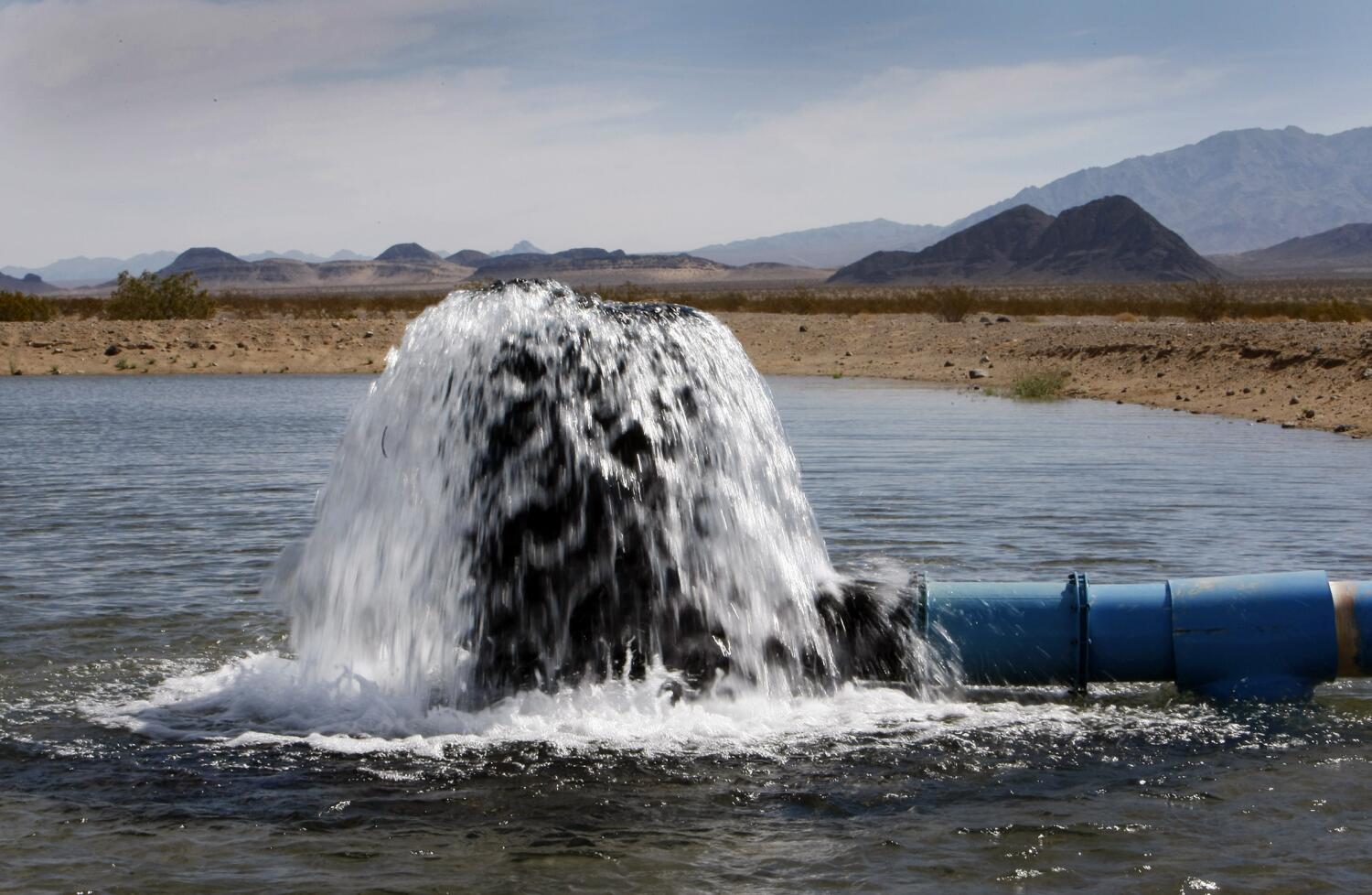
You can't treat a desert aquifer like a limitless bank account, but that's exactly what federal officials are trying to do again.
The federal government is backing a decades-old, highly controversial plan by Cadiz Inc. to pump billions of gallons of groundwater from beneath the Mojave Desert. Touted as a fix for the tightening water crisis along the Colorado River, the project has secured fresh momentum under the Trump administration. It sounds like a tidy solution on paper. You take water sitting under a scorching desert and pipe it to parched agricultural fields and cities.
It's a mirage.
The reality is that this plan relies on math that doesn't hold up to independent scientific scrutiny. The federal push to jumpstart the pipeline threatens to bypass critical environmental protections, ignore indigenous tribal sovereign interests, and risk permanently drying up an ecosystem that takes centuries to recover from human intervention.
Moving Water Across State Lines
The current push centers on a massive shift in strategy for Cadiz Inc. For years, the company tried to sell its desert groundwater to urban Southern California water districts. When California state laws and aggressive local pushback tied those efforts up in knots, the company pivoted. Now, the project is framed as the Mojave Groundwater Bank.
The new goal is to pump up to 50,000 acre-feet of groundwater per year. A large chunk of that—up to 30,000 acre-feet—is being targeted for interstate exchange to bail out water-starved users in the Colorado River basin, including a recent deal with the Central Arizona Irrigation and Drainage District.
The Bureau of Reclamation signed a funding agreement to fast-track the technical review of this plan. The federal government is actively reviewing how to use converted fossil fuel pipelines and new infrastructure to tie this desert aquifer directly into the Colorado River Aqueduct.
The federal backing isn't just a green light. It's an endorsement of a privatization plan that critics argue treats public natural resources as private commodities.
The Problem with Desert Hydrology
The core issue comes down to a fundamental disagreement about how water behaves in an arid environment. Cadiz claims the aquifer system in the Fenner Valley holds roughly 30 million acre-feet of water and recharges naturally at a rate that justifies pulling out 16 billion gallons a year for 50 years.
Hydrologists from the U.S. Geological Survey (USGS) flatly contradict this.
Independent data shows that the natural recharge rate from infrequent desert rainfall is a small fraction of what Cadiz claims. If you pump water out five times faster than nature puts it back in, you aren't harvesting a sustainable resource. You're mining it. Once that ancient water is gone, it's gone for good.
When groundwater levels drop by an estimated 80 feet, gravity does its work. Desert springs like Bonanza Springs will dry up. These springs aren't just scenic spots on a map. They're the literal lifeblood for bighorn sheep, desert tortoises, and migrating birds.
Bypassing Local Control and Tribal Rights
Local Native American tribes have lived in this region since time immemorial. The Chemehuevi Indian Tribe and the Fort Mojave Indian Tribe have spoken out against the project, noting that drawing down the aquifer causes irreversible harm to their sacred lands and cultural traditions.
The federal fast-tracking of this project deliberately tries to cut through the red tape that previously held it back. In the past, California passed Senate Bill 307, which requires state agencies like the State Lands Commission and the Department of Fish and Wildlife to certify that desert water extraction won't harm the environment. By utilizing federal rights-of-way and structuring deals as interstate exchanges, the current administration and Cadiz are trying to loop around state-level environmental reviews.
This sets a dangerous precedent. If a private corporation can secure federal backing to drain a local aquifer and export it across state lines over the explicit objections of state regulators and local tribes, local water sovereignty disappears.
What Needs to Happen Next
The fight over the Mojave's water isn't over, and it won't be settled quietly in Washington offices. If you want to protect these public lands, watch the courts and state regulatory boards.
First, keep a close eye on the California State Lands Commission. Even with federal backing, the physical pipeline infrastructure must cross sections of state-owned land. State officials still hold the power to enforce California Water Code Section 1815, which demands strict environmental proof before a drop of water leaves the basin.
Second, support the legal challenges being mounted by conservation groups and tribal nations. Legal battles managed to vacate previous pipeline approvals that skipped environmental reviews, and the upcoming federal reviews will face the same intense legal scrutiny.
True water security in the American West won't come from draining the last remaining drops of ancient desert aquifers. It comes from serious investments in recycling, stormwater capture, and realistic conservation. Draining the Mojave is a short-term gamble with permanent consequences.