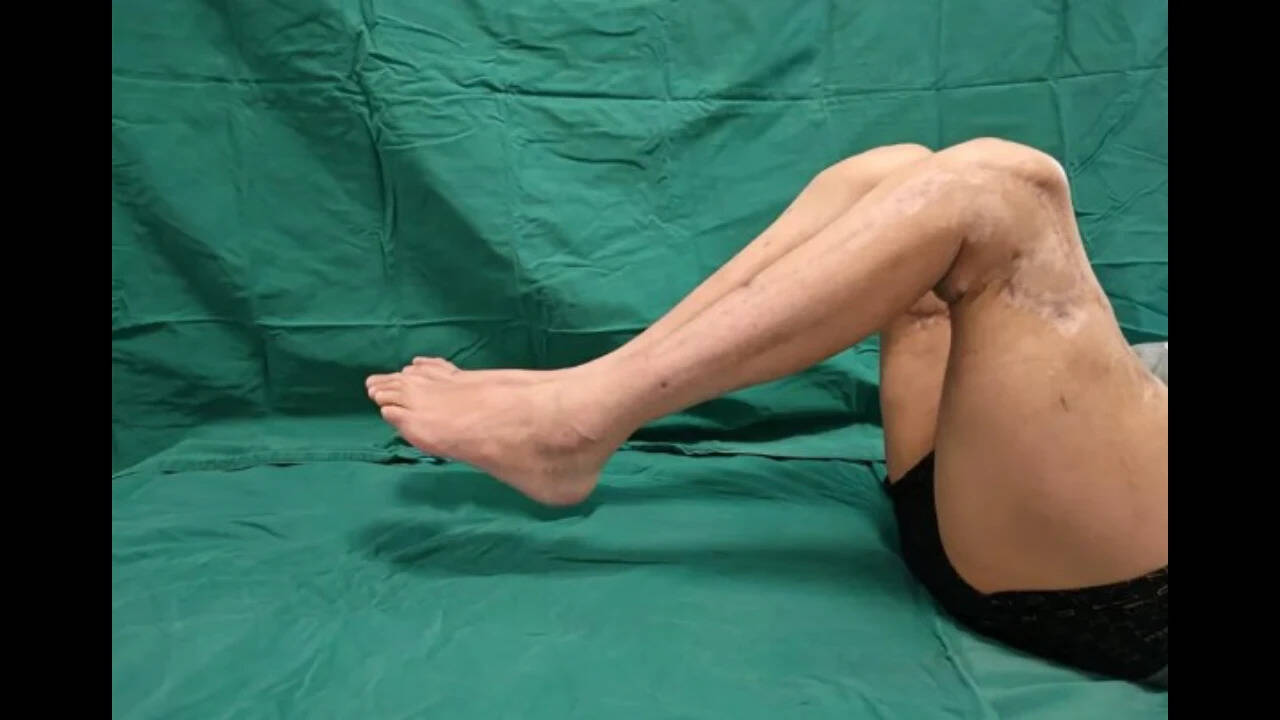
When a man loses both legs in a catastrophic industrial accident, the conventional medical response is clear: prepare for life as a double amputee. But in a Suzhou factory, the script changed. Surgeons didn't just accept the trauma; they attempted the near-impossible. They performed the first-ever successful double thigh replantation.
This isn't just about a factory worker walking again. It's about how far modern microsurgery has moved past traditional boundaries. If you think surgeons just stitch things back together, you're missing the entire point of this achievement.
Why This Case Is Different
Most people confuse standard limb reattachment with this specific case. We’ve seen single-limb replantations for decades. Those are complex, sure, but they involve one site of trauma, one set of neurovascular structures to manage, and a single period of post-operative recovery.
Double thigh replantation is an entirely different beast. You are dealing with:
- Simultaneous massive blood loss management.
- Double the risk of systemic shock.
- Complex nerve alignment for two major limbs at once.
- The logistical nightmare of keeping both limbs viable while addressing severe open comminuted fractures.
The medical team at Suzhou Ruihua Orthopaedic Hospital didn't just perform a surgery; they navigated a prolonged, twenty-month reconstruction process. The patient, identified as Jiang, didn't wake up and run a marathon. He faced skin necrosis, underwent flap reconstruction, and battled femoral nonunion. This was a long, grueling fight.
The Reality of Recovery
Let's be clear about the "walking" part. It’s not like the movies. Jiang is currently using a walking frame to navigate indoors. He isn't back on the factory floor. He’s doing basic daily tasks.
If you or a loved one ever face a severe trauma, you need to understand that the surgery is only the entry ticket. The real work happens in the years of rehabilitation that follow. Medical science has reached a point where we can reconnect nerves and vessels that seem permanently severed, but the brain’s ability to relearn limb control and the body’s capacity for tissue healing remain the final, un-hackable hurdles.
What Microsurgery Actually Involves
You’ve likely heard terms like "microsurgery" thrown around, but it’s often misunderstood. It’s not just using a small scalpel. It’s about working under high-powered magnification to suture vessels that are often smaller than a millimeter in diameter.
In this case, the success hinged on:
- Vascular Anastomosis: Connecting the arteries and veins so blood flow is restored before tissue death occurs.
- Nerve Repair: Carefully aligning nerve fibers so sensation and motor function have a pathway to return.
- Internal Fixation: Using hardware to stabilize femurs that were essentially pulverized in the machinery.
Doctors didn't just "fix" the legs. They had to rebuild the structural foundation while simultaneously ensuring the biological "plumbing" and "wiring" functioned well enough to prevent the limbs from dying.
The Broader Impact on Trauma Care
Why does this matter if you aren't a surgeon? It changes the prognosis for future trauma victims. Previously, surgeons might have opted for amputation if the injuries were too extensive. This case provides a new baseline for what is physically salvageable.
We are seeing a shift where "salvage" is favored over "removal" far more aggressively than it was even ten years ago. This doesn't mean every severed limb can be saved, but it does mean that the medical threshold for what constitutes a "lost cause" has been pushed back significantly.
If you’re interested in the future of trauma medicine, watch for these developments:
- Tissue Engineering: Researchers are looking at ways to bridge nerve gaps faster, reducing the time limbs spend without connection.
- Enhanced Rehabilitation: Integrating robotics with traditional physical therapy is already starting to shorten recovery times for patients with complex orthopedic injuries.
The Suzhou team proved that technical expertise, when combined with insane levels of persistence, can rewrite the rules of injury recovery. Don’t expect this to become routine tomorrow. It requires a specific set of circumstances—fast transport, highly specialized hospital staff, and a patient who can survive the initial physiological trauma.
Focus on the reality rather than the hype. We have the tools to do incredible things, but we still operate within the hard, physical limitations of human biology. Recovery is a marathon, not a sprint.