You come outside, coffee in hand, ready to start the day. Instead, you're greeted by seven massive, bursting black sacks of household garbage rotting on the pavement right outside your property. If you live in a British city, this isn't a hypothetical nightmare. It's a regular Tuesday.
Fly tipping—the illegal dumping of waste—is an epidemic that is breaking local councils and driving residents mad. But every now and then, a regular citizen decides they have had absolutely enough. You might also find this connected coverage insightful: Why The Chennai Celebration Of 250 Years Of American Freedom Matters For Global Trade.
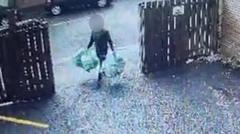
Take Dean Gauci, a 38-year-old Airbnb maintenance worker in Cardiff. When he found seven bags of rank household waste dumped at a block of flats he manages, he didn't call the local council to file a report that would sit in a queue for weeks. He didn't wait for tax dollars to clean up someone else's mess. Instead, he pulled up his CCTV footage, tracked down the culprit, and delivered the garbage right back to the offender's front doorstep.
It was swift, petty, and wildly effective. It also highlights a massive systemic breakdown: when local enforcement fails, vigilante trash disposal takes over. As highlighted in recent articles by NBC News, the implications are widespread.
The Anatomy of a Doorstep Delivery
Gauci runs Stay Care Operations Ltd., and he estimates this specific Cardiff spot has been hit by fly-tippers 30 or 40 times. Property managers usually suck up the cost, paying private waste companies to haul the junk away and passing those fees onto landlords or tenants via service charges.
Gauci chose a different path. First, he went full detective mode. He ripped open the bags to search for junk mail or delivery labels. The culprit was smart enough to peel the addresses off their Amazon boxes, but they weren't smart enough to avoid the high-definition lenses of the building's security cameras.
The CCTV footage showed a clear shot of a man dumping the waste at 9:00 AM on a Friday. Gauci took screenshots, knocked on three neighbours' doors, and within minutes, had a name and a location. The illegal dumper didn't drive in from another borough; he lived just ten houses up on the exact same street.
Armed with this information, Gauci piled the seven bags high on the culprit’s front porch, completely blocking the entrance, and rang the bell. When the man answered, faced with his own garbage and the reality of a security camera recording his face, he offered a classic, stuttering excuse: "I was going to move this, sorry mate."
He didn't move it. Not until it became his problem again.
Why Our Cities Are Drowning in Trash
It's easy to look at the guy who dumped those seven bags and write him off as a selfish outlier. But the reality is much more complicated. The infrastructure designed to handle our waste is actively breaking down, and cities like Cardiff are reaching a boiling point.
Gauci doesn't just blame the litterbug; he puts the blame squarely on local councils.
The mechanics of modern trash collection are practically set up to encourage illegal dumping. In many UK municipalities, general black-bin waste is only collected once every two weeks. To make matters worse, strict limits dictate exactly how much you can throw out—often just two bags per household. If a wheelie bin lid is slightly open because a bag is too full, bin collection crews will leave the entire container on the curb.
When you limit legal options, illegal options explode. If a family misses a single collection window, they are stuck with a month's worth of waste. Confronted with a house smelling like old food and a growing rat problem, desperate or lazy people make terrible choices. They drive to a quiet lane, a park, or a managed block of flats, and they drop the problem on someone else.
The Total Failure of Official Channels
If Gauci had followed the official playbook, the story would have gone quite differently.
- He would have logged onto a clunky council portal or used an app like Love Clean Streets to file a report.
- He would have uploaded the video evidence showing the man's face and his walk back to his house.
- The report would have sat in a queue while enforcement officers managed thousands of active cases.
- Weeks later, if the council actually pursued the case, they might have issued a Fixed Penalty Notice.
Councils are broke. They lack the staff to review thousands of hours of Ring doorbell and CCTV footage for localized dumping. Statistics show that while hundreds of thousands of fly-tipping incidents are reported across the country every year, only a tiny fraction result in actual prosecutions or meaningful fines.
When the official penalty is a distant, unlikely bureaucratic slap on the wrist, it ceases to be a deterrent.
The Legal Risk of Petty Retaliation
While Gauci's doorstep return is deeply satisfying to read about, it walks a razor-thin legal line. If you are thinking about pulling a similar stunt with your local neighbourhood trash bandit, you need to understand the risks.
Technically, moving waste from one location and dumping it on a public pavement or someone else's private property is also a form of fly-tipping or littering under the Environmental Protection Act 1990. It doesn't matter if the trash belonged to them originally; the law doesn't really recognize the concept of "finders keepers, losers gets their garbage back."
You could also face civil claims for harassment or trespass if you enter a gated garden to pile up trash, or if the confrontation turns sour. In similar viral internet cases, angry fly-tippers have called the police on the property owners, claiming they felt threatened or alarmed on their own property.
Yet, despite the legal gray areas, public support almost always sides with the victim turning the tables. When a farmer in northern England famously used a tractor to return hundreds of illegally dumped tires to a fly-tipper's driveway, the internet cheered. People are exhausted by a system that protects the privacy of rule-breakers while leaving honest citizens to foot the bill.
How to Protect Your Property Without Starting a War
If your home or business is getting hit by illegal dumpers, you don't necessarily have to resort to a high-noon doorstep confrontation. You can use tactical steps to make your property an impossible target.
- Install visible, highly active cameras: Dummy cameras don't cut it anymore. Use systems with prominent, bright status lights and place clear, unmistakable signs stating "CCTV in Use - Evidence Passed to Council."
- Brighten up the blind spots: Fly-tippers hate light. Install high-lux motion-activated LED floodlights over the specific alcoves, side alleys, or bin stores where people tend to drop bags under the cover of night.
- Enclose your bin areas: If you manage a block of flats or commercial space, open bin stores are an open invitation. Secure the perimeter with code-locked gates or heavy-duty timber housings so only paying residents can access the disposal zones.
- Secure the physical evidence immediately: If someone dumps bags, put on gloves and check for mail before the rain ruins it. If you find a name and address, don't just post it online—file a formal report with clear photographic proof of the identifying documents inside the trash piles.
Vigilante justice like Dean Gauci’s works because it forces immediate accountability. It skips the bureaucracy and makes the perpetrator deal with the immediate, messy consequences of their actions. Until local councils fix the broken collection schedules and underfunded enforcement teams that created this mess, expect to see a lot more garbage returning to sender.