The World Cup just started, and FIFA is already insulting your intelligence.
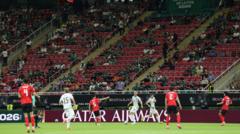
If you watched South Korea beat the Czech Republic 2-1 in Guadalajara, you didn't just see a great game. You saw vast, glowing oceans of bright red empty seats. They were impossible to miss, especially in the expensive lower tiers and VIP sections directly opposite the main television cameras.
Naturally, football's governing body scrambled for a spin machine. Their official explanation? The stadium was practically full, but thousands of fans simply decided to spend the match hanging out on the concourses instead of sitting down.
Honestly, it's a laughable claim. Anyone who has ever been to a football match knows people don't pay hundreds—or thousands—of dollars to stare at a concrete breeze-block wall and eat lukewarm stadium food while a World Cup match happens 50 yards away.
FIFA announced the official attendance as 44,985, just a fraction under the Estadio Akron’s 45,664 capacity. But the eye test told a completely different story. The empty seats weren't a mirage. They are the direct, entirely predictable result of a ticketing strategy driven by pure greed.
The Concourse Myth vs the Reality of Ticket Pricing
Let's look at the actual numbers because they expose exactly why those seats were bare. For that Group A clash in Mexico, a ticket in the lower tier cost a whopping $500. If you wanted to sit slightly higher up, you were still looking at $400. Want a VIP experience? That would set you back a staggering $5,000.
When you price out the average local match-going fan, you rely on international tourists or corporate sponsors to fill the void. If those corporate buyers don't show up, or if neutral fans decide a group-stage match isn't worth a week's wages, you get exactly what we saw in Guadalajara: gaping holes in the crowd.
FIFA president Gianni Infantino has repeatedly defended the tournament's controversial "variable pricing" model. It's a system where prices for 90 of the 104 tournament matches climbed by an average of 34% between late last year and April 2026. Infantino argued that keeping prices high prevents tickets from being scooped up by scalpers and sold on the black market.
But the empty seats on day one proved that logic completely flawed. Instead of protecting fans from scalpers, FIFA just cut out the middleman and priced the fans out themselves.
A Systemic Crisis Hidden in Plain Sight
This isn't an isolated incident or a minor logistical hiccup. It's a systemic issue that FIFA desperately tried to fix behind the scenes before the tournament even kicked off.
Just a few weeks ago, the governing body quietly slashed ticket prices across all 104 matches and dumped 70% of its bulk-reserved hotel rooms back onto the market. It was a clear, eleventh-hour panic move to fill stadiums. It didn't work. On the eve of the tournament, roughly 180,000 tickets were still sitting unsold on FIFA's official resale platform, and another 15,000 group-stage tickets were available directly. Even the highly anticipated United States opener against Paraguay had thousands of unsold seats going into match day.
The financial strain on regular fans goes way beyond the ticket barrier. Think about what it actually costs to attend a game now. You're dealing with:
- Extortionate ticket fees driven by variable pricing models.
- Artificially inflated accommodation costs in host cities.
- Domestic travel prices that have skyrocketed nearly tenfold.
- General holiday expenses like food, drinks, and transit.
When you add it all up, attending a single group-stage match becomes completely impossible for the working-class fan. FIFA bragged earlier this year that their ticketing site received over 500 million booking requests. But requests don't equal conversion when the final price tag resembles a house deposit.
The Backlash is Reaching Higher Authorities
People are noticing, and it isn't just angry fans venting on social media. The aggressive pricing strategies have caught the attention of lawmakers.
The attorneys general of New York and New Jersey launched formal investigations into FIFA's pricing practices, even issuing subpoenas to the organization. There are growing calls from congressional figures demanding Infantino appear before lawmakers to explain the lack of transparency around ticket allocations and dynamic fee hikes.
When a football tournament faces legal scrutiny before the first round of games even finishes, you know the corporate strategy has detached itself from reality. Turning the World Cup into an exclusive playground for the ultra-wealthy doesn't just ruin the atmosphere in the stadium; it looks terrible on global television.
If you want to secure tickets for upcoming matches without falling into the pricing trap, you have to bypass the standard panic-buying routes. Stick strictly to the official FIFA resale portal rather than third-party sites, as prices there are capped and occasionally dip when desperate sellers try to recoup costs. Avoid booking accommodation inside the immediate radius of the stadium; using public transit networks from secondary commuter towns will save you hundreds. Most importantly, don't buy into the institutional spin. When the stadium looks empty, it's because the fans were priced out, plain and simple.