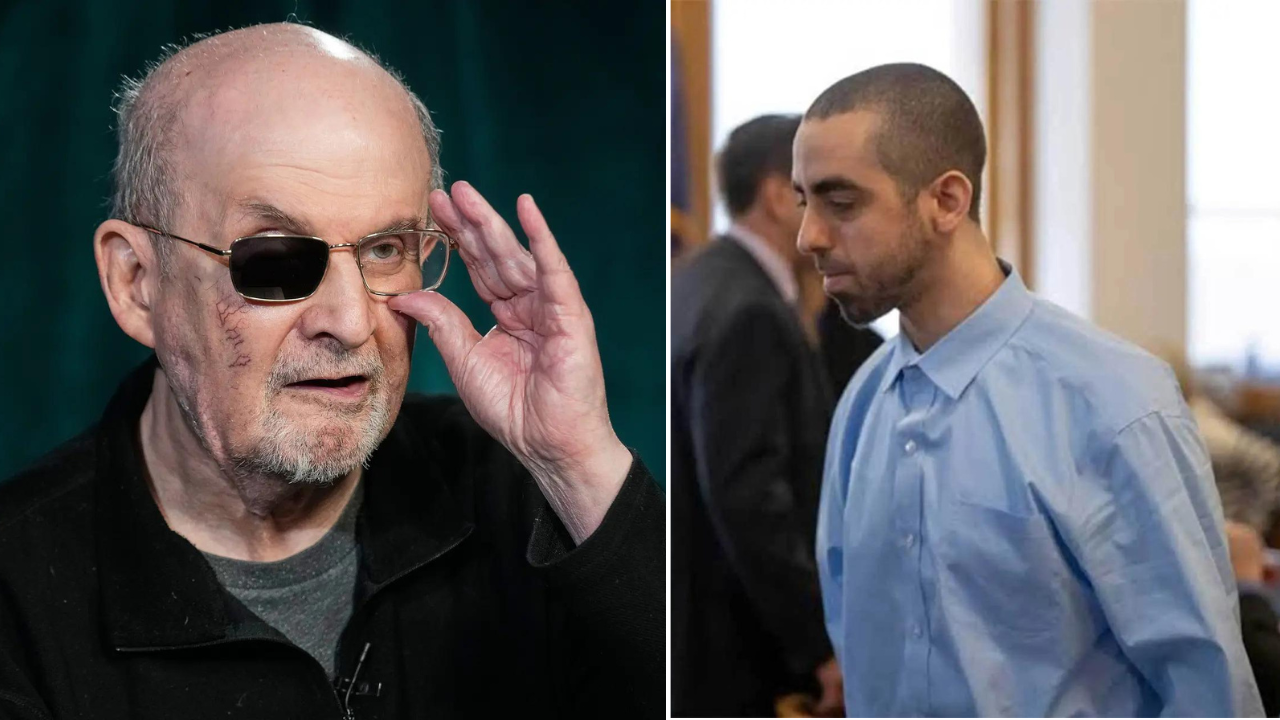
A federal jury in Buffalo didn't take long to reach a verdict. After just two hours of deliberation, they found 28-year-old Hadi Matar guilty on all federal terrorism counts, including providing material support to Hezbollah.
If you thought the legal fallout from the brutal 2022 stabbing of author Salman Rushdie ended with a state court prison sentence, think again. This federal verdict drags international proxy networks, online radicalization, and decades-old religious edicts into sharp, undeniable focus. Matar is already serving a 25-year state sentence for attempted murder, but this new federal conviction changes the entire scope of the prosecution. He now faces a mandatory maximum of life in prison when he is formally sentenced on November 3.
Let's look at what actually happened in the courtroom and why this case shatters common assumptions about modern security threats.
Beyond an Impulsive Act
For a long time, defense attorneys tried to paint the attack at the Chautauqua Institution as an isolated, spur-of-the-moment outburst by a troubled young man. The evidence presented by federal prosecutors completely destroyed that narrative.
Matar spent more than a year meticulously preparing. He didn't just wake up angry on August 12, 2022. Digital records and messaging logs proved he spent months tracking Rushdie's schedule, verifying whether the 1989 death fatwa issued by Iran's Ayatollah Ruhollah Khomeini remained active, and communicating with contacts across international borders in Canada, Australia, and Iran.
He even traveled to the Western New York literary event using an alias—Hassan Mughniyeh—combining the first name of Hezbollah leader Hassan Nasrallah with the surname of the group's former external security chief, Imad Mughniyeh. This was operational tradecraft, plain and simple. It wasn't the work of a chaotic lone actor acting in a vacuum. It was a calculated attempt to align with an external terrorist organization.
The Real Power of Material Support Charges
Why bother piling federal terrorism charges on top of an attempted murder conviction? State charges handle the local crime, but federal material support charges address the geopolitical machinery behind the knife.
Prosecutors laid out how Matar immersed himself in Hezbollah propaganda, created video edits celebrating the group, and took screenshots of Hezbollah fighters who died in combat on the exact morning of the attack. By legally tying his actions to a designated foreign terrorist organization, the Department of Justice sent an unmistakable signal. You don't have to board a flight to a training camp in Lebanon to be an active part of a terrorist network. Consuming their media, adopting their directives, and executing violence in their name satisfies the legal threshold of material support.
This sets a dangerous precedent for future investigators dealing with online radicalization. When an individual adopts foreign extremist ideologies through encrypted apps and chat rooms, digital footprints matter just as much as physical weapons caches.
What This Means for Free Speech and Security
Salman Rushdie spent decades living under the shadow of a bounty before stepping onto that stage in western New York to speak about the safety of writers. Surviving 15 stab wounds, losing the sight in his right eye, and subsequently chronicling the ordeal in his memoir turned him into a living symbol of literary defiance.
When extremists target writers, they aim to shut down open societies. The Chautauqua Institution was built as a haven for open debate, learning, and cross-cultural exchange. The collision between that open space and violent ideological proxy warfare highlights how vulnerable public figures remain, even decades after a decree is initially pronounced.
As we approach Matar's November sentencing date, the legal system has closed every door for his defense. The jury deliberated for a remarkably short window because the paper trail was bulletproof. Ideological commitment paired with digital planning leaves a permanent mark. Justice caught up to the operational reality of the plot, ensuring that the remainder of Matar's life will be spent behind federal prison walls.


