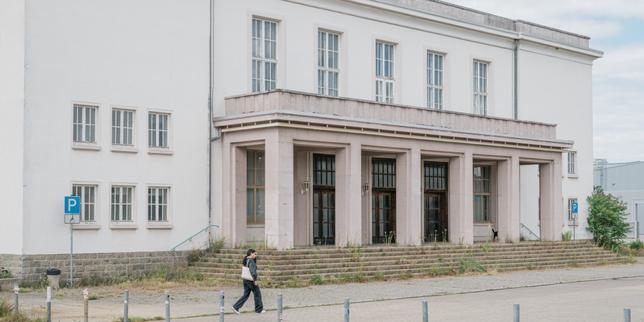
You can't understand modern German politics by looking at a map of Berlin. To see where the country is actually heading, you have to look at places like Bitterfeld-Wolfen.
Once known as the heart of East Germany's heavy chemical industry, this city of roughly 37,000 residents in Saxony-Anhalt has become something else entirely. It's a laboratory for a highly strategic, localized political takeover. The far-right Alternative for Germany (AfD) doesn't hold an absolute majority here. They don't run every local council, and they don't occupy every mayoral office.
Yet, they are completely unavoidable.
The political establishment in western Germany often operates under the assumption that the far right can be isolated. They call it a Brandmauer—a firewall meant to block any mainstream cooperation with the AfD. But on the ground in the former East, that wall isn't just cracking. It's effectively gone. The AfD has woven itself so tightly into the daily mechanics of local governance, sports clubs, and civic life that municipal politics cannot function without them.
Understanding how a minority party achieves veto-level dominance isn't just an academic exercise. It's the reality of German governance as the country approaches critical state elections in autumn 2026.
The Strategy of Local Strangulation
Mainstream media often treats far-right surges as emotional outbursts by angry voters. That's a mistake. What's happening in Bitterfeld-Wolfen is calculated, structural, and remarkably patient.
Instead of waiting to win over 51% of the electorate, the AfD targets the foundational blocks of small-town life: local budgets, civic programs, and municipal funding. By dominating committee debates and mobilizing vocal minorities, they force mainstream parties into an impossible choice—either paralyze the local government or cut a deal.
A prime example unfolded in early 2026 over a federal initiative called Demokratie Leben (Live Democracy). The program funds civil society projects, youth initiatives, and democratic awareness groups across Germany. In Bitterfeld-Wolfen, local AfD politicians didn't just complain about the program online. They actively campaigned to dry up its municipal support, branding it as a waste of taxpayer money that only feeds leftist non-governmental organizations (NGOs).
Local democratic watchdogs point out that these attacks aren't aimed at massive, nameless activist groups. They target highly specific, local volunteers who keep youth centers running or organize regional cultural events. By putting these small, fragile civic organizations under intense political pressure, the AfD forces mainstream councilors to reconsider funding them just to maintain peace in the town hall.
It is a strategy of municipal strangulation. When you control the tone of the budget debates, you control what the town is allowed to build, celebrate, or support.
Real Wins Built on Hyper Local Issues
If you ask a resident in the Anhalt-Bitterfeld district why the AfD is winning, they probably won't start by talking about immigration or national border controls. They will talk about their local hospital or the community sports hall.
The AfD has mastered the art of taking credit for keeping rural infrastructure alive. Consider these highly localized battles:
- The Fight for the Maternity Ward: When the local Goitzsche-Klinikum hospital in Bitterfeld-Wolfen faced the closure of its birth station a few years ago, local citizens were furious. The AfD jumped on the issue, using its platforms to pressure regional authorities. When birth rates at the hospital surprisingly climbed back up, the party immediately messaged it as a victory forced by their pressure.
- Defending Local Hospitals: In neighboring Zerbst, the regional AfD faction aggressively pushed legislative debates to rescue another endangered clinic. Whether their motions structurally fixed the hospital's finances didn't matter; to the voter on the street, the AfD looked like the only party making a loud, unyielding scene to protect local healthcare.
- Recreational Funding: Mainstream parties often get bogged down in bureaucratic explanations for why a public space is closing or why a project is delayed. The far right skips the nuance and focuses entirely on the optics of grievance, claiming federal money goes everywhere else except to the local community.
When the federal government distributes millions to renovate local infrastructure—like the 2,25 million euros allocated in the spring of 2026 for the renovation of the Krondorf sports hall—the AfD frames it not as a gift from Berlin, but as a concession wrung out of a stubborn federal system by local resistance.
The Disappearance of the Firewall
For years, the federal leadership of the Christian Democratic Union (CDU) insisted that its local politicians would never vote alongside the AfD. In places like Bitterfeld-Wolfen, this rule has collapsed under the weight of everyday pragmatism.
Local councils have to pass budgets. They have to fix roads. They have to decide on garbage collection and school repairs. When the AfD holds a massive block of seats, a local CDU or Free Democratic Party (FDP) representative faces a choice: negotiate an amendment with the AfD to get a majority for a local infrastructure project, or let the project die and explain to angry neighbors why the road is still full of potholes.
Unsurprisingly, local politicians choose the road over the firewall.
The AfD capitalizes on this normalization by keeping their public presentation highly professional at the municipal level, even while their state-level leaders are classified as right-wing extremists by domestic intelligence agencies. In Anhalt-Bitterfeld, they run open citizen discussions, host community barbecues, and sponsor regional motorbike meetups, like the "Simson" moped rallies featuring prominent regional candidates.
They present themselves as a normal, albeit louder, regional interest group. By the time a mainstream politician sits across from them in a committee meeting, the taboo has already evaporated.
Economic Trauma and the Green Transition
You cannot separate the political reality of Bitterfeld-Wolfen from its industrial scars. After German reunification in 1990, the old East German chemical complexes were largely dismantled or sold off. Tens of thousands of workers lost their jobs in a matter of months. While the region successfully rebuilt itself into a modernized "Chemical Park" that hosts international firms, the collective memory of economic abandonment remains fresh.
Now, a new economic shift is triggering old anxieties: the green transition.
As Germany pushes to decarbonize its economy, industrial regions in the East feel targeted once again. The AfD has positioned itself as the sole defender of traditional industry against what they frame as ideological madness from Berlin.
Local party branches celebrate when they successfully halt regional wind energy expansion plans, such as the termination of wind power planning processes in nearby Muldestausee or their public campaigns against turbines in the Dübener Heide nature park. To a population that associates structural economic changes with mass unemployment, stopping a wind farm looks like protecting their way of life.
What This Means for the Near Future
The political landscape of eastern Germany isn't waiting for the next federal election cycle; it's transforming town by town right now. As Saxony-Anhalt prepares for its next major state election, the dynamics tested in Bitterfeld-Wolfen provide a clear window into the future of German governance.
Mainstream parties cannot rely on moral arguments or institutional firewalls to keep the far right out of power. The AfD has proven that you don't need 51% of the vote to dictate the political agenda of a city. You just need a disciplined, obstructive presence on the local committees that control the money, a hyper-focus on municipal anxieties, and an establishment willing to compromise just to keep the lights on.
The firewall didn't fail because of a grand ideological shift. It failed because a minority party figured out exactly how to make themselves indispensable to the basic mechanics of small-town life.
Practical Steps for Tracking Regional German Politics
If you are analyzing German political risk or tracking the stability of European governance ahead of the upcoming elections, stop watching federal talk shows. Focus instead on these ground-level indicators:
- Monitor Municipal Committee Votes: Watch how local councils in Saxony-Anhalt, Thuringia, and Saxony vote on school funding, infrastructure, and civic budgets. Joint votes between the CDU and AfD at this level are the truest indicator of political normalization.
- Track Local Infrastructure Crises: Far-right surges in rural areas correlate heavily with the closure of public services. Keep an eye on regional hospital closures, public transport cuts, and bank branch consolidations in the eastern states.
- Analyze Local Civic Program Debates: Watch how cities handle federal funding for democratic awareness or integration programs. If local councils start rejecting federal money to avoid conflict with right-wing factions, the institutional retreat is accelerating.