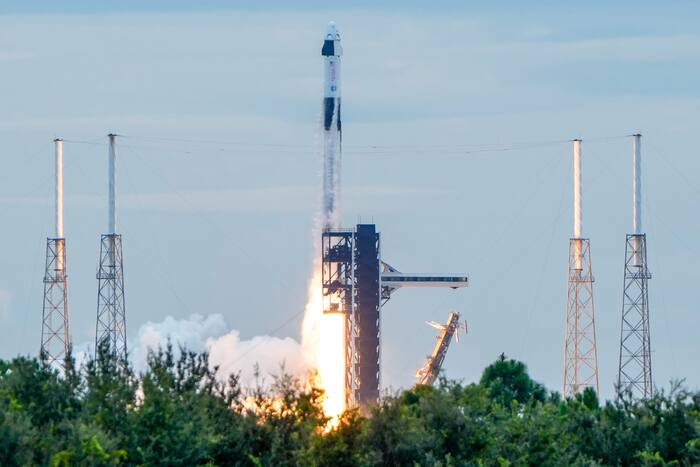
We launch things into orbit every single week, but nobody wants to talk about what happens on the way down.
Every seven days, tons of heavy metal, spent rocket boosters, and defunct hardware re-enter our atmosphere. Most of it burns up in a fiery streak, but a surprising amount survives the trip. It hits the ocean, or worse, land.
Space debris isn't just a sci-fi trope anymore. It is an active hazard, and our current cadence of rocket launches means the sky is falling more often than ever before.
The Reality of Orbital Debris
Look up. You cannot see them, but thousands of dead satellites and rocket parts are circling the planet right now at thousands of miles per hour. When their orbits decay, gravity pulls them back.
The numbers are staggering. Space agencies and tracking networks report that hundreds of tons of defunct hardware plunge back to Earth annually. We are treating low Earth orbit like an open-air junkyard.
People assume everything vaporizes in the upper atmosphere. Physics tells a different story. Titanium tanks, heavy engine nozzles, and dense alloy structures routinely survive the intense heat of re-entry. They impact the surface at terminal velocity, often weighing hundreds of pounds.
Why Launch Rates Changed Everything
Commercial spaceflight exploded over the last decade. Companies like SpaceX, Rocket Lab, and a massive ecosystem of international startups launch payloads almost daily. More rockets mean more upper stages left in orbit. More constellations mean thousands of small satellites that eventually fail and burn up.
Think about the math. If you double the number of yearly launches, you multiply the eventual re-entry events.
Most upper stages used to be steered into remote oceanic regions, famously known as the spacecraft cemetery near Point Nemo in the South Pacific. But controlled descents cost precious fuel. When commercial operators try to save weight and maximize payload profits, controlled re-entries become less frequent. Uncontrolled drops become the default.
That means gravity picks the landing spot, not engineers.
The Danger Zones We Do Not Talk About
Statistics comfort people because the Earth is mostly covered in water. Oceans make up about seventy percent of the surface, so statistically, falling debris lands in the sea.
Statistics do not help much when a multi-ton rocket body lands uncomfortably close to populated regions.
We have seen core stages from heavy-lift rockets tumble back uncontrolled over residential areas in Africa and Asia, raining metallic shrapnel over towns. Farmers routinely find charred cylindrical objects weighing hundreds of pounds in their fields.
It is a statistical game of Russian roulette that we play every single week. Sooner or later, luck runs out.
What Actually Works Versus What We Say
Space agencies talk a lot about sustainability guidelines. They love voluntary codes of conduct. They suggest operators design satellites to burn up completely or move to graveyard orbits.
Voluntary rules do not work in a cutthroat commercial market. When profit margins depend on shaving off every extra pound of fuel, companies skip the de-orbit burn.
Fixing this requires strict mandates. Every rocket launched into orbit must carry a guaranteed, certified disposal mechanism. If you cannot bring your hardware down safely, you should not be allowed to put it up there.
Insurance companies and international governing bodies need to step up financial penalties for negligent orbital littering. Until a crashed booster costs a company more than a proper disposal burn, nothing changes.
Stop treating Earth's atmosphere and surface as a free trash bin. Demand accountability from commercial space operators before a headline-making disaster forces our hand.