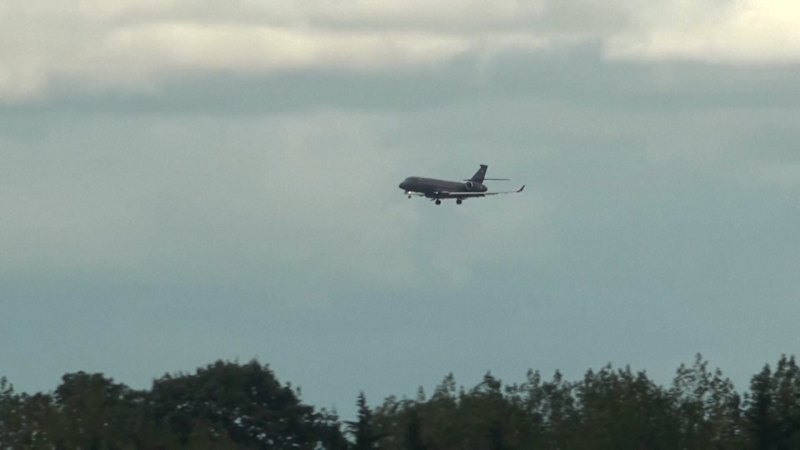
The high-security military jet touching down at Casement Aerodrome near Dublin didn't just carry a 49-year-old man; it signaled the sudden collapse of a decade-long illusion. When Daniel Kinahan was bundled off a government flight following his extradition from Dubai, the global underworld watched an untouchable blueprint shatter. For years, international kingpins thought they could shelter behind golden visas, luxury high-rises, and cleaned-up sports portfolios in the United Arab Emirates. They were wrong.
Let's look at what actually happened, why this extradition matters far beyond Irish borders, and how a web of drugs, boxing promotions, and billion-dollar cartels finally hit a brick wall.
The Dubai Safe Haven Myth Is Dead
For nearly ten years, Daniel Kinahan lived openly in the Persian Gulf. He played golf, rubbed shoulders with elite boxing figures like heavyweight champion Tyson Fury, and tried to brand himself as a legitimate sports advisor. It was a brilliant PR strategy designed to sanitize a brutal reputation.
Law enforcement agencies across the globe grew furious. While investigators in Ireland, the United Kingdom, Spain, and the United States mapped out a massive drug-trafficking and money-laundering network, Kinahan sipped coffee in luxury cafes.
The turning point didn't happen overnight. In 2022, the United States Department of the Treasury dropped massive sanctions on the Kinahan Organised Crime Group (KOCG), slapping a five million dollar bounty on leadership information. That designation changed the diplomatic math. Dubai authorities couldn't ignore the mounting international pressure forever. When Irish courts issued a fresh arrest warrant earlier this year, the net tightened. Arrested in April, Kinahan's legal team fought hard to block the transfer, but UAE courts ultimately cleared the path for the extradition.
Inside the Logistics of a High-Stakes Extradition
Moving a high-profile target accused of running a cartel estimated by police to be worth over one billion euros requires military precision. Irish authorities didn't take any chances.
A government aircraft flew straight to the Middle East, picking up the prisoner under heavy guard. Upon landing at the military base west of Dublin, Kinahan was immediately transferred into a heavily armored convoy. Instead of waiting for a standard morning docket, he faced a rare Sunday night emergency sitting at Dublin's Special Criminal Court.
He wore a simple black hoodie, put on dark-rimmed glasses, and took a calm sip of water. When asked if he had legal representation present, he noted he had been isolated in Dubai since Friday afternoon and hadn't managed to secure a lawyer yet. Even so, he told the three-judge panel he was fine with proceeding. Charged formally with directing the activities of a criminal organization between October 2015 and April 2017, Kinahan acknowledged the reality of his situation. When told that bail applications for such charges must go through the High Court, he offered a blunt response: "I understand. I think we know I won't be getting bail, but thank you."
From there, authorities whisked him away to the maximum-security Portlaoise Prison, specifically to the high-security A5 unit. His next court date is locked in for October 5.
How a Bloody Dublin Feud Triggered a Global Hunt
To understand why law enforcement hunted Kinahan so aggressively, you have to look back at the violence that tore through Irish streets.
The Kinahan enterprise wasn't just moving South American cocaine and European firearms quietly; it was fueling a devastating gang war. A bitter, bloody feud with the rival Hutch crime family exploded in February 2016 during an audacious daylight attack at a boxing weigh-in at Dublin's Regency Hotel. That hit left multiple dead and turned a localized drug dispute into an international priority.
Governments realized that clean corporate facades couldn't mask the trail of bodies left behind. US agencies estimated the feud caused at least 18 murders, pulling in innocent bystanders and drawing unprecedented cross-border police cooperation. Investigators tracked money flows through boxing promotions like MTK Global—which Kinahan co-founded before stepping away under pressure—and various shell companies designed to legitimize narcotics profits.
What Happens Next to the Cartel Empire
With the alleged mastermind sitting in an Irish prison cell, the structural integrity of the entire network is fracturing.
Other senior figures have already fallen. Thomas "Bomber" Kavanagh, who ran British operations for the syndicate, received a 21-year prison sentence in the UK. Other key lieutenants have faced heavy sentencing.
Kinahan himself has largely maintained a posture of fatalism. In a phone interview recorded shortly before his arrest, he claimed he was being used as a scapegoat, complaining about the optics while musing about missing simple comforts like batch bread and crisps.
Yet, bravado doesn't rewrite criminal indictments. The Special Criminal Court operates without juries precisely to protect judges from intimidation by powerful syndicates, making it a formidable venue for prosecutors.
The golden era of transnational criminal exile is officially closing. Safe havens are shrinking, and modern intelligence sharing means distance no longer equals immunity. The dance is over, and the courtroom reckoning has begun.