Law textbooks don't teach you how to survive a bushfire. They don't prepare you for a four-year drought that strips your family property bare, either.
In the 1980s, a law student named Chauncy packed up his books in Sydney and headed back to Canyonleigh, New South Wales. His father had fallen ill, leaving the family’s 670-hectare sheep and cattle farm without a leader. When his father passed away, the land became his full-time problem. Then nature stepped in to make things worse. Fire tore through the pastures. Then the rain stopped coming.
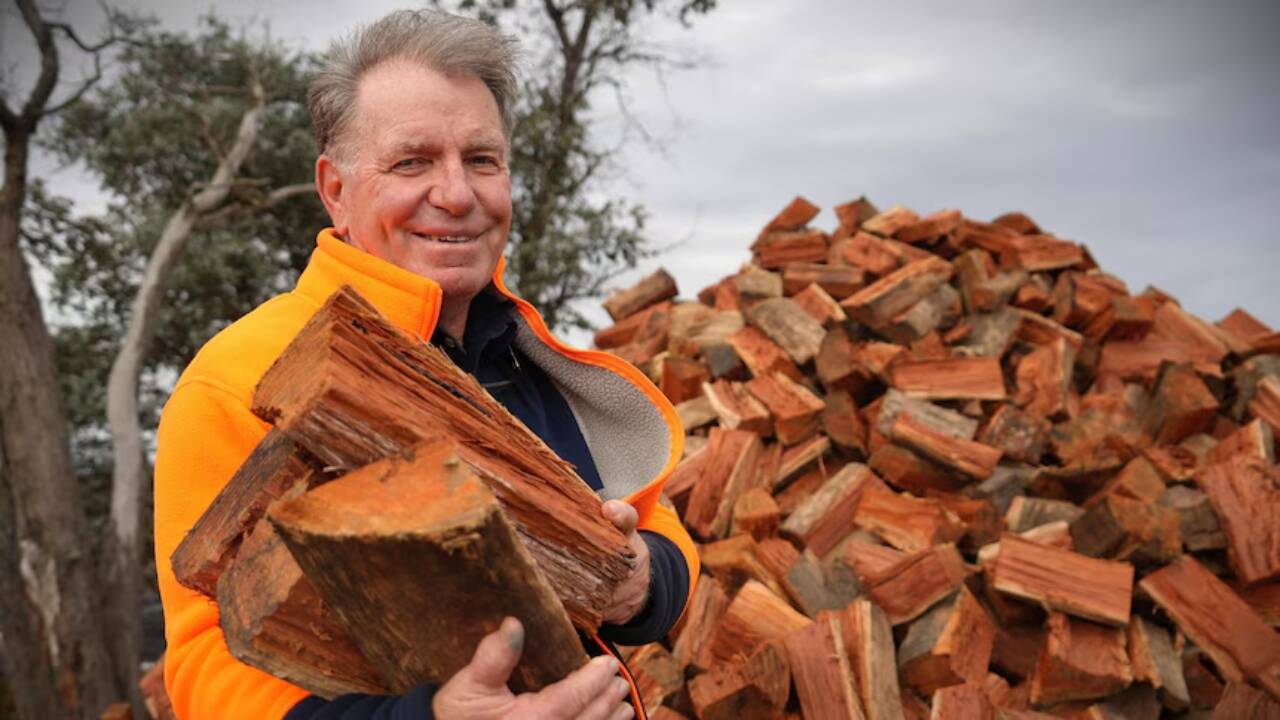
Faced with financial ruin and mouths to feed, a traditional livestock setup wasn't going to cut it. So, he looked down at the ground. Literally. Scattered across his ruined acreage were millions of pieces of fallen timber. What started as a desperate side hustle—hawking logs door-to-door in wealthy Sydney suburbs—morphed into an industrial powerhouse moving one million bags of firewood every single year.
Trading Textbooks for Timber
Most people assume pivoting careers requires a massive venture capital injection or a clean slate. Chauncy had neither. He had debt, dead livestock, and a pile of wood.
At thirty years old, he loaded up a vehicle, drove into upscale neighborhoods, and knocked on doors. He didn't have a grand corporate strategy. He had an immediate cash flow problem.
“After about three weeks, I had enough business where I didn’t have to knock on a door,” he recalled.
That initial traction proved people didn't just want firewood; they wanted convenience. They wanted someone else to handle the heavy lifting. Instead of waiting for the agriculture market to recover from the brutal eighties drought, he doubled down on timber.
Scaling From a Bootstrapped Hustle to an Industrial Operation
You can't sell a million bags of wood a year with an axe and a pickup truck. Growth demands ruthlessness and operational evolution.
Within a few years, manual labor gave way to machinery. Solo doorknocking transformed into commercial supply chains. He stopped selling strictly to homeowners and expanded his reach to small businesses, franchises, and major retailers.
The product itself underwent a transformation. Gone were random, irregular branches. They became precision-cut logs, sorted, weighed, and sealed into distinct 10-kilogram and 15-kilogram yellow bags.
Today, the logistics footprint looks closer to a major freight company than a rural farm. On peak days, dozens of trucks pull out loaded with tons of product. His signature yellow packaging sits inside roughly 3,000 service stations across multiple Australian states.
What Modern Entrepreneurs Get Wrong About Pivoting
People love to romanticize reinvention. They think it happens overnight. Chauncy’s trajectory teaches a completely different lesson about adaptability under pressure.
- Survival comes before branding: He didn't start with a fancy logo or a marketing plan. He started because he needed money to survive the week.
- Leverage what’s under your feet: Instead of trying to import solutions, he monetized the exact waste product destroying his farm.
- Saying yes too often can build an empire: While standard business advice preaches narrow focus, he admitted his growth came from rarely turning down a logistics opportunity.
Even macro trends like the rise of renewables haven't killed the demand. In fact, unexpected cultural shifts—like millions of people stuck at home during global lockdowns buying fire pits—pushed sales even higher.
The Fragility of Success
Building something massive out of raw nature means you're always vulnerable to regulatory shifts. While the business survives economic downturns and fuel crises, modern forestry restrictions pose a genuine threat. Policy changes regarding native forest logging in various states could choke off supply lines overnight.
A former law student who just wanted to keep his family afloat now navigates complex environmental compliance, large-scale forestry contracts, and a workforce featuring everyone from career timber cutters to traveling backpackers.
Look around your own ventures. If your primary path burns to the ground, stop mourning the ashes. Check what's left on the floor. Sometimes the waste product you are ignoring is the exact thing that can save you.