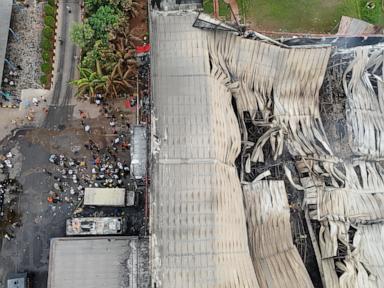
Rescuers find them piled up just feet from the door. Every single time.
When news breaks that most victims of a factory fire died trying to reach an emergency exit, my stomach drops before I even finish reading the headline. I've spent years walking industrial floors, reviewing egress plans, and sitting through post-incident debriefs, and honestly, the same tragic pattern shows up again and again. People know where the exit is supposed to be. They run toward it. And still, they don't make it out.
A sign over a door doesn't save lives if the path leading there turns into a maze or a trap.
Because the referenced news report could not be accessed directly, I won't pretend to recite details from that specific wire story or invent casualty numbers, names, or quotes from the scene. Instead, let's look straight at what happens on industrial shop floors when fire breaks out, why people die right near emergency exits, and what actually keeps workers alive when seconds count.
Why Factory Fire Victims Die Near Emergency Exits
When a fire starts inside a manufacturing plant, people don't freeze because they're stupid. They get overwhelmed because smoke, heat, and layout bottlenecks strip away their options in under two minutes.
In modern industrial fires, smoke is the real killer long before flames reach a worker. Dense black smoke from burning plastics, resins, solvents, or textiles drops visibility to zero almost immediately. A corridor that looked wide open during a Tuesday morning shift becomes a disorienting wall of toxic gas by Tuesday afternoon.
Workers instinctively head toward the nearest emergency exit they remember. That makes complete sense. You go where you think safety is.
The trouble is that shop floors change faster than evacuation maps. Raw material pallets get stacked against walls. Finished goods sit in staging lanes. A rolling rack gets parked near a stairwell because "it's just for an hour." When panic hits and visibility vanishes, workers bump into obstacles they never expected, lose their bearings, and burn precious oxygen pushing past gear that shouldn't have been there in the first place.
Then there's the door itself. Locked doors, padlocks added to prevent theft or unauthorized breaks, exit doors that swing inward against a surging crowd, or heavy fire doors without working panic hardware can turn a supposed lifeline into a bottleneck. Even a single locked latch at the front of a crowd can stop dozens of people dead in their tracks while heat and smoke bank down from the ceiling.
International bodies like the International Labour Organization and the Occupational Safety and Health Administration have documented industrial fire hazards for decades, pointing repeatedly to blocked egress routes, poor ventilation, and inadequate emergency preparedness as recurring killers in manufacturing settings. Standards from organizations like the National Fire Protection Association exist for a reason, yet rules on paper often clash with daily production pressure on the floor.
What Goes Wrong Inside Real Industrial Buildings
Walk into ten factories and you'll see ten different ways safety fails in slow motion.
Some of the worst traps aren't dramatic at all. They look boring. A roll-up shutter that's half-lowered. Exit lights wired to a circuit that trips when main power cuts out. A stairwell double-used for spare parts storage because floor space is tight and orders are behind.
I've seen plants where management treated fire drills like a box-ticking exercise. Everyone walks out slowly, chats near the parking lot for ten minutes, and heads back inside. Nobody tests what happens when an exit route is blocked by smoke or when a shift supervisor isn't there to guide people. Real emergencies don't look like calm ten-minute strolls.
Let's be real about why this happens. Production quotas push managers to squeeze every square inch of space and every minute of output. Security concerns push some operators to lock secondary doors at night or on weekends. Cost pressures push corners to be cut on maintenance, alarm testing, and worker training.
None of those decisions are made thinking, "Today we're going to trap people near an exit." They're made as small compromises over weeks and months. Until the day a spark hits combustible dust, flammable liquid, or overloaded wiring, and all those small compromises add up all at once.
Smoke Moves Faster Than Human Memory
People think they'll just remember the way out. That works great when you can see the floor and the walls.
When heavy smoke fills a room, your sense of direction goes haywire fast. You can't tell left from right easily, heat radiates off overhead layers, and breathing gets painful. If a worker has to detour around a stack of boxes or search for a latch in the dark, every extra ten seconds matters.
Low-mounted exit markers and clear floor markings help way more than people give them credit for, yet plenty of facilities still rely almost entirely on high ceiling signs that disappear into the smoke layer first.
Bottlenecks Turn Exits Into Chokepoints
An emergency exit isn't a magic portal. It's a narrow opening at the end of a path.
If fifty or a hundred people hit a single exit at the same time—especially if another door was locked or blocked—crowding creates a crush hazard right at the threshold. Add panic, low visibility, and doors that don't open smoothly outward with a single push, and people end up trapped right at the finish line.
That's one of the cruelest parts of industrial fires. Rescuers often find victims closest to the exits because everyone ran in the right direction, only to hit a wall, a locked barrier, or overwhelming smoke right at the end.
Misconceptions About Factory Fire Safety
Plenty of well-meaning people repeat myths about workplace fires that sound reasonable until you look closely at how fires behave.
- Myth: If a factory has exit signs, workers will get out fine. Signs don't move pallets, unlock latches, or clear smoke. An exit route only works if the full path—from workstation to door to safe outdoor assembly point—is clear, unlocked, well-lit, and passable under stress.
- Myth: Fire suppression systems mean evacuation planning is secondary. Sprinklers and extinguishers are vital, yet fires in complex buildings with combustible materials can still spread fast or produce heavy smoke before suppression controls them. Safe egress and fast evacuation remain non-negotiable.
- Myth: A quick annual walkthrough is enough. A factory floor is alive. Equipment moves, inventory shifts, contractors bring temporary gear, and doors wear out. Monthly checks and realistic drills catch problems that once-a-year inspections miss.
There's also a debate worth being honest about when talking about industrial safety globally. Different countries and smaller workshops face very different economic realities, enforcement capacity, and building infrastructure than large multinational plants. Pointing fingers from afar is easy; fixing aging buildings and tight margins is messy and hard. Still, basic life-safety principles—keep paths clear, keep exits unlocked for outward escape, train people well—aren't luxury extras. They're baseline survival.
Practical Next Steps for Workers, Managers, and Investigators
If you work in a facility, run one, or want to push for safer conditions after reading about another tragedy, don't wait for an inspection notice. Start with what's right in front of you today.
- Walk every exit route like you can't see. Trace the path from workstations to every marked emergency exit. Look for stored items, cables, narrow pinch points, or blind corners that would trip someone up in low visibility.
- Check every exit door mechanism by hand. Confirm doors open outward freely without keys, padlocks, slide bolts, or wedged frames that could bind under pressure.
- Test emergency lighting and alarm visibility. Don't just assume backup lights and strobes work. Verify they stay visible when glare or smoke is present and that alarm sounds reach noisy production zones.
- Run unannounced, realistic evacuation drills. Mix up which exit is "blocked" or smoky during practice so supervisors and workers learn to adapt instead of blindly following habit into a hazard.
- Speak up early about blocked aisles and locked doors. If you spot a hazard on the floor, document it with photos, report it through safety channels, and keep following up until the obstruction or lock is actually gone.
Safety doesn't live in a binder on a shelf. It lives in whether a door swings open on the first push when everything else goes wrong.