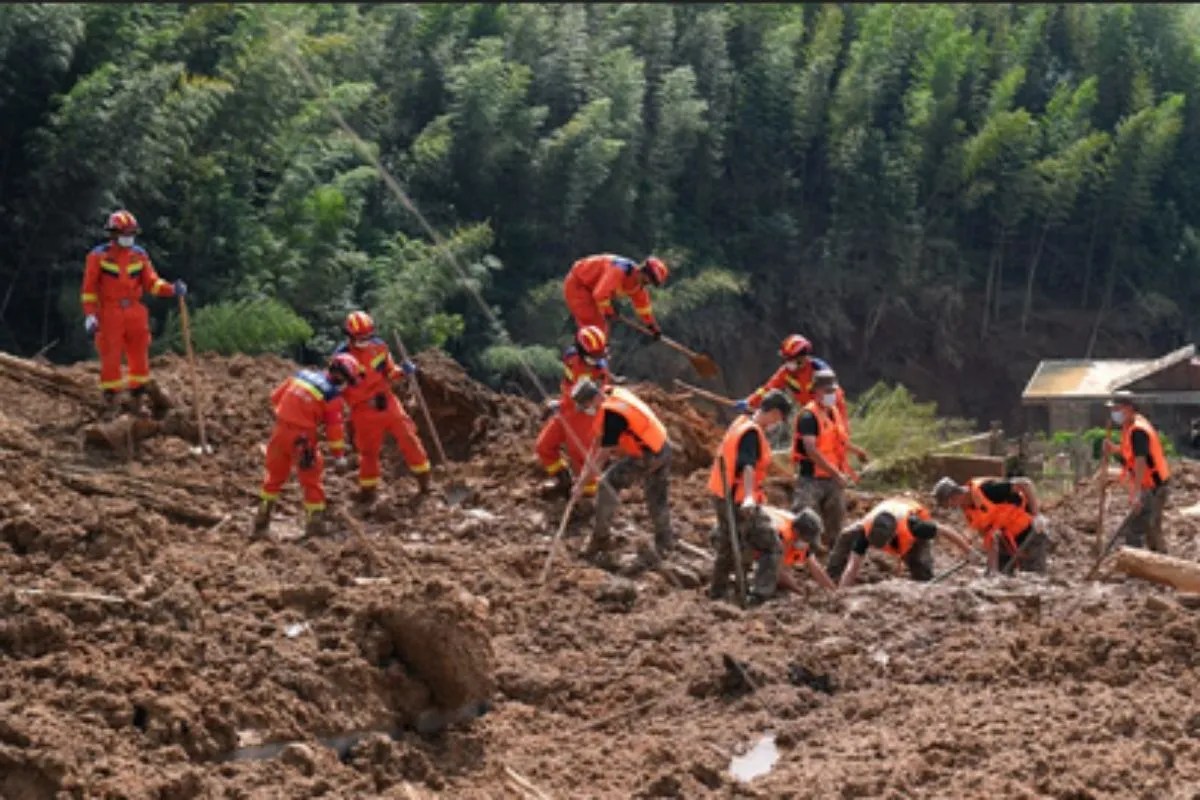
Nature doesn't care about your infrastructure plans. When weeks of relentless rainfall batter fragile mountain slopes, the ground gives way. That's exactly what happened in Jiangxi province, where a devastating mudslide tore through Mingkeng village in Suichuan county, leaving 12 people dead and exposing the brutal reality of escalating climate extremes.
Most news reports treat events like this as isolated tragedies. They aren't. They're symptoms of a systemic vulnerability hiding in plain sight across mountain communities worldwide.
The Anatomy of a Mountain Catastrophe
Let's look at what actually triggers these disasters. You've got torrential downpours—often turbocharged by typhoons like Saudel—dumping massive volumes of water onto steep, vulnerable terrain. The soil becomes saturated. Internal water pressure spikes. Gravity does the rest.
In Jiangxi, the impact wasn't limited to a single community. Suichuan county and surrounding townships like Zuoan and Gaoping faced multiple landslides that blocked roads, destroyed homes, and trapped residents. When the mud starts moving, standard emergency response timelines become completely irrelevant. Roads wash out instantly. Communication lines go dark.
Local officials scrambled to respond. Deputy head of Gaoping township Liang Kuan coordinated the evacuation of roughly 200 residents to safe shelters. Across the broader region, authorities moved more than 5,300 people out of harm's way as the total affected population topped 161,000.
Why Government Funding Alone Won't Fix This
Beijing's Ministry of Natural Resources bumped up its geological disaster emergency response level from IV to III, dispatching specialized search and rescue teams. The National Development and Reform Commission pumped 20 million yuan—roughly 28 crore rupees—into central disaster relief funds.
Money helps, obviously. You need funds for food, medicine, heavy excavation equipment, and temporary housing. But throwing cash at a disaster after it happens is a reactive band-aid.
Here's what people miss about rural landslide management. You can't just build concrete retaining walls everywhere and call it a day. Mountain geography is vast, dynamic, and unpredictable. Real protection requires aggressive early-warning sensors, strict zoning laws that ban building in high-risk alluvial fans, and community-level evacuation drills that actually happen before the rain starts pouring.
The Human Cost Behind the Statistics
Twelve lives lost isn't just a data point on a weather summary. It represents families shattered, homes buried under tons of sludge, and communities left picking up the pieces. Even with rapid deployment, rescue teams struggled against blocked access routes and unstable terrain. One person remained missing while search operations continued.
This points to a harsh truth about rural safety. Remote villages often lack the instant communication infrastructure and heavy machinery needed during the critical first six hours of a disaster. By the time outside help arrives, geography has already dictated the outcome.
What Needs to Change Right Now
If we want to stop reading these headlines every monsoon season, local governments and international planners have to shift their entire approach.
- Stop treating evacuation as a last-minute scramble. Make mandatory relocation protocols automatic when rainfall crosses specific threshold metrics.
- Invest in low-cost, local tilt-meters and moisture sensors for high-risk slopes instead of relying solely on regional satellite forecasts.
- Harden rural lifeline roads so emergency vehicles don't get cut off the moment a hillside slips.
Weather patterns are getting more violent. Mountain villages are getting more vulnerable. If we don't upgrade our defensive playbook, history will just keep repeating itself in the mud.